SaaS Link Building
Off-Page SEO: What Counts and What to Do First
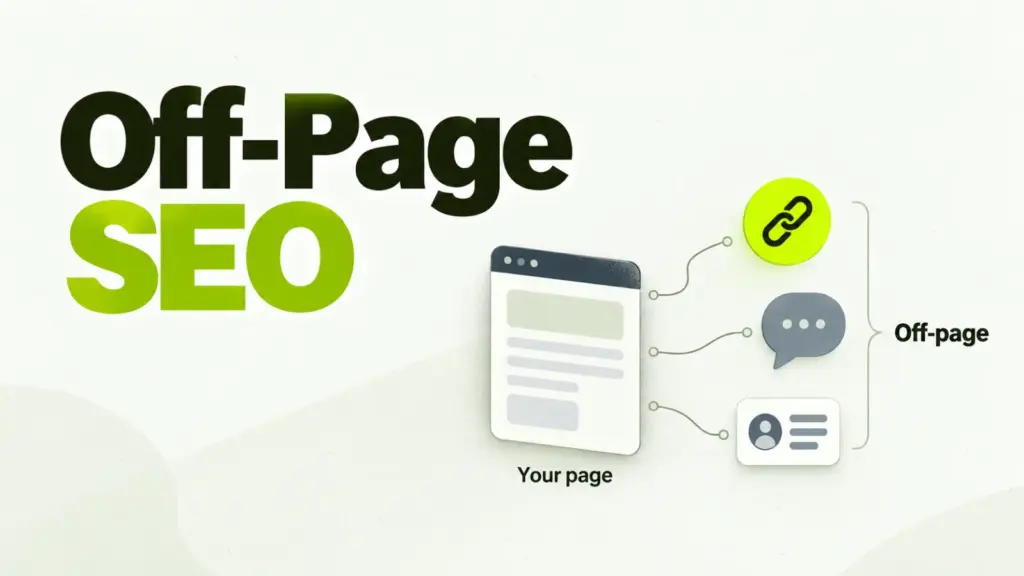
Search engines read your site, and they also read what the rest of the web says about it. Off-page SEO is that second reading: the links, mentions and reviews that sit on other people’s pages.
The guides that rank for this list a dozen activities as though they weigh the same. For a SaaS site they don’t, and the order you do them in matters more than the count. Here’s what the term covers, which activities change anything, and what to do first.
What off-page SEO covers
Off-page SEO is everything that happens on other sites that changes how search engines and AI answers treat yours.
The line with the rest of your SaaS SEO program is easy to draw. Titles, headings, schema and internal links are yours to edit, and our on-page SEO guide covers them.
Crawling, rendering and speed are yours as well, and the technical SEO checklist covers those. Off-page is the third part, and the only one where somebody else has to say yes.
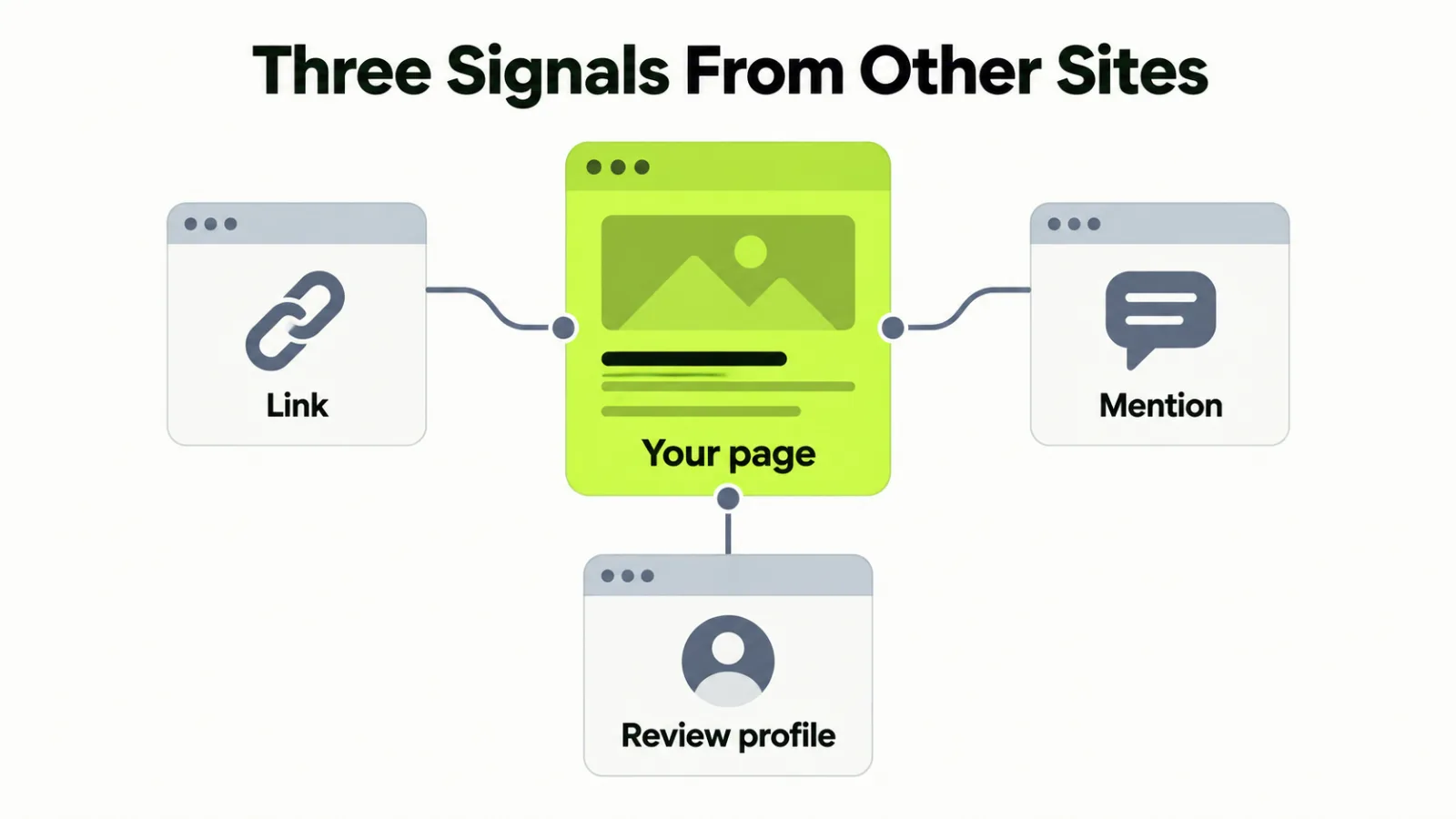
Three kinds of signal come out of it:
- A link. A page on another site points to yours. The number of different sites that do it, your referring domains, is what most off-page work tries to raise.
- A mention. A page names your product without linking it. A brand mention passes no link, but it still tells a reader, and a search system, that you exist in that category.
- A profile. A listing or review on a site that exists to list products in your category, with your name, description and category on it.
All three are somebody else’s decision. That’s why off-page work is slower than anything on your own site, and why it can’t make up for a page that isn’t ready to be linked.
Off-page SEO is wider than link building
Link building is most of off-page SEO but not all of it, because mentions and review profiles shape how your brand is understood without a link.
That matters more now that answers are assembled from pages and not only ranked from them. A page that names you beside a category, with no link, can still be a source an AI answer draws on.
Our guide to getting cited by AI covers that side. It’s why a mention counts as work to plan and not as a bonus.
It also changes how to read the tactics in our link posts. Guest posts, digital PR, broken links and resource pages are ways to get one kind of signal. Off-page SEO is the whole set you’re trying to earn.
Which activities matter for a SaaS site
For a SaaS site, the activities that matter are the ones that put your name, and often a link, on pages your buyers already read. Sort the usual list by that test and it gets shorter:
- Earned editorial links. A page of yours that other writers cite, such as original data, a free tool or a template. It’s the base of everything else, and the test for which links count as earned is in our post on white hat methods.
- Guest posts on sites your buyers read. Fine when the site is relevant and a person there chose the topic. See guest posts for SaaS SEO.
- Digital PR. A story or a dataset a journalist has a reason to cite. It’s the slow one, and our comparison of digital PR and link building shows where it fits.
- Inclusion in lists and roundups. Being named on a “best tools for” page, which listicle link building covers in full.
- Review and directory profiles. Accurate listings on sites in your category. This is upkeep and not outreach: complete them, keep the description current, and check they say what you sell.
- Communities. Useful answers where buyers ask, with a link when it helps the asker and without one when it doesn’t.
Social posts sit outside that list on purpose. Sharing a page gets it seen and sometimes linked, which is distribution. It isn’t a signal to count on for rankings, and counting it as off-page work hides the activities that do move them.
What to leave out
Skip link schemes. A private blog network or a bought placement turns the signal you want into one that can be discounted or penalised. A tidy anchor doesn’t change what it is.
If a link is there because money changed hands, treat it as advertising and keep it out of your earned count.
What to do first
Do the work in the order of what you control, which means a page worth linking first, then links to it, then profiles and mentions.
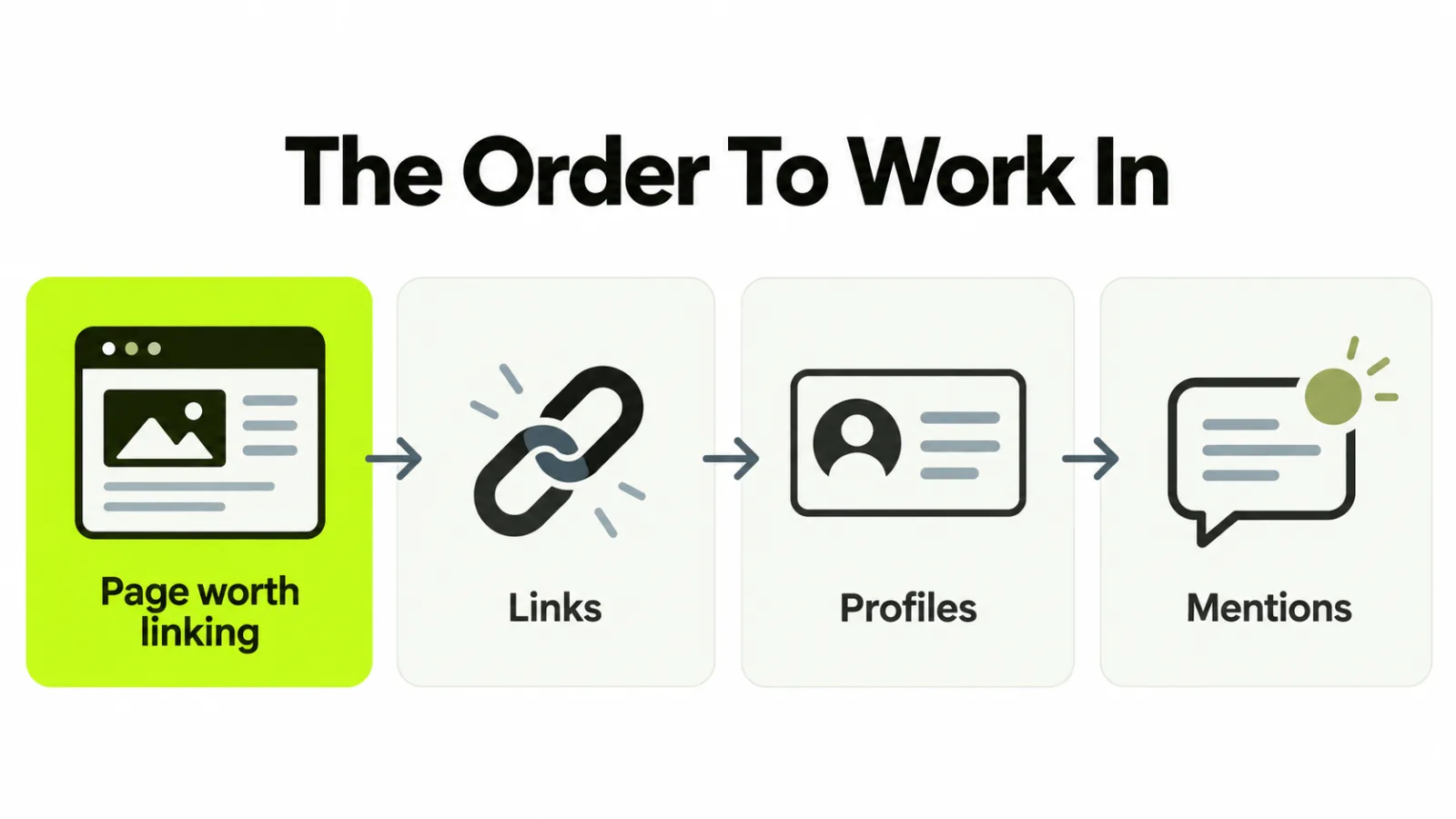
- Choose the page worth linking. If no page on your site gives a stranger a reason to cite it, outreach has nothing to offer. That page is the work, and what SaaS teams build for it is covered in our assets guide.
- Check it’s ready. It should be indexed, titled for its query and answering it. A link to a page that can’t rank sends its value nowhere.
- Find who already links to your competitors. A site that linked a rival has shown it links to products like yours, and our competitor link gap guide sorts it into what to chase now and what to leave.
- Fix the profiles you control. It’s a short job with no reply to wait for, so do it early.
- Watch for mentions. Save a search for your product name and the category terms you want to be found by. A writer who named you has already chosen to, which makes an unlinked mention the easiest place to ask for a link.
What off-page work can’t fix
A page that doesn’t answer its query stays flat however much is linked to it. Links raise the ceiling on a page that already deserves to rank, and they don’t change what the page is.
The same goes for a page Google can’t index and for a site whose pages all say what every competitor says. If steps one and two above aren’t true yet, fix them before you send a message.
How to tell it’s working
You can tell it’s working by checking relevant referring domains, branded search and AI citations over a quarter, with any single authority score as a rough guide.
Count new referring domains from sites your buyers would visit, not the total, because a pile of unrelated links says little about you.
Watch branded search impressions in Search Console, since more people looking for your name is what a mention and a review profile are for. Then ask the AI tools a few category questions and note whether your name appears.
A score moves in steps and lags the work, which is why how domain authority moves is worth reading before you report on it. The wider set of numbers is in our guide to SaaS SEO metrics.
Give it a quarter before you judge it. The plan that ties these together is in our SaaS backlink strategy guide.
Frequently asked questions
What are off-page SEO activities?
Off-page SEO activities are earning links from relevant sites, guest posts, digital PR, being named in lists, keeping review and directory profiles accurate, and joining buyer communities. For a SaaS site, start with the ones that put you on pages your buyers already read.
How do you do off-page SEO?
You do it by picking one page worth linking, then working outward: links to it first, then your profiles, then the mentions you can turn into links. One page done properly beats ten pages half-promoted.
Does social media count as off-page SEO?
Not as a signal to rely on. A social post can get a page seen and sometimes linked, which is distribution, and the links that follow are the part that counts. Track those and not the shares.
How long does off-page SEO take to work?
Months, not weeks. A link has to be published, found and weighed, and a new mention has to be picked up before it helps. Judge the work across a quarter, and judge it by the sites that now link to you.
What’s the difference between on-page and off-page SEO?
On-page SEO is what you edit on your own pages, such as titles, headings, schema and internal links. Off-page SEO is what other sites say and link about you, which you can ask for and can’t change yourself.