SaaS Link Building
Expired Domains for Link Building: Risks and When They Work
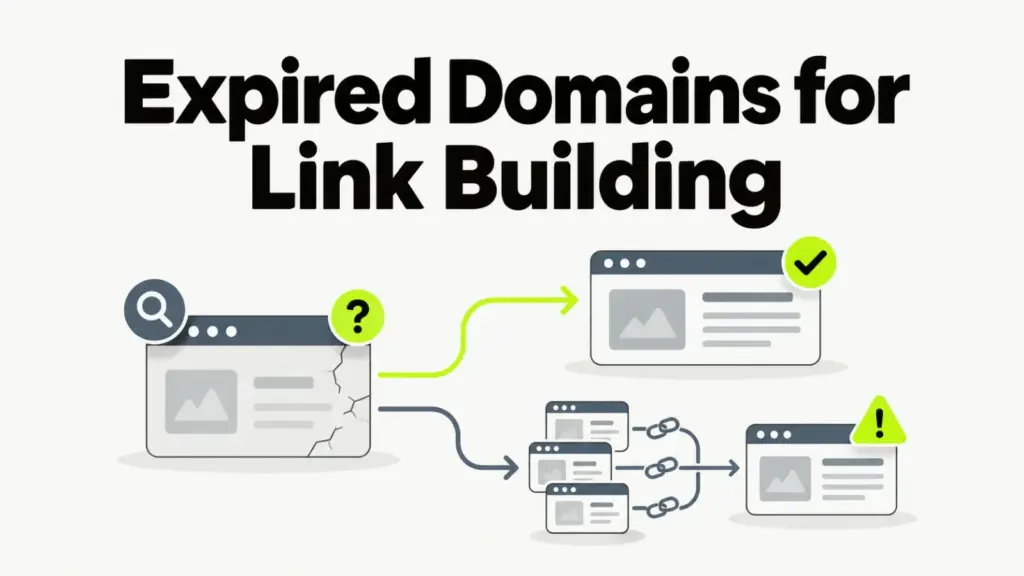
Expired domains for link building work in a few narrow cases and fail in most of the ones vendors sell. Google’s spam policies name expired domain abuse directly, and private blog networks built on old domains count as link spam. Buying a lapsed domain is safe when you run a real site on it, merge a business you acquired, or use its dead links as outreach leads.
What is an expired domain, and why do link builders want one?
An expired domain is a domain name its owner stopped renewing, which the registry then released for anyone to register or buy at auction. Link builders want expired domains because the old site’s backlinks often still point at the name. They hope that authority passes to whoever owns it next.
That hope is the weak point. The backlinks were earned by a site that no longer exists, for content that’s gone. Nothing guarantees a search engine keeps crediting them after the owner and purpose change, and a high Domain Rating score on Ahrefs can’t tell you whether Google still does.
Most lapsed names reach buyers through backorder services and domain auctions run by registrars and specialist marketplaces. Listings there often lead with backlink counts and third-party scores. Read those as marketing.
Which expired domain tactics break Google’s spam policies?
The expired domain tactics sold most often run straight into Google’s spam policies. Google’s spam policies describe expired domain abuse as buying a lapsed domain and repurposing it mainly to manipulate rankings with content that gives users little or no value. The link spam policy covers the rest.
Watch for four patterns:
- A private blog network (PBN), a set of rebuilt expired domains that exist to link to one main site.
- A rebuilt site hosting thin articles or affiliate pages on a name that once meant something else.
- A 301 redirect from an unrelated expired domain to your site, purely to move its old links.
- Paid guest posts sold on a rebuilt domain without rel=”sponsored” on the links.
Google’s own examples of expired domain abuse include a former school’s domain reused for unrelated content. Check the current examples in Google’s spam policies. Bought links that pass ranking credit are link spam wherever they sit. Paid placements must carry rel=”sponsored”, which Google’s guide to qualifying outbound links explains.
PBNs on expired domains also leave footprints: shared hosting, matching themes, the same few outbound targets. Once one site in a network is caught, every site it links to is exposed.
How do you vet an expired domain before buying it?
Vetting an expired domain means checking what the name was used for, who links to it and why, before you pay anything. Five checks catch most problems. You need the Wayback Machine, Google search and one backlink index such as Ahrefs, Semrush or Majestic.
Run each candidate domain through these checks:
- Its Wayback Machine history shows one consistent, legitimate business or publication.
- Its backlinks come from real sites on a topic close to yours.
- Its anchor text is mostly brand names and URLs, with no gambling, pharma or foreign-language spam.
- It wasn’t rebuilt as a PBN or an ad-filled parking page after it lapsed.
- The name doesn’t match another company’s trademark.
Fail one check and walk away. A clean history still carries no promise of link value, and you can only see a current manual action after you own the domain and verify it in Google Search Console. If you take one on, run a backlink profile audit for an inherited domain before you build on it.
When does an expired domain work for a SaaS company?
An expired domain works for a SaaS company when the purchase serves a real business purpose and any link value is a side effect. Use one test: would you still buy this name if it had zero backlinks? If the answer is yes, you’re on solid ground.
Four situations pass that test:
- You want the name itself for a product, brand or feature launch.
- You acquired a company, and its domain came with the deal.
- You buy a lapsed resource in your niche and run it as a maintained site for its old audience.
- You want to protect your brand from a lookalike or typo domain.
Acquisitions need the most care. Redirect old pages only to pages on your site that cover the same thing, and send the rest to a close parent page or let them return a 404. Pointing a whole acquired blog at your homepage wastes the relevance that made those links worth keeping.
Can you earn links from expired domains without buying them?
You can earn links from expired domains without buying them through dead-link outreach, often called broken link building. Sites that still link to a defunct domain carry a broken reference on their pages. Publish a better resource on the same topic, and you have a reason to ask them to update the link to yours.
Start in your backlink tool: find dead domains in your category, export their referring pages and sort them by topical fit. Judge the opportunity by the count of referring domains over raw backlinks, because one site linking twenty times is still one relationship.
Match what the dead page offered. Check its old version in the Wayback Machine, then point the site owner to a page of yours that covers the same ground. A pitch for an unrelated product page gets ignored.
For most SaaS teams, this is the version of expired domain link building worth doing. It costs nothing up front, and every link you earn is an editorial choice by the site that gives it.
Which expired domain approach fits your situation?
The right expired domain approach depends on why the name interests you in the first place. Match your situation to a row below. If the only payoff of a plan is inherited links, stop there.
| Situation | What to do |
|---|---|
| You want a lapsed name for a brand or product | Buy it, start fresh and expect no link value |
| You bought a company and its domain | Merge content and redirect matching pages only |
| A dead site still has links on a topic you cover | Contact the linkers and offer your equivalent page |
| A seller offers an “aged domain with authority” | Skip it |
We don’t build PBNs or buy expired domains to pass links. Our link building engagement process earns editorial placements through outreach and digital PR, billed per delivered placement, and placements are earned, never guaranteed.
What happens if an expired domain tactic backfires?
An expired domain tactic that backfires ends one of two ways: Google’s systems stop crediting the links, or a reviewer issues a manual action against the site involved. The first is silent and costs you the purchase price. The second appears in the Manual Actions report in Google Search Console.
A manual action needs cleanup before you file a reconsideration request. Remove the redirect or the links from the expired domain, document what you changed and when, then submit the request. Keep the record, because the reviewer wants to see the source of the problem gone.
Run a dead-domain search in your category this week
Open your backlink tool and search for dead domains that once covered the problem your product solves. Pick three with referring pages from real publications, check what each dead page offered, and note which of your pages could replace it. That list gives you outreach leads with a built-in reason to reply, and you haven’t spent anything on a domain.
If a seller emails you an “aged domain with high DR” in the meantime, delete it. The guide to backlink quality signals beyond Domain Rating shows why that number says little on its own.
Frequently asked questions
Yes, buying a lapsed domain is legal in the United States as a rule. The risk is trademark: a name matching another company’s mark can draw a complaint under ICANN’s UDRP process. This is general information, so check a specific name with counsel.
No one outside Google can confirm that for a given domain. Treat the old links as unknown value, and judge the purchase on whether the name is worth owning without them.
An expired domain lapsed and was released, while an aged domain is any domain with a long registration history, often sold without ever lapsing. Sellers use “aged” to suggest built-up trust. For link building, age alone isn’t worth a premium.
Only when the domain carries spammy links you can’t remove and you’re building a real site on it. Google positions the Disavow tool for unnatural links tied to manual action risk, so a clean domain rarely needs it.
Rarely in a way that’s worth the effort. The history stays visible in web archives and backlink indexes, and the spam links keep pointing at the name. If a domain spent years as a parking page or part of a PBN, buy a different one.