SaaS Link Building
Link Building for Ecommerce SaaS: A Strategy for Cart and Marketplace Platforms
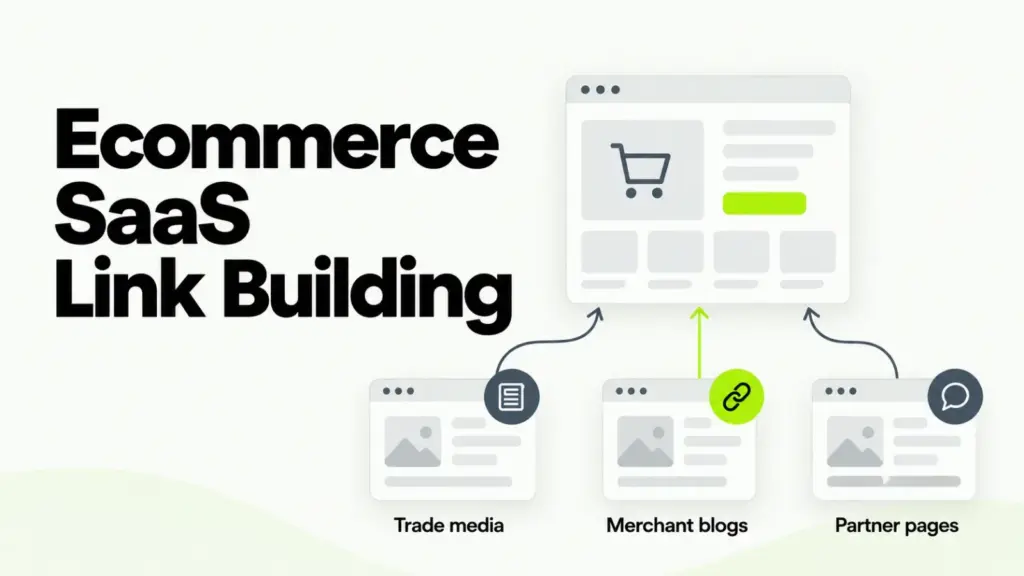
Link building for ecommerce SaaS works when you earn links from the people merchants already read: trade media, agency blogs, partner ecosystems and operator communities. Your product is a cart, checkout or marketplace tool, so your best proof is merchant outcomes. Build assets around that proof and pitch publications that cover online selling.
Who links to an ecommerce SaaS company?
Four groups link to ecommerce SaaS companies: ecommerce trade publications, agencies and consultants who build stores, platform ecosystems, and merchants who write about their own stack. Each links for a different reason, so each needs a different offer.
Trade publications want data and a clear point of view on selling online. Agencies link when your tool solves a client problem they have already written about. Ecosystem partners link when integration pages are useful to their users. Merchants link when you give them something to cite.
If you compete with Shopify, BigCommerce or WooCommerce, expect the biggest platforms to dominate the broad "best ecommerce platform" pages. Skip chasing those head-on. Target narrower angles where you have a real edge: a vertical, a region, a B2B ordering workflow, a marketplace model.
Which linkable assets work for cart and marketplace platforms?
The assets that earn links for cart and marketplace platforms are original merchant data, calculators, migration guides and checkout research. They give a writer a number or a tool to cite. Feature announcements rarely do, because a journalist has no reason to point readers at them.
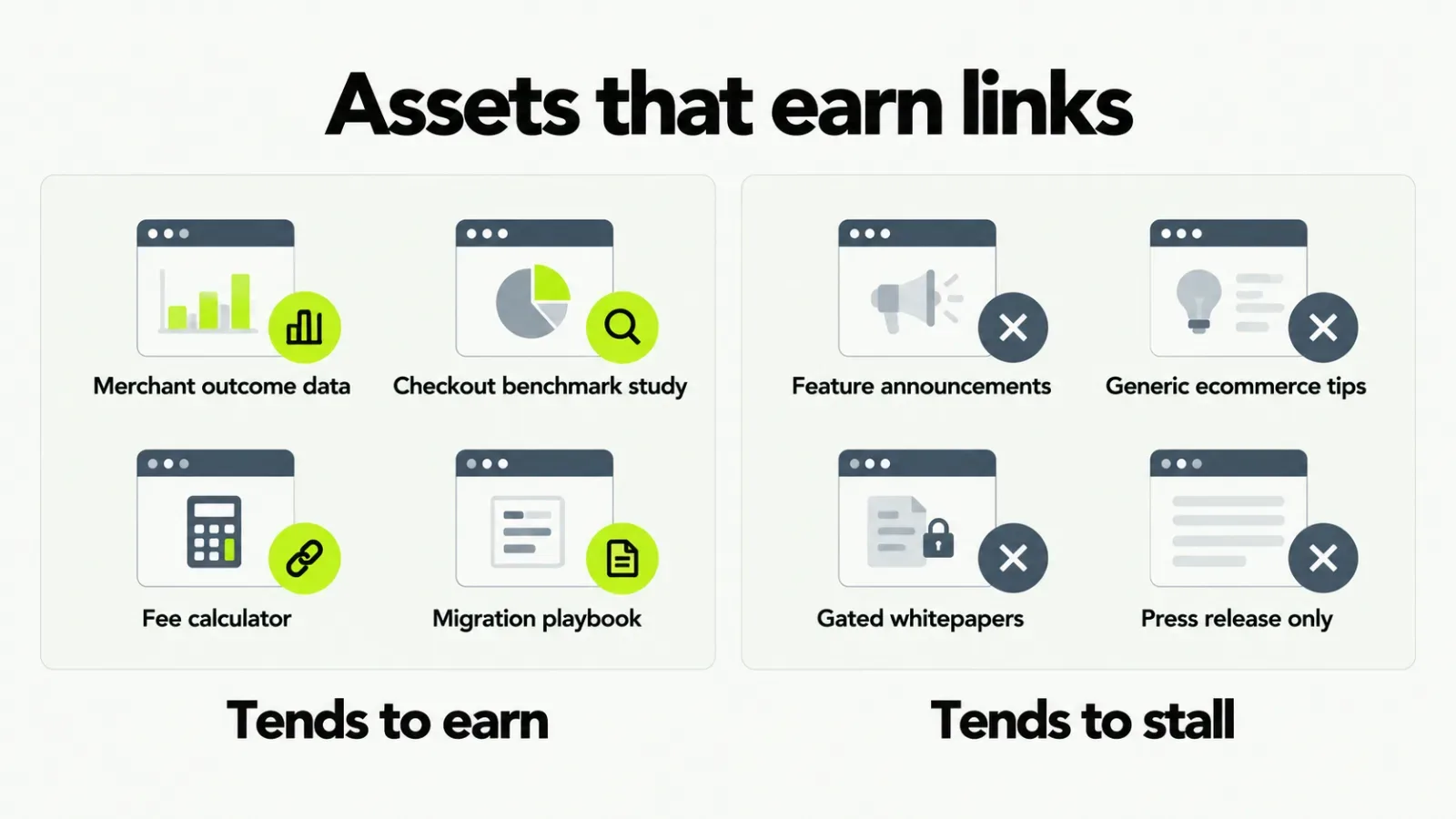
Four formats are worth the effort:
- A checkout or conversion study built from anonymized, aggregated merchant data you are allowed to use.
- A fee or margin calculator for sellers comparing payment, shipping or marketplace costs.
- A migration playbook for merchants leaving a competing platform.
- A seasonal operations report for peak-period readiness.
Check data rights first. Aggregated usage data can be sensitive under your merchant terms, so have counsel confirm what you can publish. Our guide to linkable assets for SaaS context sits in the broader strategy page; start there if you have no asset yet.
Skip the gated whitepaper. A link goes to a page a writer can read without filling in a form.
How do app stores and platform ecosystems create links?
App stores and partner directories create links because each listing, integration page and partner profile can point back to your domain. For a cart or marketplace platform, these ecosystems are often the most natural source of relevant links, and they also send qualified merchants.
Treat them as one channel among several. Some listings use attributes that limit ranking credit, and that is fine: they still bring referral traffic and brand mentions. Check how each marketplace marks its outbound links before you count on ranking credit.
The deeper mechanics, including API partners and marketplaces, are covered in our piece on link building through SaaS integrations. Read it before you plan partner outreach.
What do the FTC review rules change?
The FTC's rule on consumer reviews and testimonials limits fake or misleading reviews, which matters if you sell review, rating or storefront tools or publish merchant testimonials yourself. Anything you publish about merchant results must be real and substantiated. Check the FTC's website for the rule's current scope and details.
For link building, this means two things. Do not seed fabricated merchant stories to win coverage. And do not buy placements that pass ranking credit. Google's spam policies treat paid links that pass ranking credit as link spam, and paid or sponsored placements should be disclosed and carry rel="sponsored".
This is general information, not legal advice. Hand compliance questions to counsel.
How do you choose an approach by stage?
Choose by stage: early teams build one data asset and a few ecosystem links, growth-stage teams add digital PR around merchant outcomes, and larger platforms run a sustained program across several audiences. The right mix depends on what proof you already own.
| Stage | Do first | Skip for now |
|---|---|---|
| Pre-Series A | One merchant story, ecosystem listings | Broad PR campaigns |
| Series A to B | Data study, agency partner pages | Chasing head-term roundups |
| Series C and later | Ongoing digital PR, awards, category research | One-off stunts |
For budget logic, see how much SaaS should spend on link building. For a representative, composite example of what sustained work can look like in a payments context, see the fintech payments case study, which gives its own figures in the title.
What should you check before hiring help?
Before hiring, check that the team understands ecommerce buyers, explains where links will come from, bills for delivered placements, and refuses paid link schemes. Placements are earned, never guaranteed, so be wary of anyone promising a link count or ranking.
Ask three questions: Which publications would you pitch for a cart platform, and why? How do you handle sponsored content? What happens when a placement does not land? Our guide on how to choose a link building agency lists more, and the services page explains how we work.
Frequently asked questions
Yes, in audience and proof. Your buyers are merchants, so trade media, agencies and ecosystems matter more than general tech press. Merchant outcome data is your strongest asset.
Target them when the angle is specific, such as a migration or a niche workflow. Broad platform comparison pages are crowded, and a relevant narrow mention is worth more.
No. They help with relevance and referral traffic, but they are one channel. Pair them with editorial coverage that you earn.
It varies with your assets and market. Earned links arrive in irregular bursts, and no vendor can guarantee timing or rankings.
Audit your merchant evidence this week
List every merchant result, dataset and workflow your team could publish with permission. Pick the one a trade writer could cite in a single sentence, and build the asset around it. If you want a second opinion on the plan, you can Book a Strategy Call.