SaaS Link Building
The SaaS Link Building Checklist That Runs a Campaign
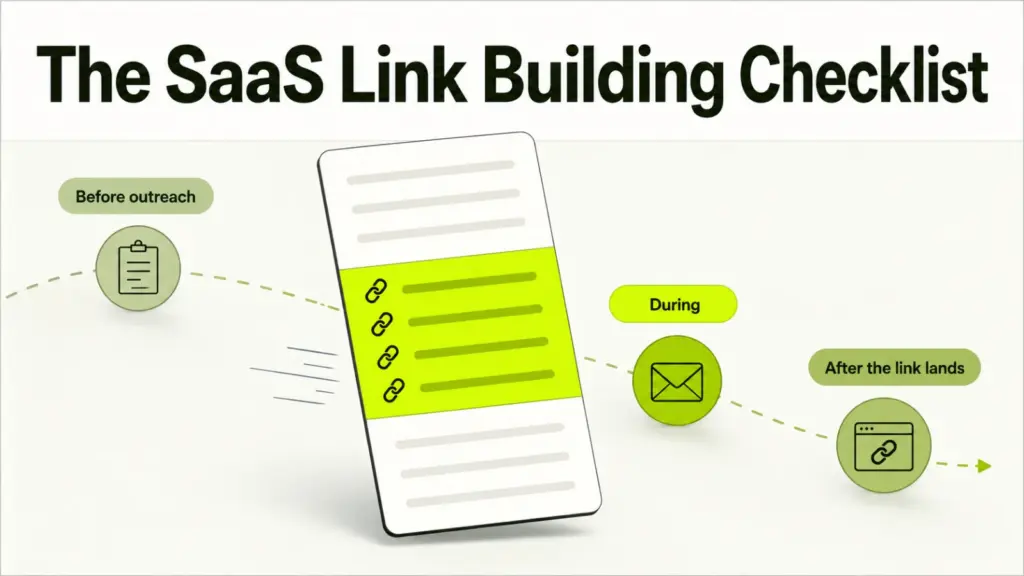
A link building checklist catches three failures that kill SaaS campaigns: prospects nobody qualified, every link aimed at one anchor, and a finish declared before anything was indexed.
The list below runs in three phases, and the order matters more than the length. Most teams own the middle phase and skip the two either side of it.
None of this is exotic. It’s the work that gets dropped when a campaign is priced on the count of links landed rather than on whether they were worth landing.
Phase one: before a single email goes out
The prep phase decides most of the outcome, and it’s the one that gets compressed when a campaign starts late. Six things have to be settled before outreach begins.
Pick the target page, and check it deserves links. A link pointed at a page that can’t convert is a link spent on nothing. If the page doesn’t rank in the top thirty for its own primary term, links aren’t the constraint yet, and the page is.
Have something worth linking to. Outreach that asks for a link to a product page asks a stranger for a favor. Outreach that brings original data, a working tool or a better explanation gives them something their readers want.
This is the step teams skip hardest, because it costs real work before any link exists. It’s also most of the difference between a campaign that converts a few percent of its list and one that converts ten times that.
Our guide to linkable assets covers what SaaS teams can build that content sites can’t.
Find out what you’re missing: Pull the referring domains of the three competitors who outrank you for the target term, and subtract your own. What’s left is a list of sites that already link to companies like yours, which beats a cold scrape.
Our page on referring domains covers why the count of domains matters more than the count of links. For the checklist, the item is narrower: the gap list exists before outreach starts, not after.
Write the anchor plan before you need it. Deciding anchors mid-campaign is how a profile ends up with fourteen links carrying the same commercial phrase. Our guide to anchor text distribution covers the ratios; the checklist item is that the plan exists on paper before the first placement.
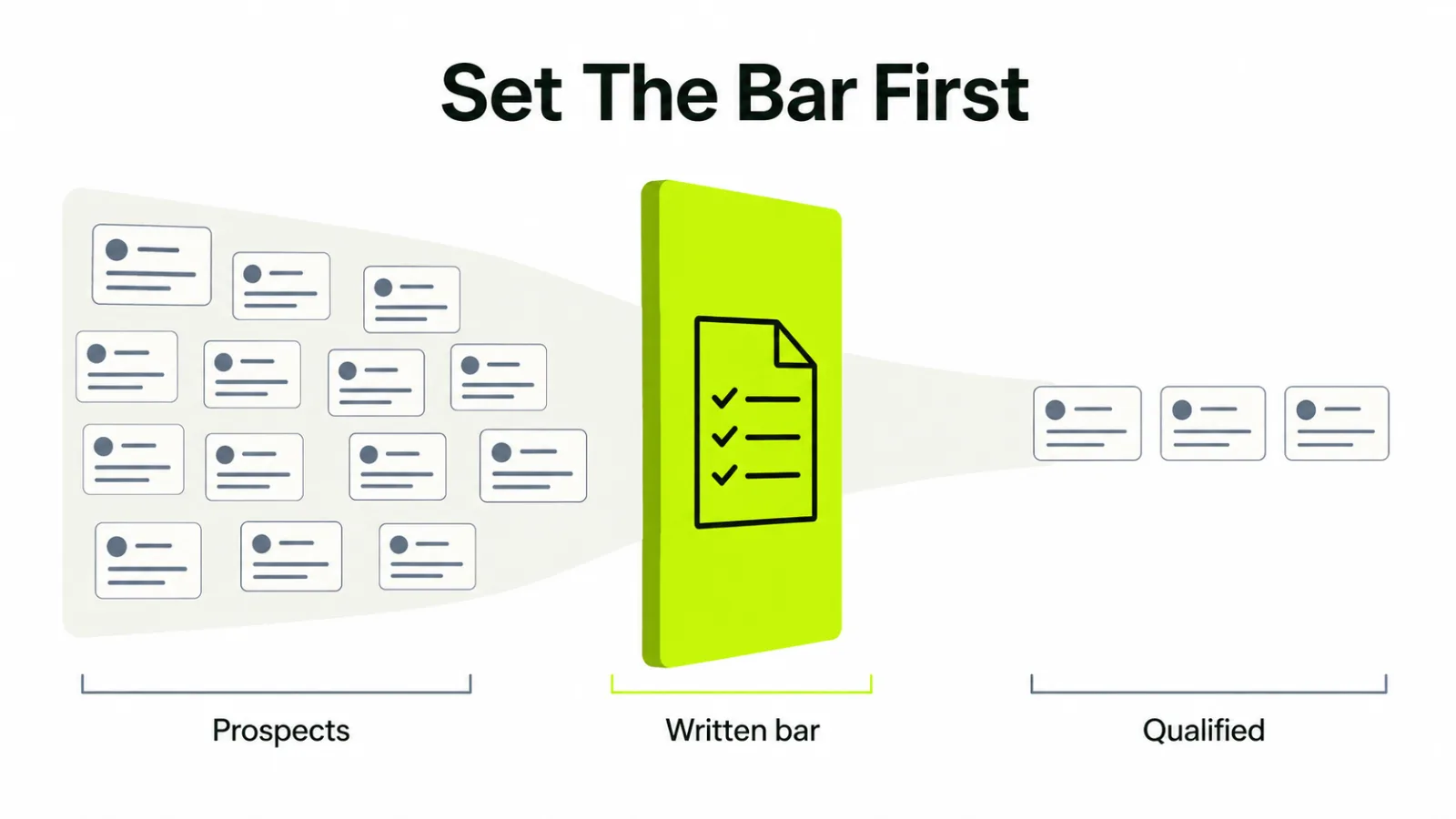
Set the qualifying bar in writing. Not a domain rating, but a test you can apply to a page. Does it get search traffic, does it sit in a topic your buyer reads, and would you send a customer to it?
Evaluating backlink quality goes into those tests. The item on the checklist is narrower: an unwritten bar moves under pressure, and a written one is harder to lower.
Prepare the sending domain: Publish the email authentication records your provider asks for, DMARC included, then raise volume over two or three weeks rather than starting at full rate. Cold volume from a domain with no sending history lands in spam.
This matters more than it sounds. A campaign reporting a poor reply rate is often reporting a delivery problem, and nobody finds that by rewriting the pitch.
Phase two: while the campaign is running
This is the phase most teams already do, so the checklist here is mostly about not lowering the bar you set last month.
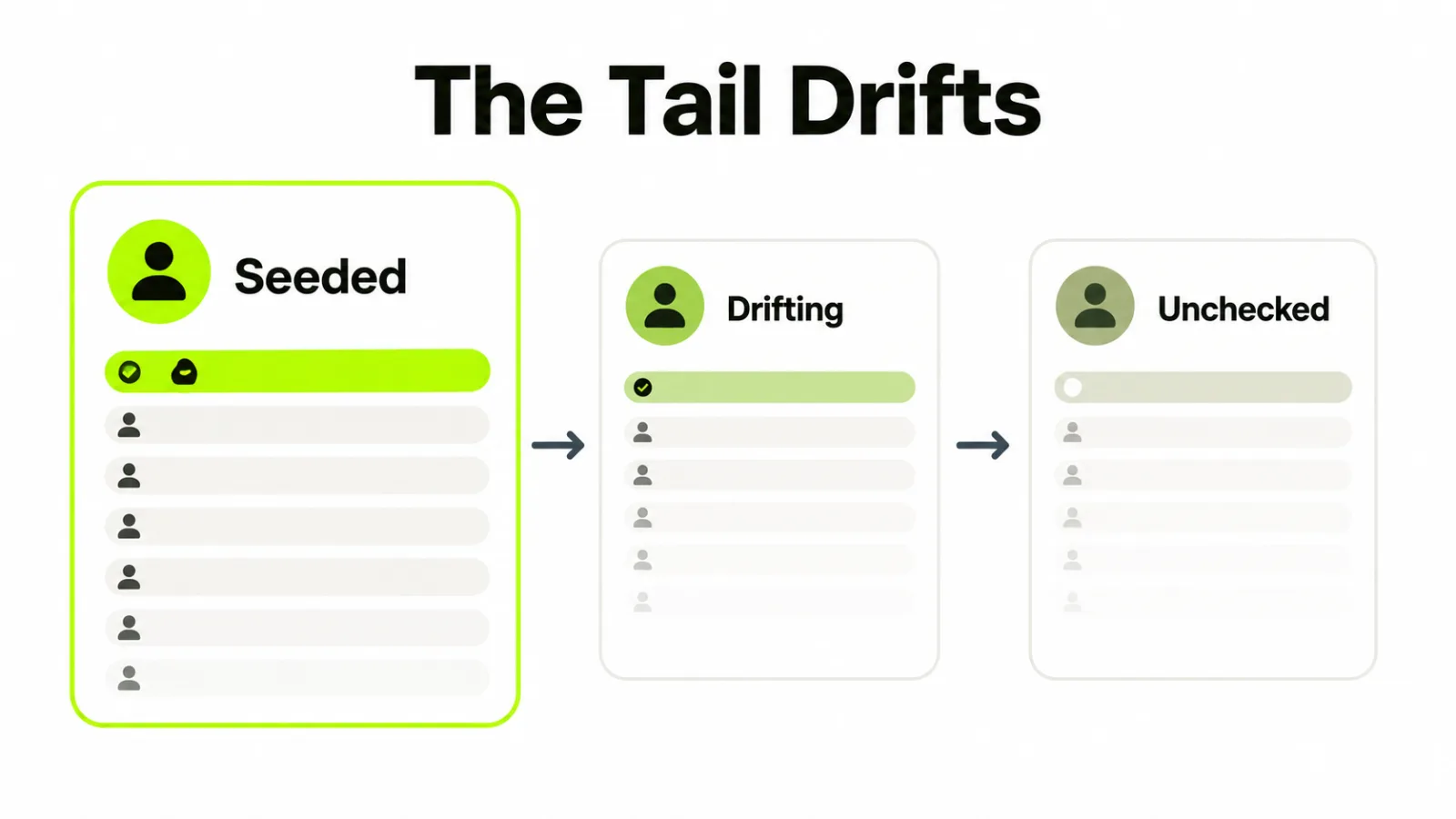
Run the relevance test on every prospect rather than every batch. Relevance decays across a list. The first twenty prospects come from a tight topical seed and the last twenty come from whatever the tool suggested next, and nobody re-checks the tail.
Find the right person, not the right address. A pitch to a generic inbox competes with everything else in that inbox. A pitch to the editor who commissioned the piece you’re referencing is a different conversation.
Look for the person whose name is on comparable articles, and check they still work there. Outreach to someone who left eighteen months ago is a common and invisible waste.
Make the pitch about their page, not yours. The pitches that work name a specific piece, say what’s missing or dated in it, and offer the thing that fixes it. The pitches that fail describe your company.
Keep it short enough to read on a phone. One follow-up after five working days, then stop: a third and fourth email buy almost nothing and cost your domain reputation.
The reply is the half this list stops short of. Our guide to outreach link building covers what to do with each kind of reply, price quotes included.
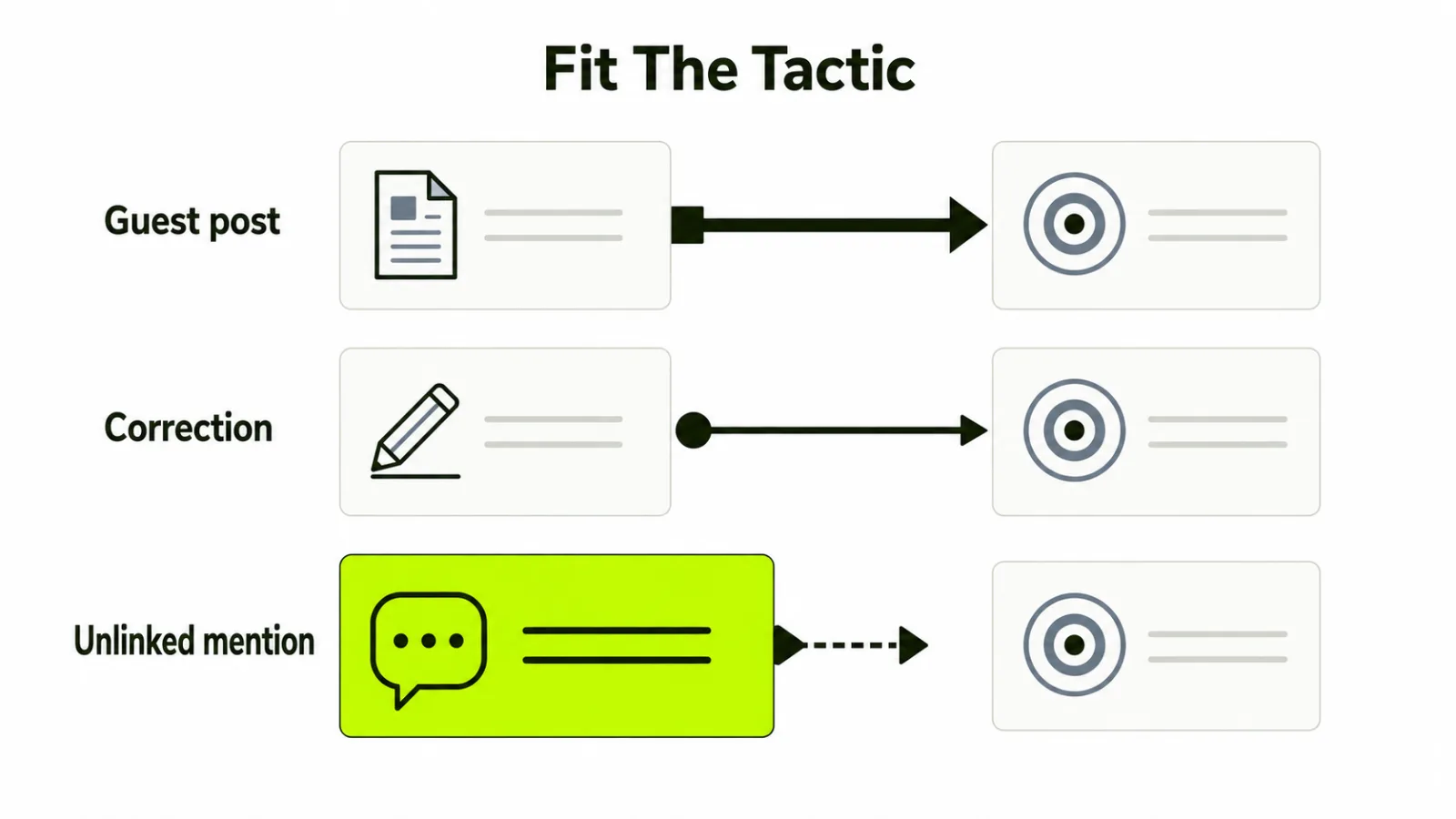
Pick the tactic to fit the target, not the other way round. A site that publishes contributor pieces wants a guest post.
A site with a dated roundup wants a correction instead. A site that already named you wants an unlinked mention recovered.
That last one is the cheapest link in the campaign and the most often left alone. Search for your brand mentions that carry no link, and ask. The publication already decided you were worth naming.
Niche edits belong in the mix too, on pages that gain from the addition. Running one tactic across every target is what makes a campaign look like a campaign.
Cap the repeats: One anchor phrase across six placements reads as a pattern because it is one. The cap belongs in the plan from phase one, and this item enforces it.
Record why each placement was approved. One sentence per link. It costs nothing while you’re deciding and it’s the only thing that makes a lost link diagnosable six months later.
Keep content-led placements separate in the tracker. A link earned through digital PR behaves differently from a placed one, and mixing them makes both look average.
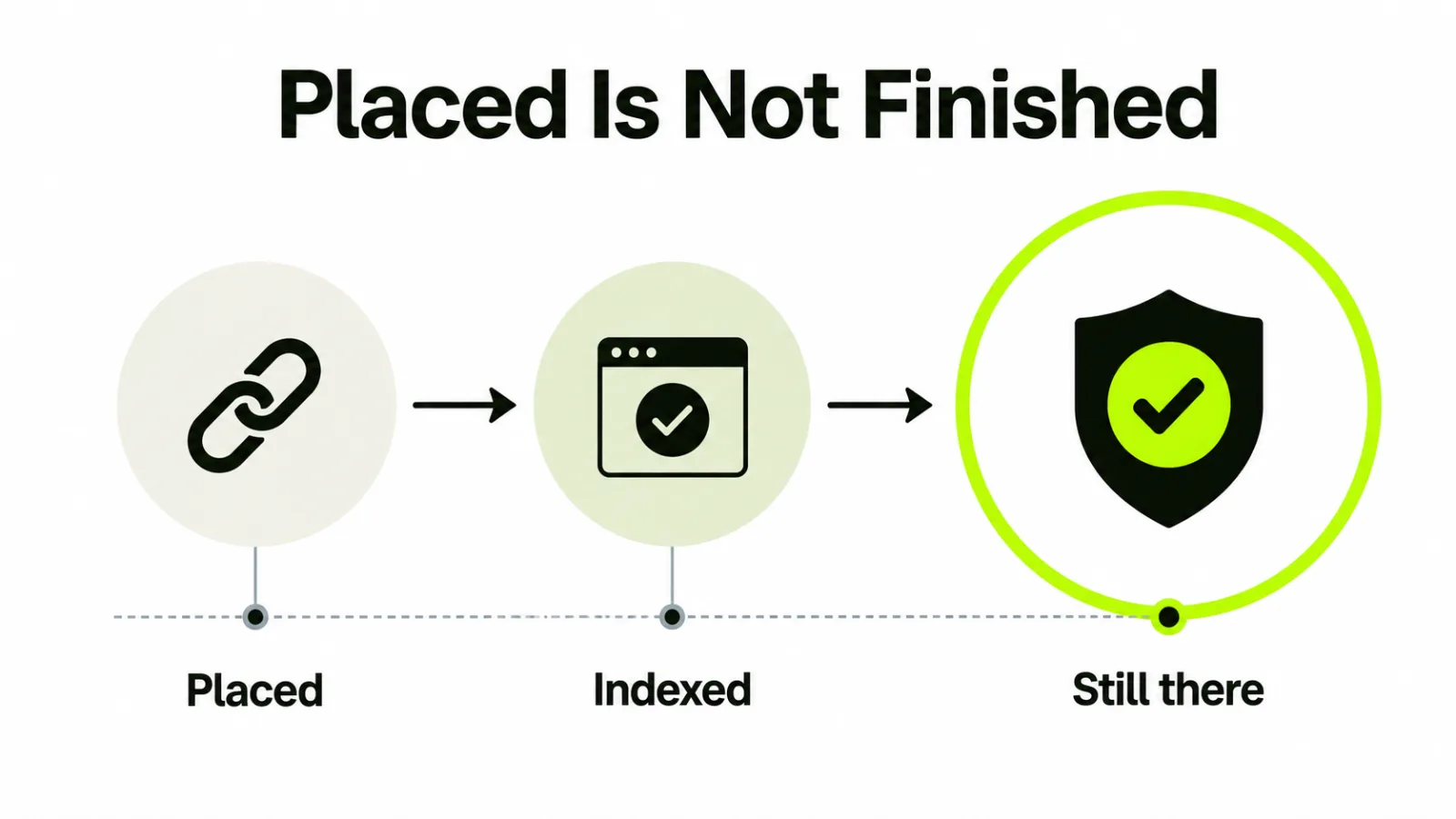
Phase three: after the link lands
The closing phase is where the most value leaks, because a campaign that’s been reported on feels finished. It isn’t.
Check the linking page is indexed. A page Google hasn’t indexed passes nothing. This is the cheapest check on the list and the one most often skipped.
Confirm the link survived the edit. Links get stripped, turned into plain text, or moved into a footer during a routine content update. Re-check at thirty days, not once.
Give it a measurement window that can see the effect. A link measured in the month it lands is measuring crawl timing. The link building ROI calculator works on the same principle: the inputs it asks for are the ones that take a quarter to move.
Write down what you’d do differently. The campaign that follows this one either inherits the lesson or repeats the mistake, and nothing else in the process carries it forward.
What runs on a cadence
Some of this list runs once per campaign. Some of it recurs, and the recurring items are the ones that stop happening.
Weekly: qualify the next batch against the written bar, send and follow up once, and log every approved placement with its reason.
Monthly: check indexation on everything placed the previous month, re-check links older than thirty days for edits, and read the anchor distribution against the plan.
Quarterly: re-pull the competitor gap, re-check that the target page is still the right one, and compare outcomes against the window you set.
What the checklist doesn’t cover
A checklist catches known errors. It won’t tell you which pages deserve links, which topics you can credibly win, or whether link building is the right spend this quarter at all. Those are strategy questions, and a well-run checklist applied to the wrong target page produces efficient waste.
That’s the honest limit of any list like this. If the strategy underneath it is unsettled, that’s the thing to fix first, and it’s most of what our SaaS link building work involves.
Frequently asked questions
What should be on a link building checklist?
Three phases, not one list. Before outreach: the target page, the anchor plan, the qualifying bar. During and after: the relevance test on every prospect, then an indexation check and a measurement window long enough to see anything.
How many links should a SaaS campaign target per month?
There isn’t a number that transfers between sites. What travels is the ratio: the count of prospects qualified per link you’d defend. If that ratio isn’t tracked, the campaign is being run on volume, and volume is the thing that fails.
How long before a new link affects rankings?
Long enough that a monthly report can’t see it. Google has to recrawl the linking page first, and the effect on the target page builds over weeks. Measuring a link in the month it lands mostly measures crawl luck.
Does a link that isn’t indexed count?
No. A page Google hasn’t indexed passes nothing, and the linking page’s index status is the first thing to check after placement. It’s also the cheapest step to skip, which is why it’s on the checklist twice.
Do I need to warm up a sending domain for outreach?
If you’re sending from a domain with no history, yes. Cold volume from a fresh domain lands in spam, and a campaign reporting poor reply rates is often reporting a delivery problem instead. Authenticate first, then raise volume over a few weeks.
What’s the difference between a checklist and a strategy?
A checklist catches the errors you already know how to make. A strategy decides which pages deserve links at all. You need both, and the checklist is worthless if it’s applied to the wrong target page.