SaaS Link Building
Why Generic Link Building Fails SaaS Companies
Generic link building fails SaaS companies because it chases the wrong thing: third-party vanity metrics and link volume instead of topical relevance, buyer context, and the earned authority that moves rankings, pipeline, and AI citations. When you sell a six-month deal to skeptical buyers, a pile of high-“DA” links from unrelated blogs does almost nothing for you. You need a smaller set of relevant, credible, content-backed links that prove you belong in your category. Most agencies aren’t built to deliver that.
Here’s the argument, plainly: the link-building industry is built to manufacture metrics instead of authority. That model fights against how B2B SaaS actually grows. Below is exactly where it breaks, why, and what to do instead.
The metrics trap: DA and DR are not Google ranking factors
The biggest reason generic link building fails SaaS is that the whole deal is priced and sold on metrics Google doesn’t read. Domain Authority (Moz) and Domain Rating (Ahrefs) are third-party, proprietary scores that estimate how strong a site’s link profile looks. They’re handy for a rough comparison. They are not ranking factors, and Google has said so more than once.
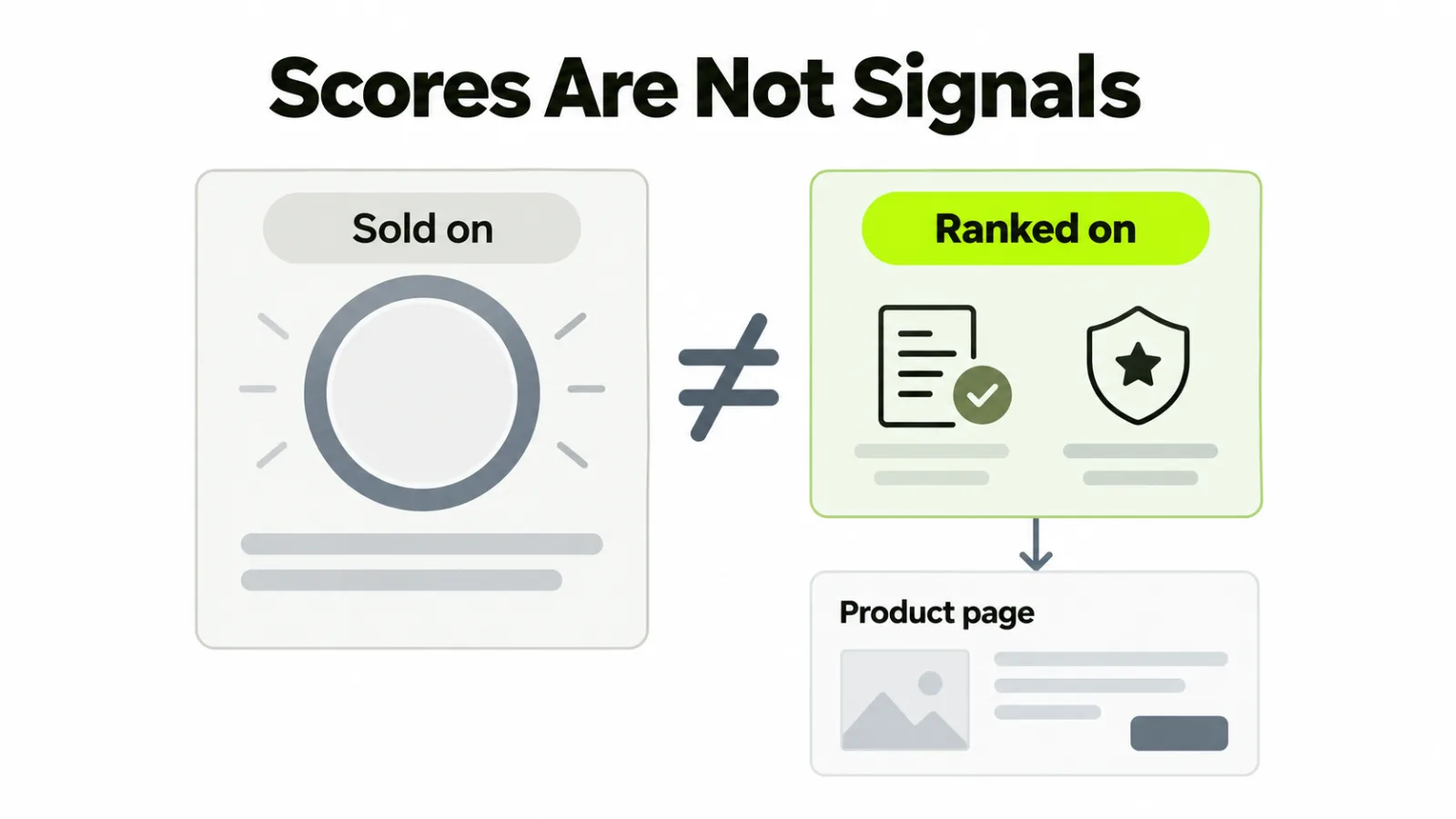
When an agency sells you “10 DA50+ links per month,” they’ve swapped the goal. The product stops being authority in your category or qualified organic pipeline. The product becomes a number on a dashboard. And that number is easy to game: a domain can post a high DR while being completely off-topic for your software, packed with sponsored posts, or losing trust. You can buy the metric and earn nothing that matters.
For what raises those scores, see our guide on how to increase domain authority.
For SaaS, this trap costs more than it does for, say, a local plumber. Your buyers know what they’re looking at. Your competitors are funded brands publishing serious content. Ranking for the terms that convert, your core category searches and “alternative-to-a-competitor” queries, takes real topical authority rather than a spreadsheet of bought DR. Chasing the vanity number burns budget and quarters you won’t get back.
Why volume, PBNs, and cheap links specifically fail B2B SaaS
Volume-first link building fails SaaS because it builds the exact pattern search engines are trained to discount, and it parks your brand in neighborhoods you don’t want to live in. Three failure modes show up over and over:
PBNs and link networks
Private blog networks exist for one reason: to pass link equity. They share footprints: hosting, templates, ownership, interlinking. That gets them caught and devalued, and the association can drag your domain down with them. No serious SaaS brand should let its name show up on a network built to be thrown away.
Cheap, templated guest posts
The “$X for a guest post” market runs on sites that publish anything, for anyone, about everything. A link from a “business tips” blog that also covers crypto, casinos, and CBD sends zero topical signal for your DevOps or fintech product, and it reads more like a paid slot than an editorial nod.
Unnatural link velocity
Buy a sudden burst of links and you get a spike that looks nothing like how real brands earn coverage. Genuine authority builds unevenly over time, tied to launches, research, and press. A flat monthly quota of identical links is the fingerprint of a campaign and not a brand.
The bigger cost is what you give up. Every dollar spent on links that don’t build category relevance is a dollar not spent on the assets that earn links and citations on their own: original data, sharp product-led content, real expert commentary. SaaS link building done right pays off. Volume tactics decay, or worse, leave you a mess to clean up.
The relevance and buyer-context argument
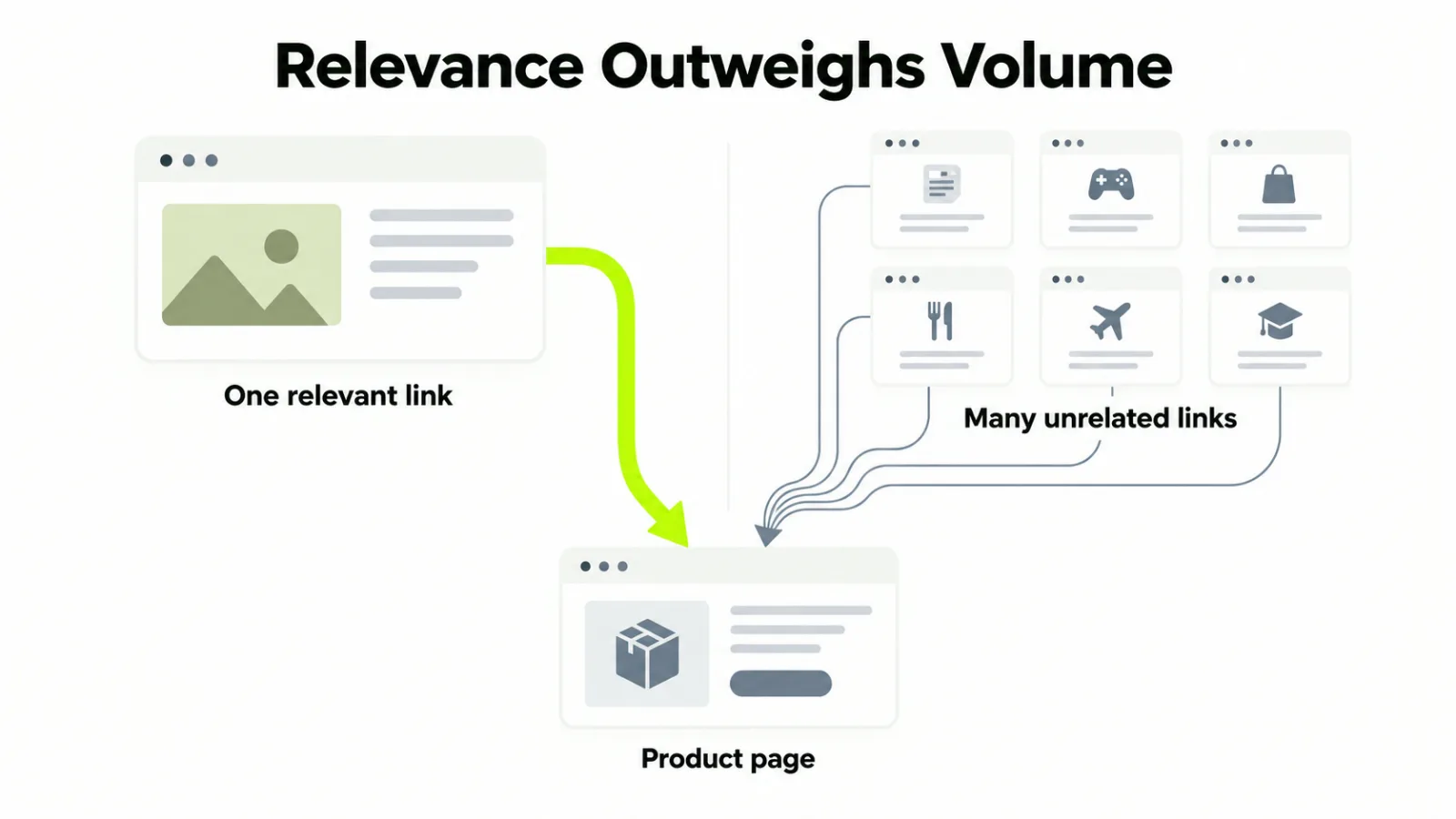
Relevance is the one variable generic link building ignores, and it’s the one that decides whether a link is worth anything for SaaS. One link from a respected publication your buyers read, on a page next to what you sell, beats dozens of links from unrelated high-metric domains. Relevance works on two levels, and SaaS needs both.
Topical relevance
Search engines read links in context: what the linking page is about, the content around it, the site’s overall focus. A link to your project-management tool from an article on team productivity sends a clean signal. The same link from a page about used cars sends noise. Generic agencies chase the domain’s metric and ignore the page’s topic, which is exactly backwards.
Buyer-context relevance
For B2B SaaS, links pull double duty. Beyond the search signal, a link or mention on a publication, podcast, or industry roundup your ICP trusts is a brand and demand asset. It puts you in the consideration set during a long, committee-driven buying cycle. A high-DR link your buyers will never see does nothing for pipeline. That’s why authority-building beats link-counting: SaaS link building services should be judged on whether they put you where decision-makers form opinions.
Generic links don’t earn AI citations
AI search makes generic link building weaker still, because AI Overviews, ChatGPT, and Perplexity cite sources they judge authoritative and relevant rather than whichever domain posts the highest third-party score. These systems build answers from the entities and sources they associate with a topic. Getting cited depends on being a recognized authority in your category, mentioned and linked across the credible corners of your space.
A PBN link or a guest post on an off-topic blog adds nothing to that recognition. It doesn’t build the topical associations, co-citations, and brand mentions that teach a model you belong in an answer about your category. What does help is the same thing that helps traditional rankings: relevant, earned coverage and being referenced in the conversations that count. Generic tactics can’t fake it, because what’s being measured is real authority and not bought metrics. We dig into this shift in how AI search changes SaaS SEO.
The irrelevant-anchor and wrong-page problem
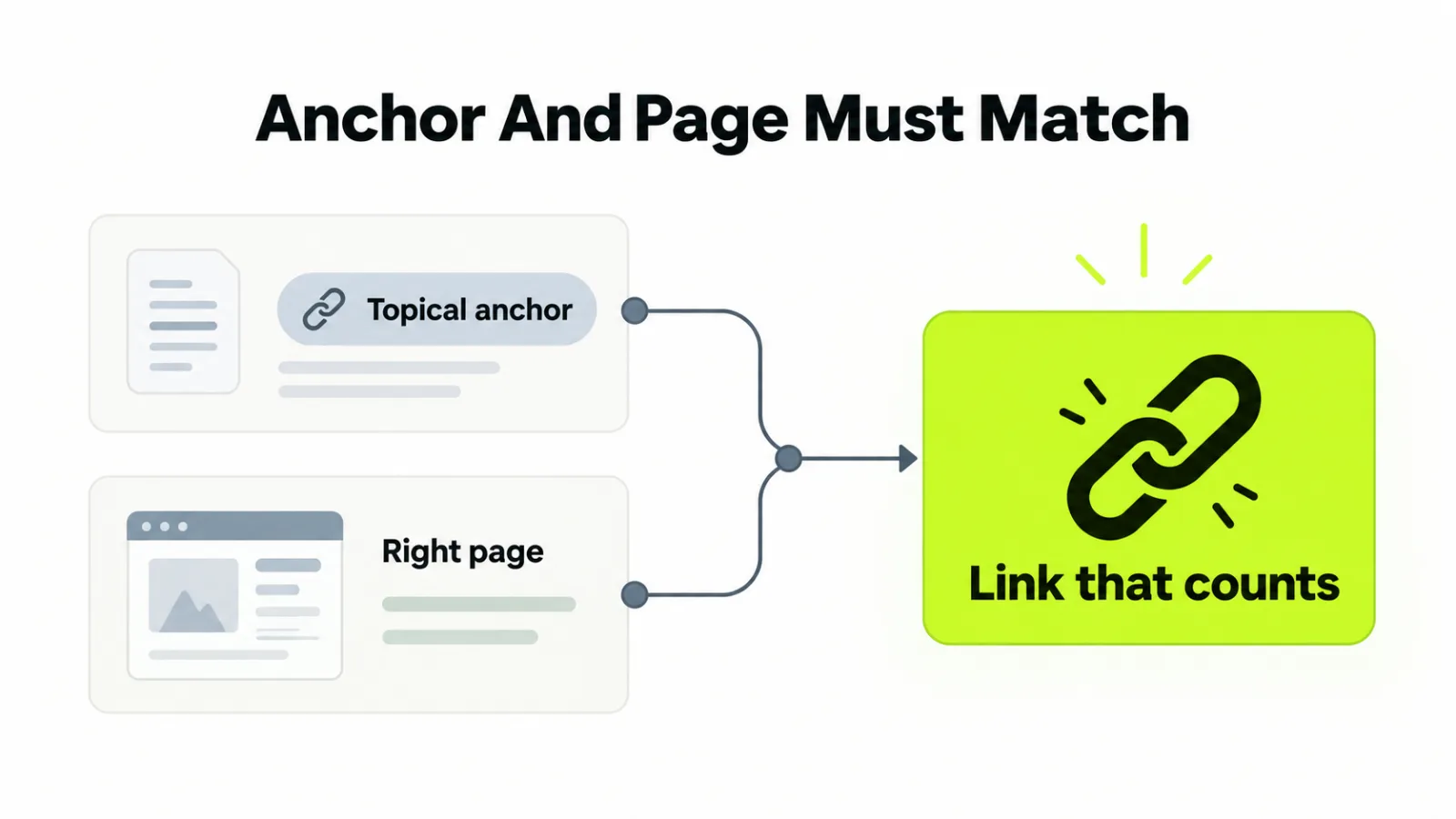
Even when a generic campaign lands a decent link, it usually points the wrong anchor at the wrong page and wastes whatever value it created. Two mistakes keep coming up:
Bad anchor text
Generic providers love exact-match commercial anchors (“best CRM software”) at scale because they look aggressive on a report. Over-optimized, repetitive anchors are an unnatural pattern. Real profiles run mostly branded, partial-match, and contextual. Anchor strategy should serve relevance rather than stuff keywords.
Wrong target page
Links get pointed at the homepage or a thin landing page because it’s easy, while the asset that deserves the authority gets nothing: a pillar guide, a comparison page, a data study. Equity lands where it can’t do topical work, and your best content stays starved.
These aren’t small details. Anchor distribution and target-page choice decide whether link building reinforces a coherent topical structure or scatters random signals. Generic vendors optimize for what looks good in a monthly report. SaaS needs links that map to a deliberate content and keyword architecture.
What generic agencies optimize for vs. what SaaS actually needs
| Dimension | Generic link building optimizes for | What B2B SaaS actually needs |
|---|---|---|
| Primary metric | DA/DR score and link count | Topical relevance and referring-domain quality |
| Source selection | Any high-metric site that will hit publish | Publications your ICP reads and trusts |
| Method | Bulk guest posts, networks, paid placements | Earned coverage backed by real content and data |
| Anchor text | Exact-match commercial anchors at scale | Branded, contextual, natural mix |
| Target page | Homepage or whatever’s easy | Pillar, comparison, and study pages on purpose |
| Velocity | Flat monthly quota | Organic buildup tied to real events |
| Outcome measured | Links delivered | Rankings, qualified pipeline, AI citations |
| AI-search value | Negligible | Builds entity authority and citability |
What to do instead: relevance-first, earned, content-led
The fix is to stop buying metrics and start building an authority system, where links are the byproduct of content worth referencing instead of the product itself. In practice, that comes down to a few disciplined commitments.
Telling the two apart is its own skill. Our guide to white hat link building gives the test, and the grey tactics SaaS teams get sold.
1. Lead with assets, not outreach
Original research, opinionated product-led guides, and useful comparison content give people a reason to link and AI systems a reason to cite. Content-led link building earns relevance you can’t buy. That is the logic behind SaaS authority building as an SEO moat.
2. Pick sources by relevance, not score
Go after the publications, newsletters, and communities your ICP actually reads. A topically aligned referring domain your buyers trust beats a higher-metric stranger every time.
3. Map links to your content architecture
Decide up front which pillar pages, comparison pages, and studies should accumulate authority, then point relevant links and anchors at them on purpose.
4. Keep anchors natural
Lean branded and contextual; make exact-match the exception. You want a profile that looks earned because it is.
5. Measure outcomes, not artifacts
Judge the work by movement in target-keyword rankings, qualified organic pipeline, and presence in AI answers rather than by how many links shipped.
This is slower than buying a quota, and that’s the whole point. Authority that pays off is harder to fake and far harder for competitors to copy. It’s also the only model that pays off across traditional search and AI search at once: the same earned mentions that lift your rankings are what answer engines read to decide who’s worth citing.
Frequently asked questions
Does Google use Domain Authority or Domain Rating as a ranking factor?
No. DA (Moz) and DR (Ahrefs) are third-party, proprietary metrics that estimate a site’s backlink profile. Google has said it doesn’t use them. They’re fine for a rough comparison, but building your link strategy around them means optimizing for a number search engines never read.
Why does my SaaS have lots of backlinks but still isn’t ranking?
Usually because the links lack topical relevance, point at the wrong pages, or arrived in an unnatural pattern. Volume without relevance and a coherent content architecture rarely moves competitive SaaS rankings. A smaller set of relevant, earned links aimed at the right pages tends to do more.
Are guest posts bad for SaaS link building?
Not by themselves. A guest contribution on a respected, topically relevant publication your buyers read can be worth a lot. The problem is bulk, templated guest posting on generic sites that publish anything for a fee: those carry little signal and read more like a paid slot than an editorial endorsement.
What is the risk of using PBNs or cheap link networks?
Private blog networks share detectable footprints and exist to pass link equity artificially. Search engines work to catch and devalue them, and the association can drag your domain down too. For a brand selling to sophisticated B2B buyers, the reputational and ranking downside isn’t worth a short-term metric bump.
How do backlinks affect whether AI tools like ChatGPT or Perplexity cite my SaaS?
AI search systems surface sources they associate with genuine topical authority. Relevant, earned links and brand mentions across credible sites in your category build the entity recognition and co-citations that make a model more likely to reference you. Generic, off-topic links add little to that.
How long does relevance-first link building take to work?
It’s slower than buying a link quota because it depends on creating content worth referencing and earning coverage over time. The payoff is durability: earned, relevant authority grows and is much harder for competitors to copy. Plan in quarters: the first signals show early, and the real separation builds over four to six months and beyond.