SaaS Link Building
SaaS Digital PR vs Traditional Link Building
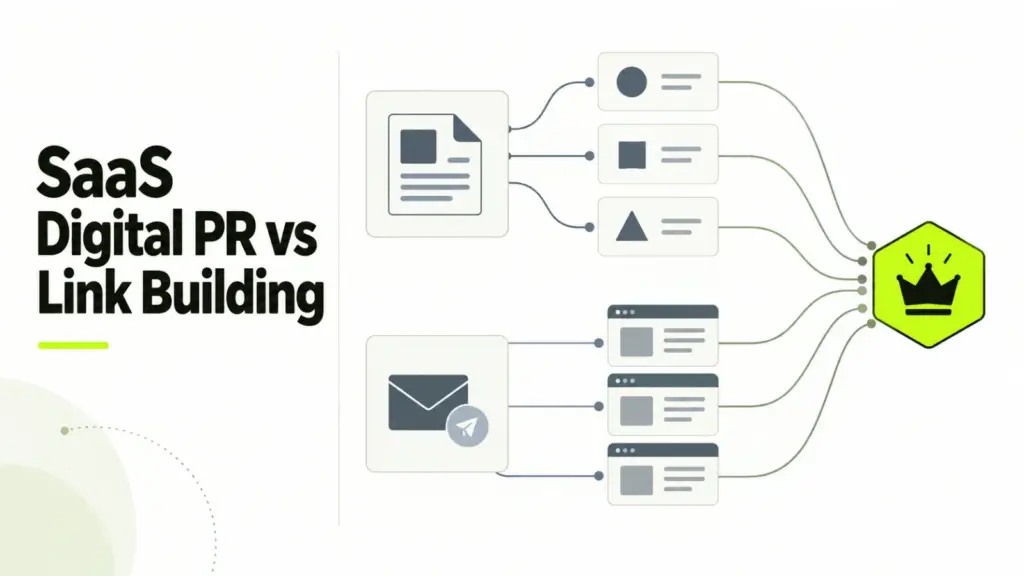
SaaS digital PR earns editorial coverage and authoritative links by creating newsworthy stories, while traditional link building acquires links through outreach to existing pages, resource lists, and guest contributions. Both grow the authority signals that move search rankings and AI-generated answers. But they start from different philosophies, carry different risk, and produce links that look nothing alike. If you’re a B2B SaaS founder deciding where to put your budget, the answer is almost never one or the other. The best authority programs pair the brand reach of digital PR with the precision of link building. This guide defines both, compares them on the dimensions that make a difference, and tells you when to lean on one, the other, or both.
What is SaaS digital PR?
SaaS digital PR is the practice of earning coverage and links from journalists, editors, and industry publications by producing newsworthy assets such as original research, data studies, expert commentary, and founder thought leadership. You’re not asking a webmaster to drop in a link. You’re giving a reporter a reason to cite your company in a story their readers want to read. The link comes with the coverage. It isn’t the deal.
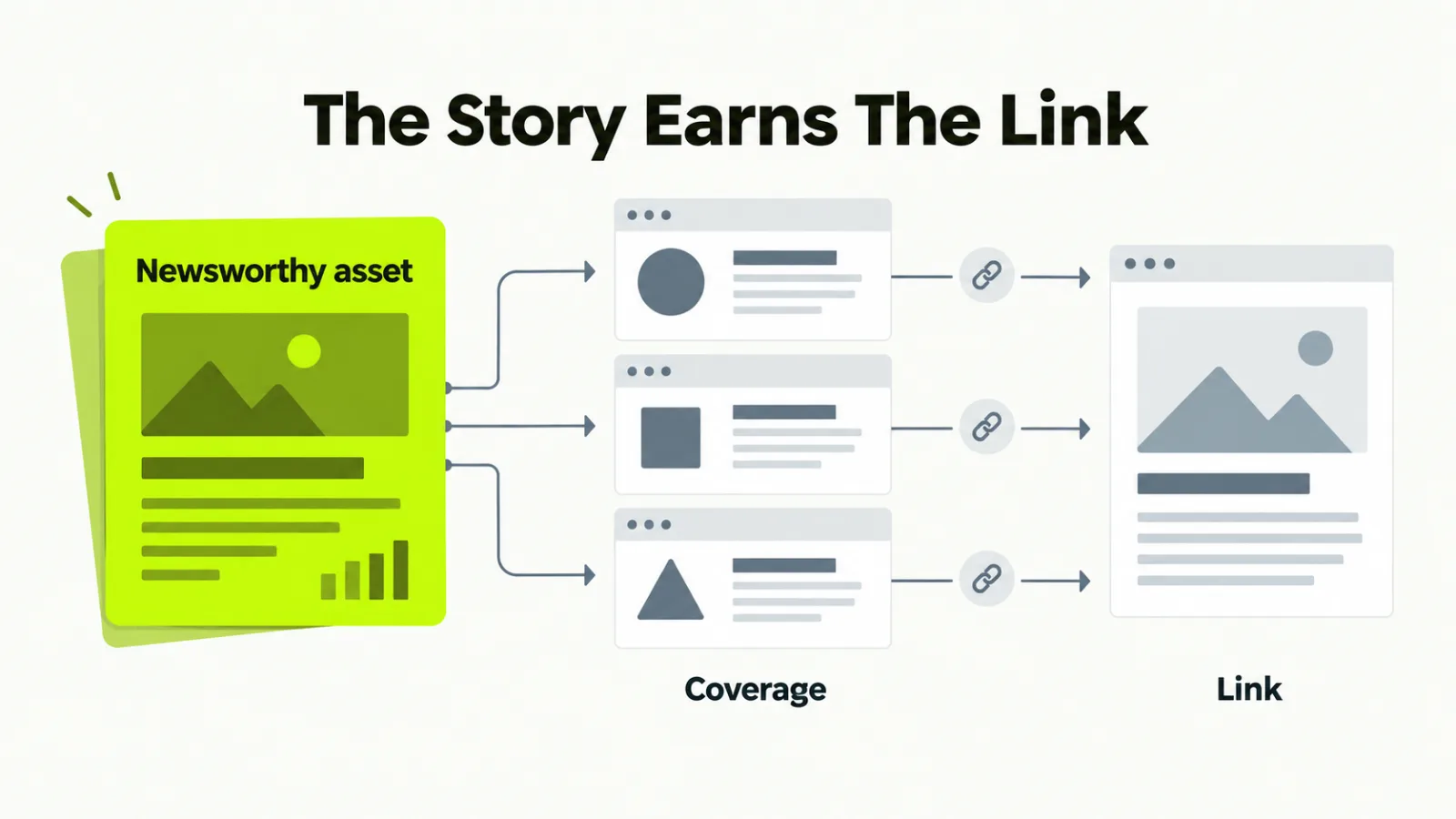
For software companies, the raw material is usually your own data. A payroll platform sits on anonymized salary trends. An observability tool sees real outage patterns. A project management product knows how teams work. Package that into a survey report, a benchmark study, or a sharp take on breaking industry news, and you’ve built something publications and niche newsletters want to reference. You earn contextual coverage on high-authority domains, brand mentions across the wider web, and links no competitor can buy their way into.
Digital PR also feeds the discovery layer now sitting above traditional search. When large language models and AI answer engines build a response, they favor entities that show up again and again across trusted, editorially independent sources. Earned media is precisely that signal.
What is traditional link building?
Traditional link building is the systematic acquisition of inbound links through targeted outreach, guest contributions, resource-page placements, digital partnerships, and broken-link reclamation, aimed at strengthening a site’s topical authority and rankings for commercial keywords. Where digital PR chases coverage, link building chases relevance and intent. The aim is to surround your money pages with links from sources that share your topic, your audience, and your search context.
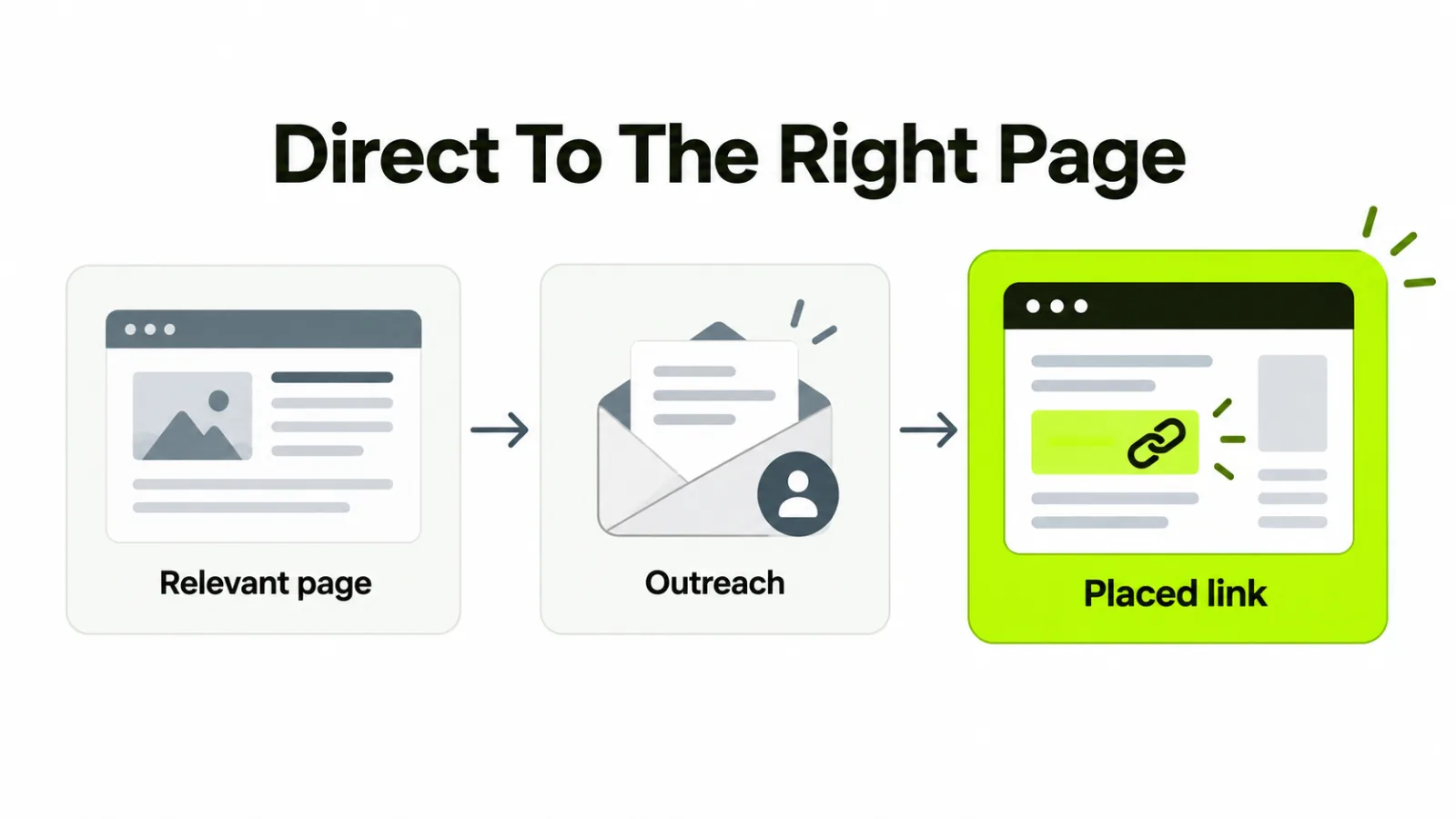
For B2B SaaS, that usually means links from software review directories, complementary tools in your category, industry blogs, and the curated resource lists buyers consult. It includes guest articles on respected sector publications, expert roundups, and partnerships with non-competing vendors who sell into the same accounts. Done right, it builds a defensible topical footprint around the pages you most want to rank: feature pages, comparison pages, high-intent solution content.
This discipline lives or dies on quality control. Manual, relevance-first link building that respects editorial standards is durable and safe. Automated, volume-first tactics that ignore relevance are what draw algorithmic scrutiny and manual penalties. The same “link building” label covers both. That’s exactly why you should pin down how any partner sources their links.
How do digital PR and traditional link building differ?
The core difference is that digital PR earns links as a consequence of newsworthiness and brand storytelling, while traditional link building acquires links through direct, relevance-driven outreach to existing web pages. That one distinction ripples out into philosophy, link quality, brand impact, AI-search effect, risk, and durability.
Philosophically, digital PR is a creative and editorial exercise. It starts with “what story deserves coverage?” Link building is a relationship and prospecting exercise. It starts with “which relevant pages should point to us?” On link quality, digital PR produces high-authority, hard-to-replicate editorial links plus a halo of unlinked brand mentions. Link building produces more topically aligned links at higher volume, with tighter anchor control.
On brand impact, digital PR builds awareness, credibility, and category authority well beyond the link itself, and it pays off across sales cycles. Link building is quieter. It moves search visibility more than reputation. Both help with AI search, but differently: digital PR strengthens your entity across the editorial web models trust, while link building reinforces the topical clusters that tell engines what you’re an authority on.
Risk and durability split too. Earned editorial links are among the most durable, lowest-risk assets in SEO, because a publication chose to cite you. Outreach links sit on a spectrum. Editorially earned, manually placed links are safe and durable. Paid or low-relevance links carry both algorithmic and reputational risk. The table below lays out the trade-offs.
| Dimension | SaaS Digital PR | Traditional Link Building |
|---|---|---|
| Core mechanism | Coverage earned from newsworthy assets | Outreach to existing relevant pages |
| Primary goal | Brand authority, awareness, editorial links | Topical relevance and ranking support for money pages |
| Typical link source | News outlets, trade press, journalists, newsletters | Industry blogs, directories, resource pages, partners |
| Link quality | High authority, hard to replicate, usually contextual | Relevant and consistent, with tighter anchor control |
| Brand impact | High, and it pays off across the funnel | Lower, aimed squarely at search visibility |
| AI-search effect | Builds entity trust across the editorial web | Reinforces topical clusters and subject authority |
| Relative risk | Low when the links are earned | Low to moderate, depending on sourcing standards |
| Speed to first results | Slower, tied to story cycles and pickup | Faster and more predictable per campaign |
| Scalability | Spiky, depends on story strength | Steadier, repeatable monthly cadence |
When should a SaaS company use digital PR?
Use digital PR when your priority is building category authority, earning links that competitors cannot buy, and establishing the brand trust that influences both buyers and AI answer engines. Lead with it when you have proprietary data, a distinctive point of view, or a founder willing to go on record with original insight.
Digital PR fits companies breaking into a crowded market who need to read as a credible challenger, funded startups that have to turn visibility into pipeline fast, and established players defending thought-leadership ground. It’s also the stronger lever for AI Overviews and large language model citations, because those systems reward entities that show up in independent editorial coverage. Want to be the company journalists call and models cite? Digital PR earns that seat. Our SaaS PR services are built around exactly this kind of earned-authority work.
When should a SaaS company use traditional link building?
Use traditional link building when you need to strengthen rankings for specific commercial keywords, support newly published money pages, or fill topical gaps that earned coverage alone will not reach. It’s the dependable engine that turns content investment into search visibility.
This approach suits SaaS companies with strong product and comparison pages that deserve to rank but don’t yet have the link equity to compete. It’s ideal for building topical depth around a category, backing a content cluster, or lifting domain authority steadily on a predictable monthly cadence. Campaigns repeat, and each link is easier to measure, so link building is often the right backbone for a long-term program. See how we run it through our SaaS link building services, and our broader take on SaaS link building.
Why digital PR and traditional link building work best together for SaaS
Digital PR and traditional link building work best together because earned coverage builds the brand authority that makes outreach land, while relevance-driven links convert that authority into rankings for the pages that drive revenue. Treat them as rivals and each hits a ceiling. Combine them and they pay off.
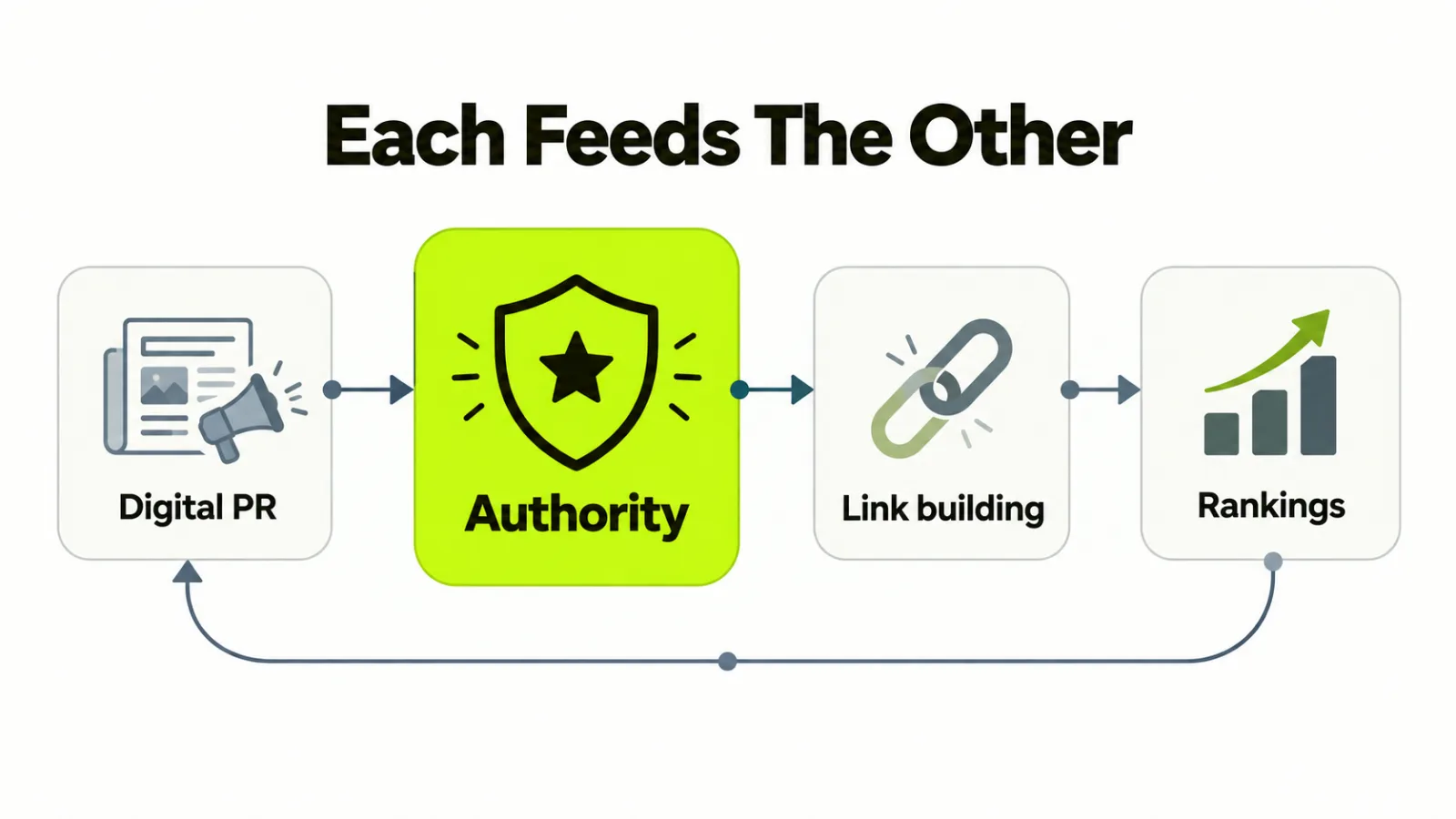
Land a data study in a major publication and you lift your domain’s authority and name recognition in one move. That coverage makes your next round of link-building outreach far easier, because editors and partners already recognize a brand they’ve seen cited. Link building then channels that elevated authority toward feature pages, integration pages, and comparison content, the places buyers decide. One builds the reputation. The other points it where it converts.
The pairing also covers both halves of modern discovery. Earned media strengthens your entity across the independent web AI engines trust, while topical link building spells out what you’re an authority on. You get a program that lifts traditional rankings, AI-answer presence, and brand credibility together, instead of trading one off against the others. Want a strategy that sequences both on purpose? Talk to our team about your authority goals.
Frequently asked questions
Is digital PR just link building with a different name?
No. Digital PR and link building both end in earned authority links, but they’re distinct disciplines. Digital PR creates newsworthy assets to win editorial coverage, with the link as a byproduct, and it generates brand awareness that link building never does. Traditional link building targets existing relevant pages through outreach to support rankings for specific content. They overlap. They aren’t interchangeable.
Which delivers results faster for a B2B SaaS company?
Traditional link building usually shows measurable results sooner, because campaigns repeat and each placement is more predictable. Digital PR can deliver outsized impact, but it’s tied to story cycles and media pickup, so the timing is harder to call. A blended program keeps link building generating steady momentum while digital PR delivers periodic authority spikes that lift the whole effort.
Does digital PR help with AI search and answer engines?
Yes. AI answer engines and large language models tend to surface entities that appear again and again across trusted, editorially independent sources. Digital PR puts your brand in exactly those publications, which raises how often and how confidently AI systems reference your company. Traditional link building backs that up by reinforcing the topical clusters that show engines your areas of expertise.
Are earned editorial links safer than outreach links?
Earned editorial links are among the safest, most durable links you can get, because a publication chose to cite you on its own. Outreach links sit on a spectrum. Manually placed, relevance-first links from editorial sources are safe. Paid or low-relevance links carry algorithmic and reputational risk. The safety of any link-building program comes down entirely to its sourcing standards, which is why you should always ask how the links are acquired.
Can a SaaS company run both with a limited budget?
Yes, if you sequence it deliberately. Many SaaS companies open with a focused link-building cadence to support priority money pages, then layer in periodic digital PR campaigns built around proprietary data or a strong point of view. The two feed each other, so even a modest combined program tends to beat putting the same budget into a single tactic on its own.
How do we decide where to invest first?
Start with your most pressing goal. Need rankings for commercial pages and a steady authority baseline? Lead with traditional link building. Need category credibility, brand awareness, and a stronger presence in AI answers? Lead with digital PR. Most B2B SaaS companies do best with a strategy that sets one as the foundation and adds the other as authority and budget grow.