SaaS Link Building
White Hat Link Building for SaaS: A Test for Any Tactic
White hat link building earns links a publisher chose to give, for reasons they’d put in writing. Black hat buys or manufactures the same links, and the label follows who made the decision.
Both end up as a link in a page. Only one of them survives an audit, a change of editor, or Google working out what the arrangement was.
The post below settles the label with one test, then applies it to the tactics SaaS teams get offered most often.
What is white hat link building?
White hat link building is earning links through work a publisher wants to reference. That means original data, a tool their readers can use, expertise worth quoting, or a story worth covering.
The other side isn’t one tactic. It covers paid placements dressed as editorial, sites built to sell links, automated spam, and swaps where two marketers agree to link to each other.
The label describes the method, not the link. Two identical links in two identical paragraphs can sit on opposite sides of the line. One was requested, the other was invoiced.
Our page on SaaS link building covers the method end to end. This post is about the boundary, and the part of it that gets blurred on sales calls.
Who chose the link, and what changed hands?
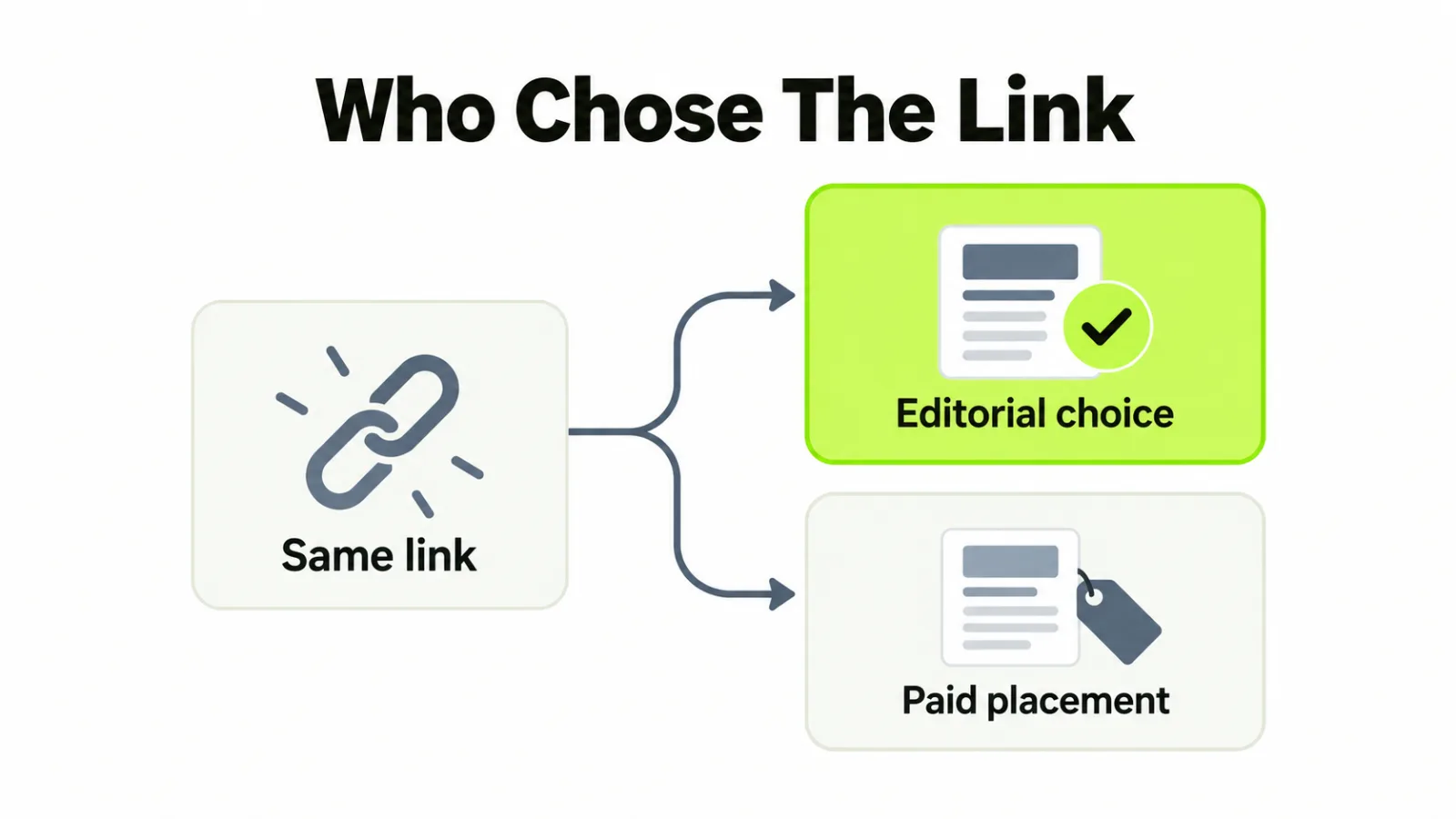
One question sorts most tactics. Would this link still be here if nothing had been exchanged for it?
If the answer is yes, a publisher decided on merit. If it’s no, the payment decided, and Google’s guidelines treat that as a link scheme however the arrangement is worded.
A second question catches what’s left. Would the publisher be comfortable if their readers could see how that link got there? Disclosure is the tell, because a disclosed paid link is marked sponsored and passes no ranking value.
Neither question needs a tool, a score or a vendor’s explanation. They’re the two things a reseller can’t answer comfortably about their own inventory.
White, grey and black, side by side
Here’s the same test applied to the four arrangements a SaaS team runs into.
| Who decided the link | What changed hands | What you carry |
|---|---|---|
| A publisher, on merit | A pitch, a draft, or nothing | A link that survives an audit |
| A publisher, for a fee | Money, undisclosed | A link scheme under Google’s guidelines |
| A network owner | Money, on a site that exists to sell links | Sites that get demoted together |
| Two marketers | A link each, or a third site to hide it | A footprint that’s trivial to spot |
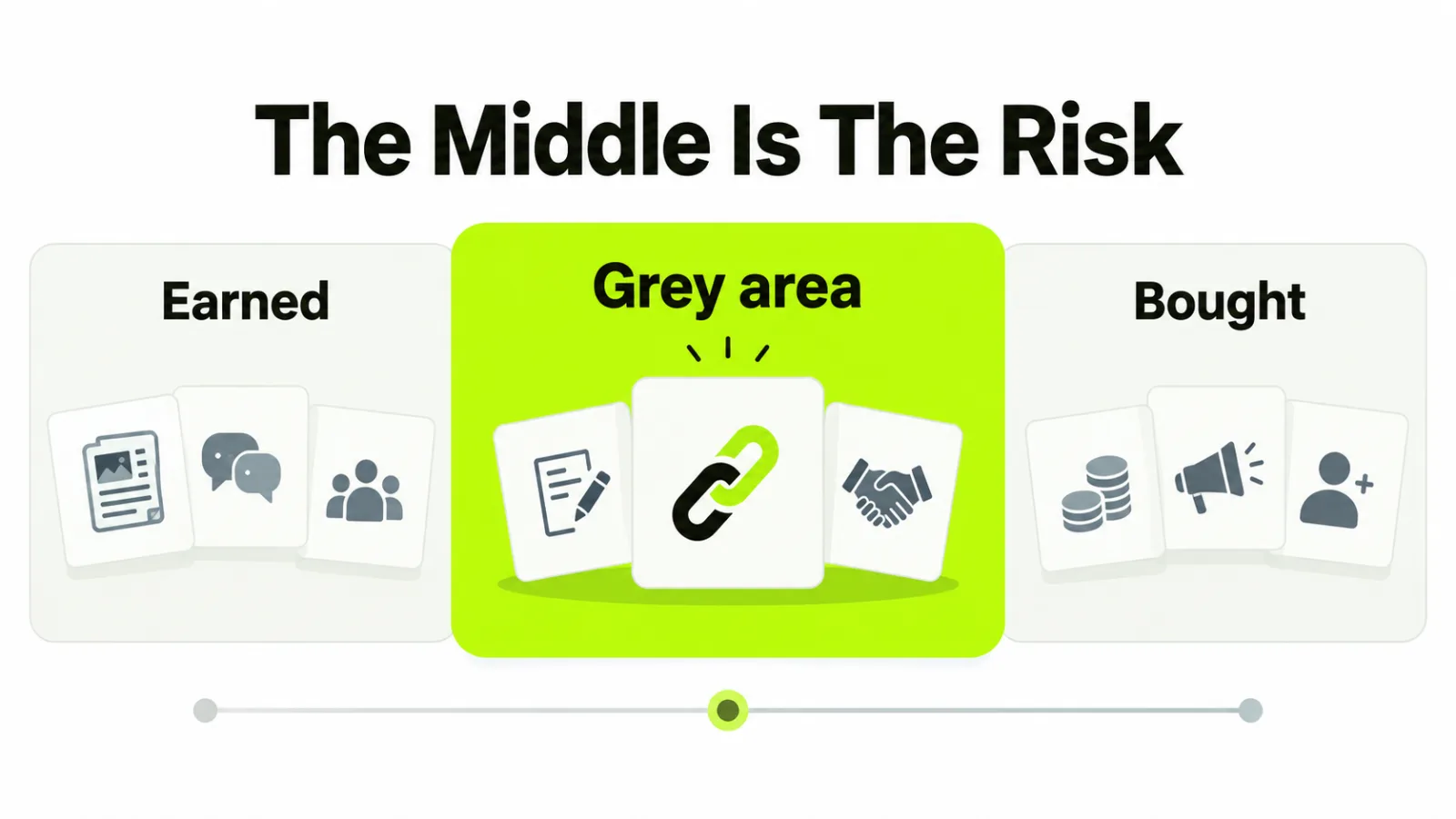
Grey hat is the second row with better manners. It’s a paid arrangement that looks editorial, which is why the people selling it prefer the softer word.
The grey area SaaS teams get sold
Almost nobody gets offered obvious spam. The offers that reach a founder’s inbox look professional, and four of them are worth naming.
Paid placements sold as editorial: A site with real readers charges a fee to run your article with a followed link. The readers are real and the arrangement is still paid.
Insertions bought by the dozen. Niche edits are ordinary editing when an editor adds a source that improves a live page. Ordered in bulk on dormant pages, they’re a rate card.
Swaps, including the three-way kind: You link to them and they link back, or a third site is added so the exchange isn’t direct. The footprint stays in the data either way.
Networks that look like publications. Private blog networks now ship with a masthead, an about page and bylines. The giveaway is that every site in the network accepts every topic.
An honest version of the same tactic exists in each case. Editorial guest posting gets pitched and can be turned down, and that rejection risk is what makes it editorial.
Why the label matters more for SaaS
It matters because the domain is an asset the company can’t re-issue. Organic pipeline gets priced into board decks, fundraising diligence and acquisition conversations.
A demotion doesn’t only cost rankings. It costs the quarter spent diagnosing it, plus the pipeline that was supposed to arrive while the team worked it out.
The timing makes the trade worse than it looks. Earned links build slowly, so the gain from cheating lands first and the bill lands later, usually after the plan was signed off.
Anchor text is where a bought profile shows itself first. Our guide to anchor text penalties covers the patterns that get sites demoted.
How to run white hat link building for SaaS
To earn links at any scale, give publishers something only your company has. For SaaS that’s usually product data, a working tool, or a specialist who can explain something hard.
Publish what your product already knows. Aggregated, anonymized usage data answers questions no survey can. Our guide to linkable assets covers what SaaS teams can build that content sites can’t.
Earn the coverage instead of buying it. Digital PR puts a named expert and a dataset in front of journalists who need both, on deadline.
Collect the links you’ve already earned. Find unlinked brand mentions and ask. The publication already decided you were worth naming, so the link costs one email.
Sequencing that work is its own job. Our link building checklist covers how a campaign runs once the assets exist.
What to ask a vendor before you sign
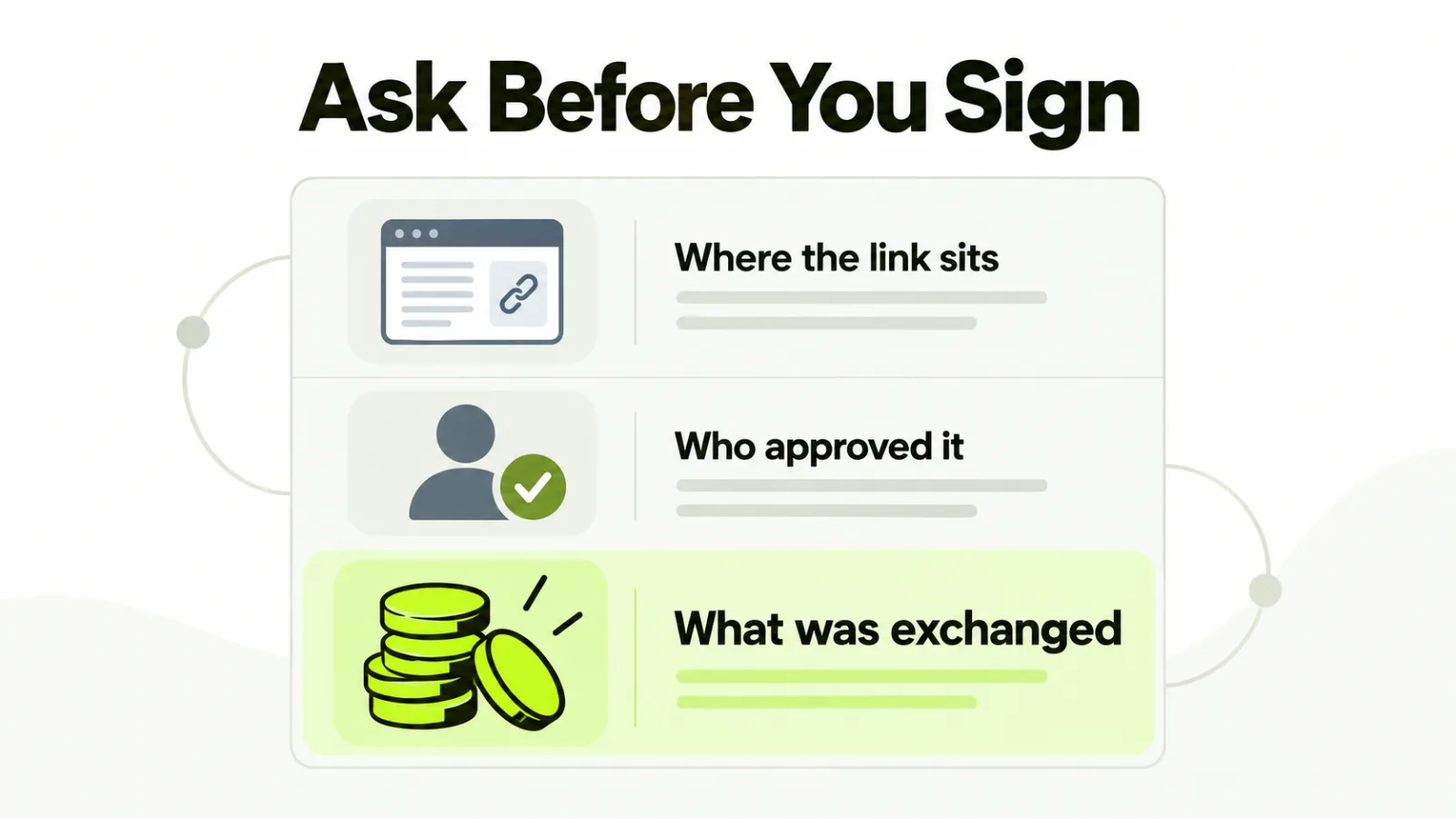
Method questions get better answers than price questions. Five of them separate an earned-links agency from a reseller.
- Where will the links sit, and can I see the sites first?
- Who approves the link on the publisher’s side?
- Does money reach the publisher, in any form?
- What happens when a link is removed six months later?
- Do you guarantee a placement count, or a metric?
The last one is the tell. A guaranteed count means the placements are bought, because nobody can promise an editor’s yes on a schedule.
Our guide to evaluating backlink quality covers the tests worth running on whatever site list you’re shown.
What white hat link building can’t fix
It can’t make a page worth linking to. Outreach aimed at a page with nothing to cite converts badly, and the fix is the page rather than the pitch.
It can’t compress the timeline either. The first links change little, and the gain shows up over quarters, which is exactly why the shortcut keeps selling.
A clean profile won’t rank a thin page on its own. Our post on link building strategies covers which pages deserve the links first.
Frequently asked questions
Is buying links always black hat?
Buying a followed link is a link scheme under Google’s guidelines, whatever the invoice calls it. Paying for a link that’s disclosed and marked sponsored is advertising, and it passes no ranking value by design. The ranking value is the part you can’t buy safely.
Are paid guest posts white hat?
No, when a fee buys the placement. A guest post you pitched, that an editor could have turned down, is editorial work. The same article on a site with a rate card is a paid placement wearing an editorial layout.
Are niche edits white hat?
It depends who chose to add the link. An editor adding a source that improves a live page is ordinary editing. A bulk order of insertions on dormant pages is a purchase, and the pages usually show it.
How long does white hat link building take to work?
Quarters, not weeks. Google has to recrawl the linking pages, and the effect on the target page builds as more of them land. A program judged on its first month is being judged on crawl timing.
Can a SaaS site recover after black hat links?
Usually, and slowly. Stop the acquisition first, disavow the worst sources, then rebuild with links you’d defend. The expensive part isn’t the cleanup, it’s the two or three quarters of progress you don’t get back.
Is grey hat worth it for an early-stage startup?
It trades a short-term gain against the one asset a startup can’t re-issue. A domain that gets demoted at Series A costs more than the links saved at seed, because the pipeline modelled on organic growth stops arriving.