SaaS Link Building
Are Guest Posts Good for SaaS SEO?

Yes, guest posts are good for SaaS SEO, but only when they’re editorial: published on real publications your buyers read, written to inform that audience, and earned on quality rather than bought. The exact same tactic that builds lasting authority done right turns into a liability done wrong. Pumping out guest posts on junk sites that exist only to sell links moves nothing in rankings and can drag your brand down with it. So the answer hinges on execution rather than on the format.
When guest posts help SaaS SEO
Guest posts help when they earn contextual links from relevant, credible publications your buyers read, building topical authority and reach at the same time. A strong article on a respected industry site tells search engines that a trusted name in your category vouches for your expertise. It also puts your brand in front of prospects who are already paying attention.
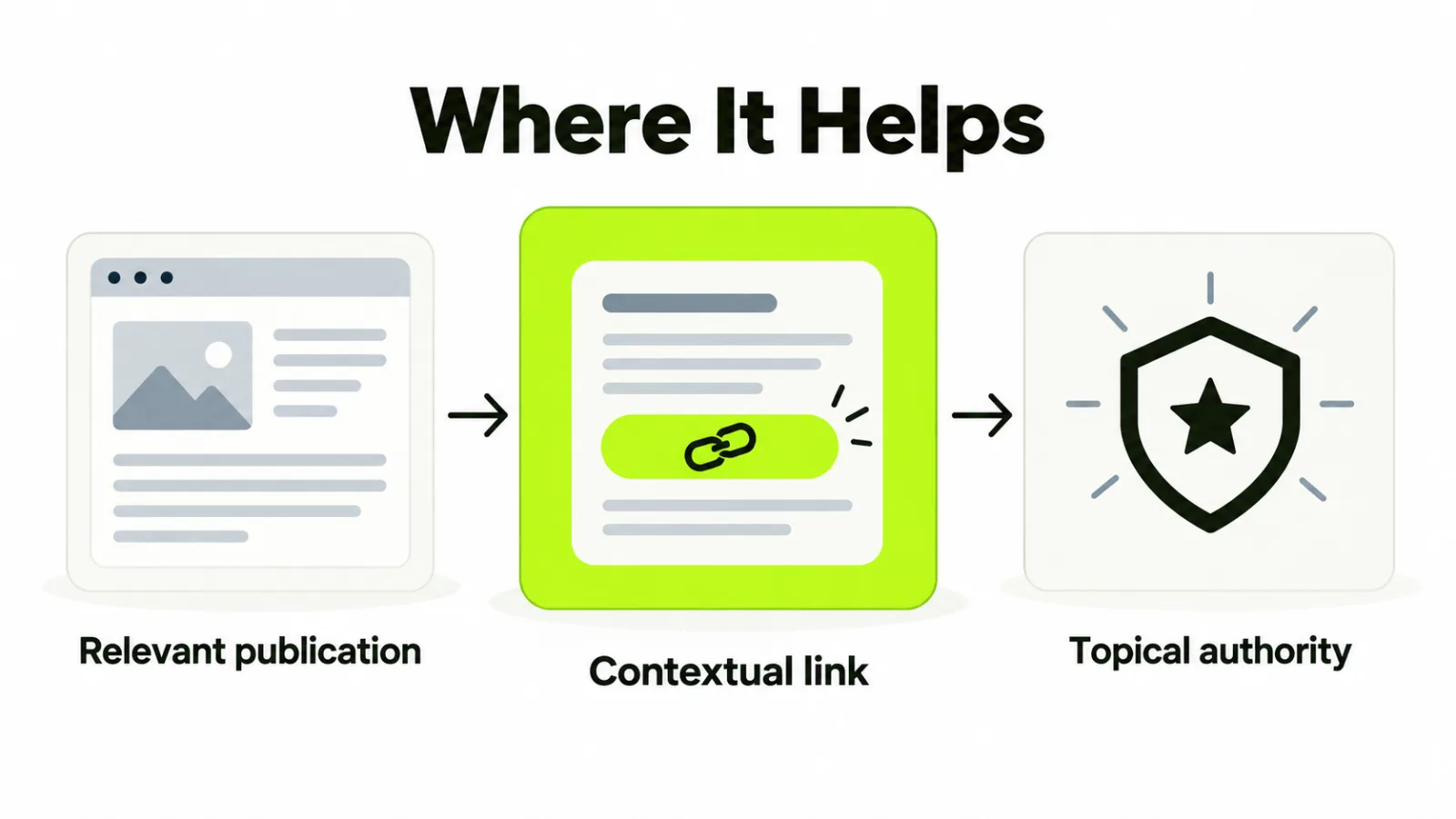
For B2B SaaS, the payoff runs deeper than the link. A sharp guest post proves your expertise to a buying audience, reinforces what your domain is known for, and earns referral traffic and recognition that stack up over months. When the article belongs on the host site and the link reads naturally in context, the placement keeps its value even as search algorithms and AI systems get pickier. That standard drives our SaaS guest posting services.
When guest posts hurt instead of help
Guest posts hurt when they are mass-produced on low-quality sites that publish anything for a fee, because those links carry little relevance and signal manipulation rather than endorsement. Search engines have spent years learning to spot the pattern. That’s precisely why the volume-first version of guest posting lost its punch and picked up real risk.
The tells are easy to read: hosts that take any topic, ship dozens of unrelated articles a week, draw no real readership, and run mainly to cash in on links. Thin or AI-spun copy, exact-match anchors crammed in everywhere, and the same template stamped across a network of look-alike domains all stack the deck against you. For a SaaS brand selling to sharp buyers, sitting next to that kind of content costs you credibility before any algorithm weighs in. The link itself is identical in the HTML. Everything around it decides whether it helps or harms.
Editorial guest posts vs spammy guest posts
The difference comes down to intent and standards: editorial guest posts exist to inform a real audience and earn placement on merit, while spammy ones exist only to plant a link. The table below maps how the two split apart on the factors that decide whether a guest post moves your SEO.
| Factor | Editorial guest post | Spammy guest post |
|---|---|---|
| Host site | Relevant publication with a real audience | Takes any topic, runs to sell links |
| Content | Original, expert, useful | Thin, templated, or AI-spun |
| Link & anchor | Natural, in context, descriptive anchor | Forced, over-optimized exact-match |
| Editorial review | Passes a real editor | None; pay to publish |
| SEO effect | Durable authority and relevance | Little value; potential risk |
How to do guest posting the right way for SaaS
Do guest posting well by vetting sites for relevance and real audience, pitching genuine expertise, and placing links naturally, treating every placement as one you’d proudly show a prospective customer. The discipline lives in your standards rather than your output count.
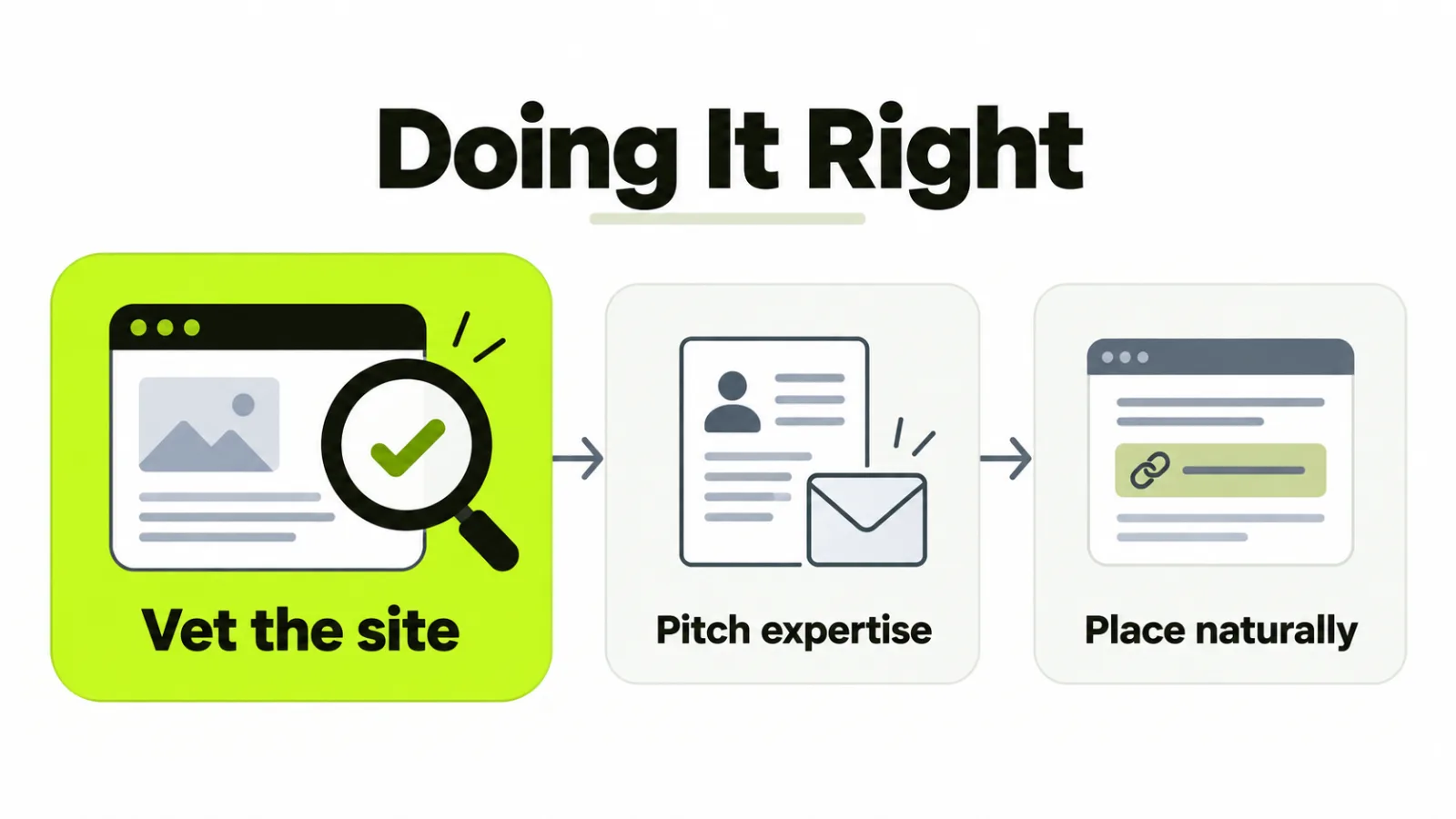
Vet for relevance and readership
Chase publications aligned with your category that have a real audience and editorial standards. Skip the ones that publish anything for a fee.
A best-of list is a related route, because there the author has already written the page. The same fee test applies, and our guide covers which lists are worth getting on.
Lead with expertise
Write articles that would earn their place even without the link: original insight, concrete examples, and a point of view worth reading.
Keep links and anchors natural
Drop the link where it helps the reader, with descriptive anchor text instead of forced exact-match keywords.
Prioritize quality over quantity
A handful of strong editorial placements builds more authority than a pile of weak ones.
Done this way, guest posting becomes one durable piece of a wider authority system rather than a tactic standing on its own. It performs best next to digital PR, brand mentions, and content-led assets, the way we structure our full SaaS link building services. Want to see where editorial guest posting fits your strategy? You can talk to our team.
Frequently asked questions
Are guest posts good or bad for SEO?
Good, when they’re editorial: published on relevant, credible sites and written to inform a real audience. Bad, when they’re cranked out on low-quality sites that sell links. The format itself is neutral. Quality, relevance, and intent behind each placement decide whether it builds authority or invites risk.
Does Google penalize guest posting?
Google doesn’t penalize guest posting as a format, but it does go after guest posts built mainly to game rankings, especially at scale, with keyword-stuffed anchors on weak sites. Editorial guest posts on relevant publications with real audiences and genuine editorial standards stay a legitimate way to earn authority. The risk lives in spammy execution rather than in contributing useful articles.
How do I know if a site is good enough to guest post on?
Look for topical relevance to your category, a real readership and organic visibility, named author bylines, and signs of actual editorial review. Steer clear of sites that take any topic, run a high volume of unrelated articles, or show the footprints of a link-selling network. One quick test: would the placement matter even if it passed no link at all?
How many guest posts should a SaaS company publish?
There’s no magic number: quality and relevance beat volume every time. A steady cadence of strong editorial placements on relevant publications does more for authority than a batch of weak ones. The right pace depends on your category, your goals, and how many relevant opportunities you can earn without dropping your standards.
Do guest posts help with AI search visibility?
They can, indirectly. AI answer engines lean on the same authority and topical-relevance signals as traditional search, so editorial guest posts that tie your brand to credible publications in your category can sharpen how AI systems recognize and cite you. As with rankings, the benefit flows from relevant, high-quality placements rather than from volume.
Should I pay for guest posts?
Paying a site purely to publish a link is the transactional kind of placement that carries little value and real risk. Investing in the work behind genuine editorial placements is a different thing entirely, and worth it: research, outreach, expert content. The line is simple: does the link exist because your content earned it, or because money changed hands for the spot?