Cybersecurity SaaS
Cybersecurity SEO Agency for B2B SaaS: Link Building and Digital PR
Security buyers are paid to be skeptical. We earn authority through original threat research and researcher credibility that CISOs, search engines and AI assistants trust.
Pay per delivered placement. Month to month, no lock-in.
What a placement earns from a paid-to-be-paranoid audience
What you get
What’s included in a cybersecurity link building engagement
Security-relevant prospecting
We target the security media, research outlets, and CISO communities your buyers trust.
Original threat research
Data-led research and findings that security press and practitioners actually cite.
Digital PR to security media
Earned coverage and expert citations from the outlets that build security credibility.
Technically-credible content
Accurate, defensible content that holds up to an expert, skeptical reader.
Researcher & brand credibility
Authority built the way security brands earn it, through genuine expertise, never spam.
Reporting tied to pipeline
Rankings, AI citations, relevant referring domains, and sourced demand, in plain numbers.
A cybersecurity SEO agency has to win over buyers who assess vendors for a living. We handle the off-page side for B2B security SaaS: editorial link building, digital PR and the authority that gets a security product named by search engines and AI assistants.
We don’t do technical SEO audits or write your documentation. Our work starts where your site ends, with the research coverage, practitioner references and press mentions that make a security team take a vendor seriously.
Below is how that works in a market where hype gets punished. It covers where security authority comes from, how research earns links, what to avoid, and how a program runs in its first quarter.
What does a cybersecurity SEO agency do?
It depends which part of SEO you’re buying, and vendors rarely say. There are three parts.
- Technical SEO: Whether search engines can crawl, render and index your site. Your engineers or a technical consultant own this.
- Content: Product pages, documentation, comparison pages and research write-ups. Your content and research teams own this.
- Authority: Links and mentions from other sites. Nobody inside the company can produce these directly, because they’re other people’s decisions.
We work on the third part only. That means link building, digital PR, brand mentions and AI-search authority. We’ll tell you which of your pages can earn links and which can’t, but we won’t rebuild them for you.
If you need all three parts from one firm, our comparison of SaaS link building agencies includes full-service options.
Why is SEO different for cybersecurity companies?
It’s different because the audience is trained to look for what a vendor is hiding, and the search results are owned by standards bodies and very large incumbents.
The buyer is a professional sceptic. A CISO or security engineer evaluates claims for a living. They read independent research, ask peers in private channels, and discount anything that sounds like marketing. A sponsored article doesn’t just fail with this reader. It counts against you.
The definitions belong to someone else. Search for a security concept and the top results come from NIST, MITRE, OWASP and vendors with a decade of research archives. A new company has to earn its way into results that institutions already hold.
The topic is one Google treats carefully. Its guidance on helpful, reliable content says its systems weigh trust signals more heavily for topics that could significantly affect people’s financial stability or safety. Advice on protecting systems and data falls in that range.
Put together, that makes source quality the main variable. Fifty links from general technology blogs won’t do what three references from practitioners and security press will. Our guide to evaluating backlink quality covers how to tell them apart.
Where does cybersecurity authority come from?
It comes from the places security people already check when they want to know whether something is real.
| Source type | Examples | Why it carries weight | How a link is earned |
|---|---|---|---|
| Security trade press | Dark Reading, BleepingComputer, The Record, SecurityWeek, CSO Online, Help Net Security | Read by practitioners and buyers every day | Original research, technical commentary, incident analysis |
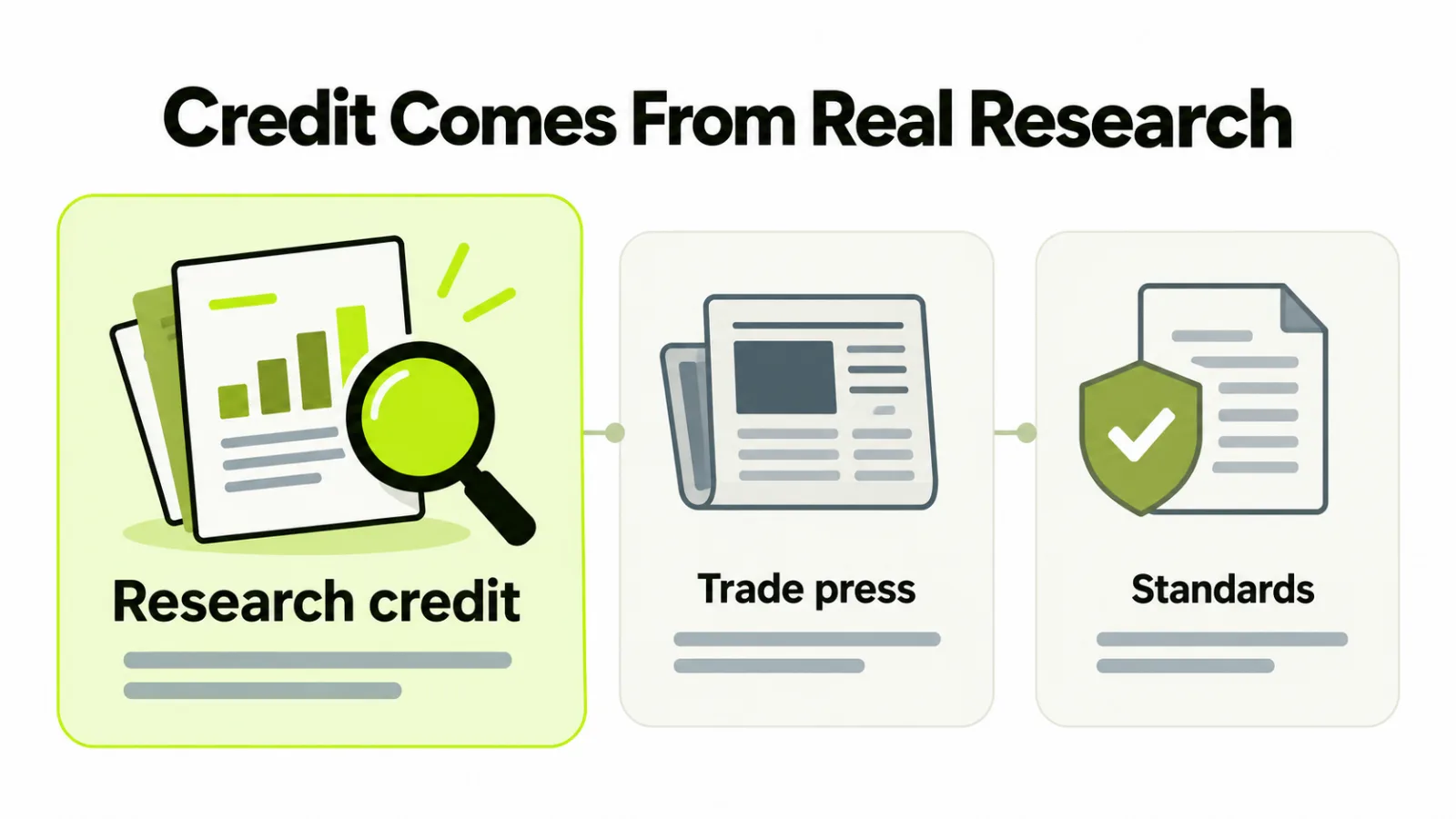
| Research credit | CVE records, vendor advisories, conference talks | Proves the team finds real problems | Doing the research and disclosing it properly |
| Frameworks and standards | MITRE ATT&CK, NIST Cybersecurity Framework, OWASP projects | The shared language buyers use to compare tools | Useful mappings and contributions others reference |
| Practitioner communities | Security forums, mailing lists, open-source repositories | Where tools get recommended peer to peer | Free tools, detection content, honest participation |
| Analysts and review platforms | Industry analyst firms, peer review sites | Feeds enterprise shortlists and AI answers | Briefings and genuine customer reviews |
| Marketplaces and integrations | SIEM and SOAR app directories, cloud marketplaces | Shows the product fits the buyer’s stack | Building and listing the integration |
| Paid awards and “top vendor” lists | Pay-to-enter award programmes, sponsored rankings | None with practitioners, who know how they work | They’re bought |
The publications are examples of where attention sits. They aren’t a promise of placement. Security editors turn down most pitches, and that rejection rate is what makes their coverage worth having.
One row deserves a note. Paid awards are common in security marketing, and buyers know which programmes charge an entry fee. The badge may help a sales deck. It does nothing for authority.
How does security research earn links?
Research earns links because it’s the one thing a security journalist can’t write without. A product launch is optional news. A new attack technique or a measured trend is a story.
There are four kinds of research a vendor can publish, and they earn links in different ways.
Vulnerability research: Finding a flaw in widely used software, reporting it to the maintainer, and publishing after a fix. The record lasts. The CVE Program catalogues publicly disclosed vulnerabilities, and each record points back to its references, including the finder’s advisory.
Some vendors go a step further and become a CVE Numbering Authority. The CNA programme authorises organisations to assign CVE IDs within an agreed scope. It’s a commitment, and it’s also a standing reason for other sites to reference your advisories.
Telemetry reports: What your product observed across customers, aggregated and anonymised. The model here is the long-running annual report. Verizon’s Data Breach Investigations Report comes out every year, and it’s cited across the industry for the twelve months that follow.
Analysis of known exploitation: CISA maintains the Known Exploited Vulnerabilities catalog, which it describes as “the authoritative source of vulnerabilities that have been exploited in the wild”. When an entry is added, defenders want detection guidance fast. A vendor that publishes something technically useful that day gets referenced.
Framework mappings. MITRE ATT&CK is a public knowledge base of adversary tactics and techniques. Detection content, coverage analysis and technique write-ups mapped to it get linked by practitioners building their own programmes.
Two rules keep research from backfiring.
- Disclose before you publish: Coordinated disclosure comes first. A vendor that drops an unpatched flaw for attention loses the community it was trying to reach.
- Score honestly: Severity inflation is noticed. The Common Vulnerability Scoring System exists so that “critical” means something, and reporters check.
We don’t do the research. Your team does. Our part is turning it into coverage: finding the angle, briefing the right reporters under embargo, and making sure the write-up on your site is the page everyone links to. Our guide to linkable assets covers how to structure that page.
Which link building methods work for security SaaS?
Research is the strongest method, and not every company has it yet. These six others work alongside it or in its place.
Expert commentary during incidents: Reporters covering a breach need someone who can explain the technique without speculating about the victim. A researcher who gives accurate, restrained comment gets called again. One who uses an incident to sell gets dropped.
Free tools and detection content: An open-source scanner, a set of detection rules, a cheat sheet. Practitioners link to things they use, and those links come from exactly the sites buyers trust.
Standards-based explainers. A clear guide to implementing part of the NIST Cybersecurity Framework, or a walkthrough of an OWASP Top 10 category with working examples. These earn steady references from consultants, educators and compliance teams.
Conference talks, written up: A talk reaches a room. The write-up, slides and code reach everyone who cites it later. Many good talks never get a proper page, which wastes most of their link value.
Integration listings: Each SIEM, SOAR, identity provider and cloud platform you connect to has a directory. Those are relevant links from inside the buyer’s environment, and partners often co-announce.
Comparison roundups and reviews: Security buyers do read “best tools for” articles, and AI assistants draw on them heavily. Earning inclusion without paying for it is covered in our guide to listicle link building.
Plain guest posting works less well here than in other SaaS categories. Security publications that accept contributed articles hold them to a technical standard, and vendor bylines that read as product pitches are rejected. When it works, it’s because the article taught the reader something.
How should a vendor handle press during a major incident?
Carefully, and only if you have something accurate to add. A widely reported breach or vulnerability is the moment security reporters most need expert sources, and the moment a vendor can do itself the most harm.
These rules keep commentary useful.
- Comment on the technique, not the victim. Explain how the attack class works and how defenders can check for it. Don’t speculate about what the affected company did wrong.
- Don’t guess at attribution. Naming an actor without evidence is the quickest way to be quoted once and never again.
- Never say your product would have stopped it. You don’t know that, the reporter knows you don’t, and it reads as selling on someone else’s bad day.
- Offer something a defender can use. Detection logic, indicators, a configuration check. Practical detail gets linked.
- Be fast and be right. A correct comment in two hours beats a polished one tomorrow. A wrong one at any speed costs the relationship.
- Stay quiet when you have nothing. Not every incident needs your view.
The write-up on your own site matters as much as the quote. A clear technical explanation, published the same day and updated as facts emerge, is what other writers link to for weeks afterwards.
We set this up in advance. That means agreed topics, a named reviewer on your research team and a short approval path, so a comment can go out while the story is still being written.
How does the plan change by security segment?
The segments share a buyer title and little else. Someone buying identity tooling and someone buying application security testing sit in different teams and read different sources.
| Segment | Who evaluates | Strongest link asset | Where it gets cited |
|---|---|---|---|
| Endpoint, XDR and managed detection | SOC leads, security operations | Threat reports, detection engineering write-ups | Security press, practitioner blogs, ATT&CK-mapped resources |
| Identity and access | IAM architects, IT leadership | Identity attack research, configuration guides | Identity community resources, IT publications |
| Cloud security | Cloud and platform security engineers | Misconfiguration data, open-source scanners | Cloud provider ecosystems, engineering blogs |
| Application security and DevSecOps | AppSec leads, engineering managers | Vulnerability research, secure-coding references | Developer communities, OWASP-adjacent resources |
| Governance, risk and compliance automation | Compliance leads, security managers, founders | Framework guides, audit-readiness templates | Compliance blogs, startup and SaaS publications |
| Email security and awareness training | IT managers, security awareness leads | Phishing trend data, simulation benchmarks | IT press, HR and training publications |
| Data security | Data protection officers, security architects | Exposure research, classification guides | Privacy and data-governance publications |
The compliance automation row behaves differently from the rest. Its buyers are often founders and operations leads preparing for a first audit, so the sources that matter include startup media and SaaS communities, and the tone is closer to general B2B software.
What should security vendors avoid?
Avoid whatever a security practitioner would call out in public. In a community this connected, a bad tactic becomes a screenshot.
- Fear as a pitch: Subject lines built on a breach that happened to someone else. Reporters filter these out, and the ones who remember your name remember it for that.
- Bought links: Google’s spam policies classify buying or selling links for ranking purposes as link spam. A security vendor caught manipulating search results has a credibility problem that goes well past SEO.
- Undisclosed paid placements. Google asks for paid links to be marked as sponsored. A disclosed placement passes no ranking value. An undisclosed one is a risk you chose.
- Manufactured reviews. The FTC’s rule on fake reviews prohibits reviews from people without real experience of the product and undisclosed reviews by insiders.
- Statistics with no source: “Attacks rose 300%” with nothing behind it. Security writers trace numbers back, and an untraceable one ends the conversation.
- Reports without data: A “threat landscape report” that restates other vendors’ findings earns nothing, because there’s nothing in it to cite.
We hold our own work to the same rule. Our page on white hat link building sets out the test we apply to every tactic.
How do AI assistants decide which security tools to recommend?
They recommend tools that turn up repeatedly in the sources they retrieve. Security engineers ask assistants for shortlists and comparisons all the time, so this is already a live channel.
Google’s documentation on AI features is clear that nothing special is required: “You don’t need to create new machine readable files, AI text files, or markup to appear in these features.” A page needs to be indexed and eligible to appear with a snippet.
What changes is how many searches sit behind one answer. Google describes a “query fan-out” technique, where AI Overviews and AI Mode issue “multiple related searches across subtopics and data sources” to build a response.
For a question like “which cloud security tools detect misconfigured storage”, the related searches cover features, pricing, integrations, independent tests and peer reviews. The tools named in the answer are the ones present across several of those.
That favours vendors with three things.
- Coverage in independent sources: Research cited by press, inclusion in honest roundups, reviews on peer platforms.
- Documentation that answers questions directly: Assistants quote pages that state what the product does, what it integrates with and what it doesn’t cover.
- Consistent facts everywhere: Category, deployment model, certifications and integrations should match across your site and third-party profiles. Our guide to entity authority explains why.
One technical check is worth doing today. OpenAI’s crawler documentation lists separate bots for search and for model training. Security teams sometimes block all of them by default, which removes the company from ChatGPT’s search answers as well.
We can’t guarantee an AI citation and neither can anyone else. We track a fixed prompt set and report changes. Our guide on getting cited by AI has the method.
Which pages on a security vendor’s site earn links?
Research and tools earn them. Product pages mostly don’t, and that’s fine as long as the site passes authority from one to the other.
| Page type | Can it earn links? | Role in the plan |
|---|---|---|
| Research write-ups and advisories | Yes, strongly | The main link target |
| Free tools and detection content | Yes, from practitioners | Steady, highly relevant links |
| Annual or quarterly data reports | Yes, on a cycle | A press moment each release |
| Framework and standards explainers | Yes, slowly | References from consultants and educators |
| Documentation | Sometimes | Cited in forums and by AI assistants |
| Product and solution pages | Rarely | Receive authority through internal links |
A common gap is the research blog that never links to the product it relates to. The authority arrives and stays on the blog. Our post on SaaS backlink strategy covers how to route it.
What do the first 90 days look like?
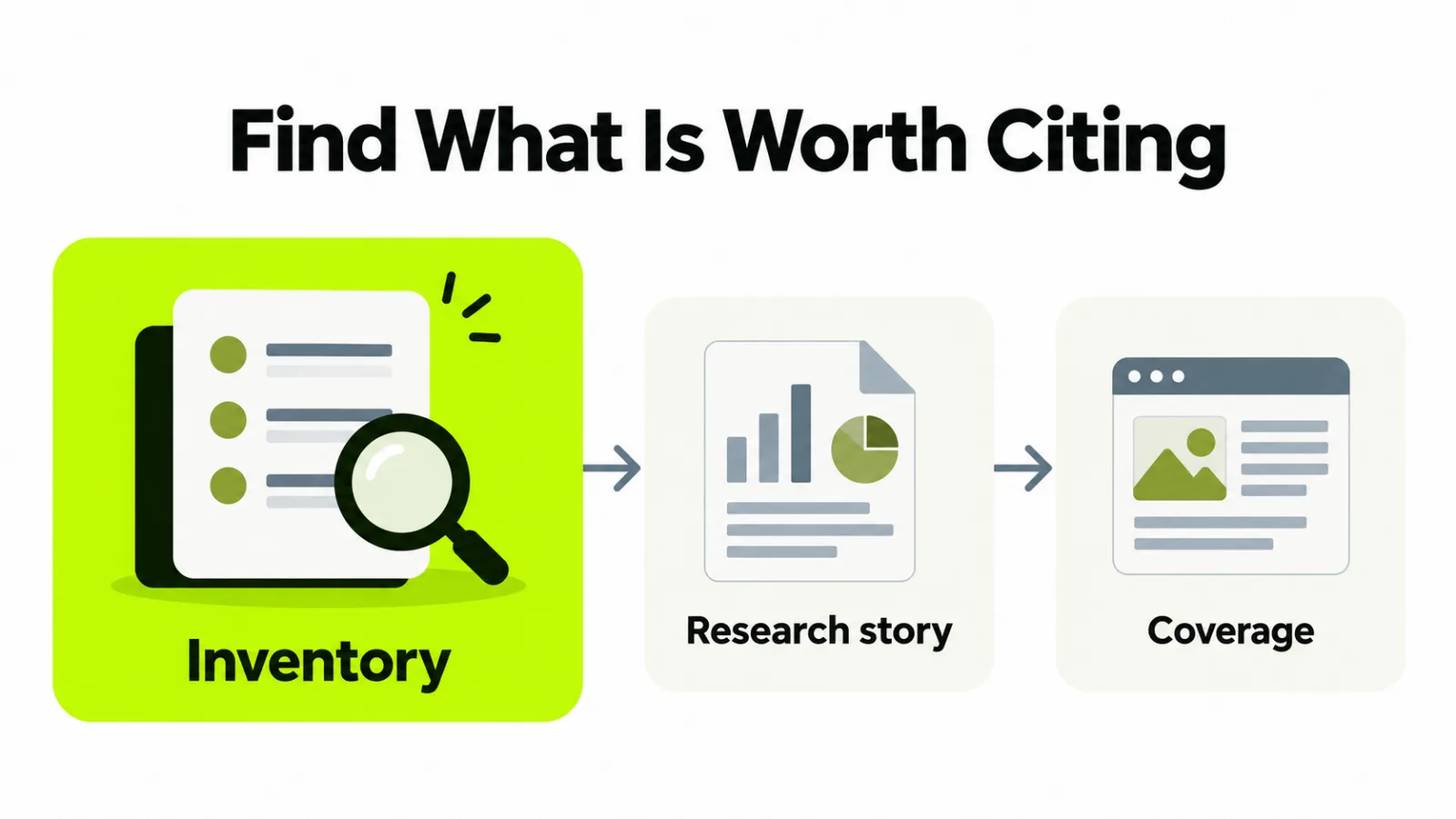
The first weeks are about finding what you already have that’s worth citing. Most security vendors are sitting on more than they realise.
| Weeks | Work | What you see |
|---|---|---|
| 1 to 2 | Review of your link profile and close competitors. Inventory of research, tools and data. Review process agreed with your research lead. | A written plan and a list of citable assets |
| 3 to 6 | First research story prepared. Commentary bench set up. Unlinked mentions reclaimed. Integration listings completed. | Reclaimed links, first reporter conversations |
| 7 to 12 | Coverage begins to land. Second asset in preparation. Reporting starts. | A placement log with the reasoning for each |
Technical review is part of the workflow. Nothing goes to a reporter until someone on your research team has checked it. A wrong detail in a security pitch costs more than a missed deadline.
We don’t sell a fixed number of links per month. Our pricing page shows typical monthly budgets by company stage, and link building budget by stage explains the reasoning.
How is a cybersecurity program measured?
On the quality of sources first, then visibility, then pipeline.
- Relevant referring domains: New links from security, IT and engineering sources. General-interest links are noted and not counted as progress.
- Research pickup: How many independent sites referenced each piece of research, and which ones.
- Rankings for evaluation queries: Category terms, “alternative to” terms and tool comparisons, tracked as a fixed set.
- AI answer presence: Whether the product is named for a fixed list of practitioner prompts.
- Organic pipeline: Trials, demo requests and opportunities that began in search.
Security sales cycles are long, and they often end in a proof of concept, so pipeline lags by quarters. We report leading indicators monthly and say which haven’t moved. The full list is in our guide to SaaS SEO metrics.
How do you choose a cybersecurity SEO agency?
Test whether they understand the audience before you test anything else. These questions do that quickly.
- Who checks technical accuracy before a pitch goes out?
- Will you pitch our product during someone else’s active incident?
- Can I see every site before a link goes live?
- Does money reach the publisher in any form?
- How do you handle embargoes and coordinated disclosure timelines?
- What will you refuse to do?
- Do you guarantee a number of placements?
The right answer to the second question is no. The right answer to the last one is also no, because a guaranteed count means the placements are purchased.
Google’s own guide to hiring an SEO makes the same point about guarantees, and recommends asking any provider to explain what they plan to do in terms you can check.
We aren’t the right fit if you need technical SEO or content written for you, if you have no research, tools or data and no plan to produce any, or if the budget is below the level where this work builds on itself. Our pricing page puts that at about $3,000 a month.
If the fit looks right, book a strategy call and we’ll go through what you already have that’s worth citing.
Frequently asked questions
What makes cybersecurity SEO different from general B2B SEO?
The audience and the competition. Security buyers distrust marketing by profession and rely on independent research and peers. The search results for security concepts are held by standards bodies and large vendors. Both raise the value of credible sources and lower the value of ordinary links.
Do we need original research before starting?
It helps a great deal, though it isn’t required on day one. Free tools, detection content, framework guides and expert commentary all earn links. We start with an inventory, because most security vendors already hold data or internal tooling that could be published.
Which publications matter for security vendors?
Security trade press, practitioner blogs and communities, and the IT or engineering publications your specific buyer reads. The mix differs by segment. An identity vendor and an application security vendor need different source maps, which we build in the first two weeks.
Are security awards and vendor rankings worth it?
For authority, generally no. Many award programmes charge an entry or licensing fee, and practitioners know which ones. They may have a use in sales material. They don’t earn the kind of trust that independent coverage does, and paid links from them shouldn’t pass ranking value.
Can you guarantee coverage in a specific publication?
No. Editors decide what runs, and security editors reject most of what they’re sent. An agency that guarantees a named outlet is selling a paid placement. We commit to the quality of the pitch and the fit of the target.
How long does it take to see results?
Reclaimed links and listings arrive in the first month or two. Research coverage follows the publication date of each piece. Ranking changes for competitive terms usually take two to three quarters, and pipeline lags behind that by the length of your sales cycle.
Should we block AI crawlers on a security site?
Decide per crawler. Blocking a training crawler and blocking a search crawler have different effects, and the second can remove you from AI search answers. Check your robots.txt against each provider’s published crawler list before applying a blanket rule.
Do you do technical SEO or write our content?
No. We do link building, digital PR, brand mentions and AI-search authority. We’ll advise on which pages can earn links and work alongside your content team, your research team or another agency.
More on cybersecurity SaaS
- Cybersecurity SaaS SEO
- Cybersecurity SaaS Guest Posting
- Cybersecurity SaaS Digital PR
- Cybersecurity SaaS Content Marketing
- Case study (composite, anonymised): cloud-native SIEM, top-3 against Splunk and Datadog.
Reporting
How results are measured
We report on rankings, AI citations, referring domains and pipeline. We don’t show numbers we can’t stand behind.
Representative results
- DR38 to DR58 in 12 months, HIPAA compliance healthtech SaaS.
- Pipeline contribution 6% to 22%, mid-market customer success SaaS.
- Top-3 against Splunk and Datadog, cloud-native SIEM SaaS.
Composite, anonymized accounts based on real client engagements. Client identities and exact metrics are generalized for confidentiality.