SaaS Link Building
Testimonial Link Building: When Vendor Testimonials Earn Links
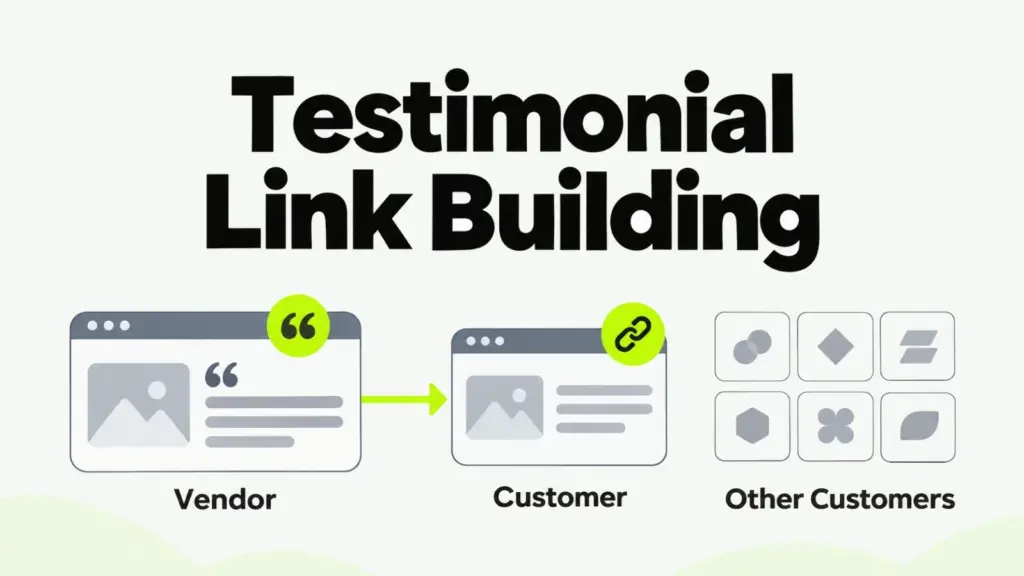
Testimonial link building earns a link worth having only when you’re a real customer, the vendor’s buyers overlap with yours, and the vendor credits you on its own terms. A testimonial traded for a followed link moves toward Google’s link spam line. A quote for a tool you never used is a fake endorsement under FTC rules.
What is testimonial link building?
Testimonial link building is the practice of writing a testimonial for a product you use so the vendor publishes it with your name, company and a link to your site. The link usually sits on a customer page, a case study or a pricing page next to your quote.
The usual pitch is simple. Find the vendors in your stack, offer each a quote, and collect links from domains with strong authority. Vendors welcome it because they need social proof, and you get your brand on a site with a large audience.
The weak spot is relevance. A project management vendor’s customer page often links to hundreds of companies in every industry, so the link says little about your market. Treat testimonial links as a small supplement to earned editorial coverage, never as the plan.
When does a vendor testimonial earn a link worth having?
A vendor testimonial earns a link worth having when the mention sits on a relevant, indexable page and reflects real use of the product. Domain authority alone is a poor reason to pursue one, because a logo wall linking to every customer tells search engines nothing about your category.
A testimonial link is worth pursuing when four things hold:
- You use the product and can name a result you would repeat to a peer.
- The vendor’s customers overlap with your buyers, so the mention reaches people who could buy from you.
- The vendor publishes the quote on an indexable page with a crawlable link to your site.
- The page gives your quote context, such as a case study, instead of burying it in a grid of logos.
A testimonial is a thin substitute for something people want to cite. If your own site has nothing worth linking to yet, start with the guide to linkable assets that earn links.
Skip the vendor that only wants your logo for a crowded wall. Your link sits among hundreds of others and earns almost nothing.
Is trading a testimonial for a link against Google’s rules?
Trading a testimonial for a link sits close to Google’s line. Google’s spam policies list exchanging goods or services for links as an example of link spam. A quote you write because you use the product, with the vendor crediting your company, is ordinary attribution. The difference is whether the link is the price.
The working rule is to never make the link a condition. Offer the quote, let the vendor decide how to credit you, and accept a nofollow or sponsored attribute without argument. Google’s guidance on qualifying outbound links explains when sites mark links that way.
Scale is the tell. Sending testimonial offers to dozens of tools you barely know is a link scheme dressed up as feedback. Partners you already integrate with are the cleaner route, covered in our piece on link building through SaaS integrations.
What do the FTC rules on endorsements change?
The FTC’s rules on endorsements require a testimonial to reflect the honest opinion and real experience of the person giving it. The FTC’s Endorsement Guides (16 CFR Part 255) set that standard, and its rule on consumer reviews and testimonials (16 CFR Part 465) bans fake testimonials, including ones from people with no real experience of the product. A quote for a tool you never used is a fake endorsement, whatever it does for SEO.
Disclosure is the second issue. If the vendor gave you something of value for the quote, such as free months or a discount, the FTC treats that as a material connection that should be disclosed. Whether a followed link counts as something of value is a question for counsel.
This is general information, not legal advice. Hand compliance questions to counsel, especially if you sell in a regulated market.
Which vendor relationships are worth a testimonial?
The vendor relationships worth a testimonial are the ones where you have real use, a result you can name and buyers in common. Integration partners come first, everyday tools outside your category second, and products you only trialed don’t qualify at all.
| Relationship | What to offer | What to avoid |
|---|---|---|
| Integration partner your buyers also use | A co-written case study with setup details and results | A one-line quote that hides the integration |
| Tool you use daily outside your category | A short, specific quote, with any link as a bonus | Asking for a followed link as a condition |
| Tool you trialed once or never used | Nothing. You have no honest experience to share. | Any testimonial at all |
Vendor customer pages often show up when you study a rival’s link profile. Before you copy them, read which competitor backlinks you can earn honestly and which you should leave alone.
How do you offer a testimonial without turning it into a trade?
Offering a testimonial without making it a trade means you lead with the experience and let the vendor decide on credit. The order of the steps below matters: relevance and honesty come before you ever look at the link.
- List the tools your team uses every week and can describe with a concrete result.
- Cut any vendor whose customers would never buy from you.
- Check the vendor’s customer and case-study pages for indexing, context and links to customers.
- Offer the testimonial through your account manager or the vendor’s customer marketing team.
- Leave the link out of the offer, and give your name, role and homepage URL when they ask how to credit you.
- Accept the link attribute they choose, and log the placement in your backlink monitoring.
A good testimonial often opens a bigger conversation: a co-written case study, a webinar or a spot on the vendor’s show. Our page on podcast guest appearances for SaaS covers that next step.
Frequently asked questions
One relevant link from a vendor in your market can help a little. Links from crowded logo walls rarely carry much weight. Nobody can promise a ranking change from testimonial links.
You can, as normal attribution to a real customer. If you promised the link as payment for the quote, qualify it with rel=”sponsored” or rel=”nofollow” in line with Google’s guidance on outbound links.
You can ask once, but don’t press. Pushing turns the link into the price of your quote, which is the trade Google’s link spam policy describes.
No. On review platforms such as G2 and Capterra, your customers review your product. Testimonial link building runs the other way: you vouch for a vendor. Each platform sets its own rules on profile links, so check G2 and Capterra’s own published guidelines.
List the tools you would vouch for this week
Write down every tool your team would recommend to a peer without being asked. Cross off any vendor whose buyers look nothing like yours, and keep the two or three that remain. Then read how SaaS link building works as a whole, so testimonials stay a small part of a bigger plan.