SaaS Link Building
Listicle Link Building: Which Lists Are Worth Getting On
Listicle link building means getting your product named in other people’s “best X software” and “top tools for Y” lists. The link is the smaller prize. The bigger one is being on the page a buyer reads while building a shortlist.
Placement vendors write much of what’s published on this, so every list looks worth being on and every price looks like a rate. Here you get a test for which lists deserve the effort, what to fix on your side first, and the point where a yes turns into an invoice.
What listicle link building is
Listicle link building is getting your product included in third-party best-of lists, so the list’s readers find you and the page links to you.
It’s close to the opposite of a guest post. You don’t write the page. An editor or an independent author already built the list, and your job is to give them a reason and the facts to add you.
That’s why it suits SaaS. Software categories already have lists, and buyers already read them. Whether the link is earned depends on one thing, which our post covers: who chose the link.
Why best-of lists matter to a SaaS buyer
It matters because a buyer comparing tools rarely starts on one vendor’s site. They search a “best X for Y” query, open a few lists, and carry names from them into a shortlist. Being named there puts you in the consideration set before anyone visits your own pages.
The same lists can feed AI search, where a tool asked for recommendations draws on pages that already compare products. That’s a reason to care about being named even on a list whose link passes nothing. Our guide to getting cited by AI covers that side.
Some authors mark every outbound link as a nofollow link or sponsored, and such a link may pass little ranking signal. A reader can still click it, which is most of what you wanted.
How to tell a list is worth being on
You can tell a list is worth being on when a named author with a stated method keeps it current, and when your buyers would read it. Five checks sort them, and the first two are the ones a sold package never mentions.
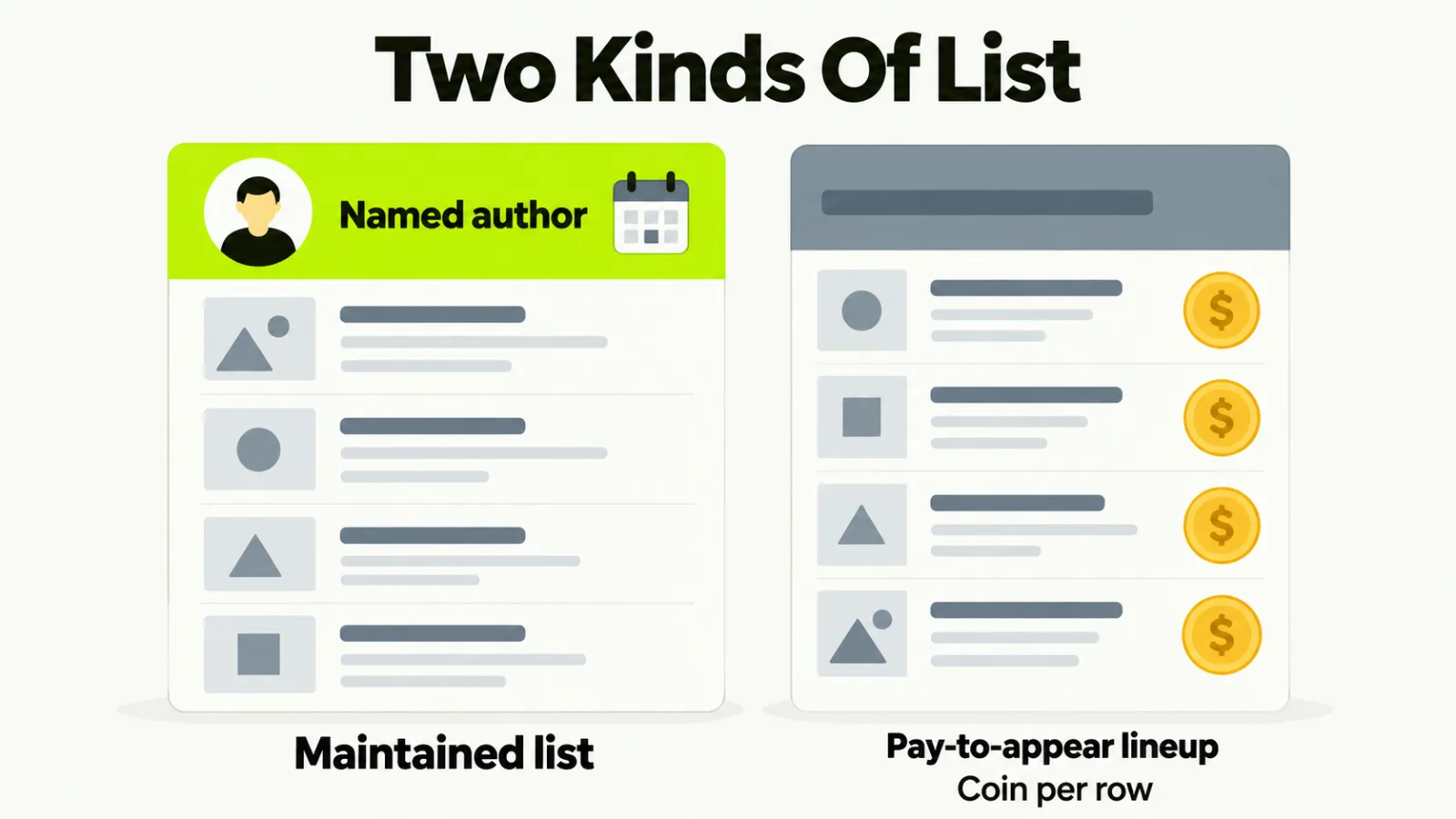
A named author, and a stated method
The page says who wrote it and how entries were chosen. A list with no author and no criteria is a page of blurbs, and nobody downstream trusts it either.
A date, and a record of updates
Lists decay. Entries get dropped and products get renamed. A list last touched years ago puts you on a page that’s on its way out.
It earns its own attention
Search the query the list targets. If it ranks, buyers find it. If it ranks for nothing and no site links to it, a placement is a link from a page nobody reads.
Your competitors are on it, and your buyers would read it
A list that names the products you’re shortlisted against is the one that matters. A list for a neighbouring category is a courtesy.
The entries look chosen, not bought
Check for a “get listed” or “advertise with us” page next to the list, and for every entry carrying a followed link. That’s a pay-to-appear lineup, and it belongs under the fee section below.
A list that fails the first two isn’t worth a pitch. One that fails the last is a different job.
Finding the lists your buyers read
Start from the queries your buyers type: the category with “best”, the alternatives to a rival, the category for one use case. Read past the first results, because independent authors often sit lower than the big review sites and roundup pages.
Then use your competitors’ links. Pull their referring domains, keep the pages that are lists, and note which ones name them and not you. Our guide to which competitor links are earnable covers the sort between links you can earn and links you can’t.
Check for lists that already name you without a link, too. That’s an unlinked brand mention, and our guide to asking for the link covers how. It’s the cheapest placement here, because the author already decided you belong.
Making the product easy to include
An author adding you has to verify what they write, and their name is on it. If they can’t confirm what the product does, who it’s for and what it costs within a couple of minutes, the easy move is to leave you out.
So fix the page before the pitch, starting with a plain description of the product and its category. Add public pricing, or an honest statement of how pricing works, and a page for each use case you want to be listed under.
Be honest about fit, too. If the list is for enterprise teams and you sell to startups, the useful question to the author is whether you belong rather than how to squeeze in.
Where the link should land
You want the link on the page that backs the claim the list makes about you. If the list says you suit one use case, the link belongs on the page for that use case and not the homepage.
That’s also where something worth linking to pays off. Original data or a working tool gives an author a stronger reason to point at the page, and our guide covers what SaaS teams can build.
Asking the author to include you
Ask the author to add you by naming what their list is missing and giving three facts they can verify in minutes.
Open with the list, not with you. Name it, and say what’s absent: your category’s entry, or a use case the list doesn’t cover. Then give what the product does, who it’s for and what it costs, with a link they can check.
Leave out the requests that mark a pitch as a sale. Don’t ask for a particular anchor, a position or a followed link, because those are the author’s decisions.
Send one follow-up after five working days, then stop. Our outreach post covers what to do with the reply.
When the answer is a fee
You should treat a paid spot as advertising, with a sponsored attribute, and not count it as an earned link.
Some authors answer with a price, which isn’t a rejection but a different product. The test from our white hat post applies unchanged: would the link be on that page if nothing had changed hands? If not, it’s a placement.
A placement can still be a sound buy, as advertising on a page buyers read. Price it as advertising, and keep it out of the link building report so the tracker only counts links that were earned.
Links bought to pass ranking value are a link scheme under Google’s guidelines. A run of sold inclusions with followed links is the pattern that gets noticed.
If a vendor sells these in packages, ask which lists, who runs them, and whether each entry will be marked sponsored. Those answers are the whole difference between a media buy and a link scheme.
After the list publishes
A listing isn’t permanent. Authors refresh lists, drop entries and reorder them, so a placement that was there in spring can be gone by autumn.
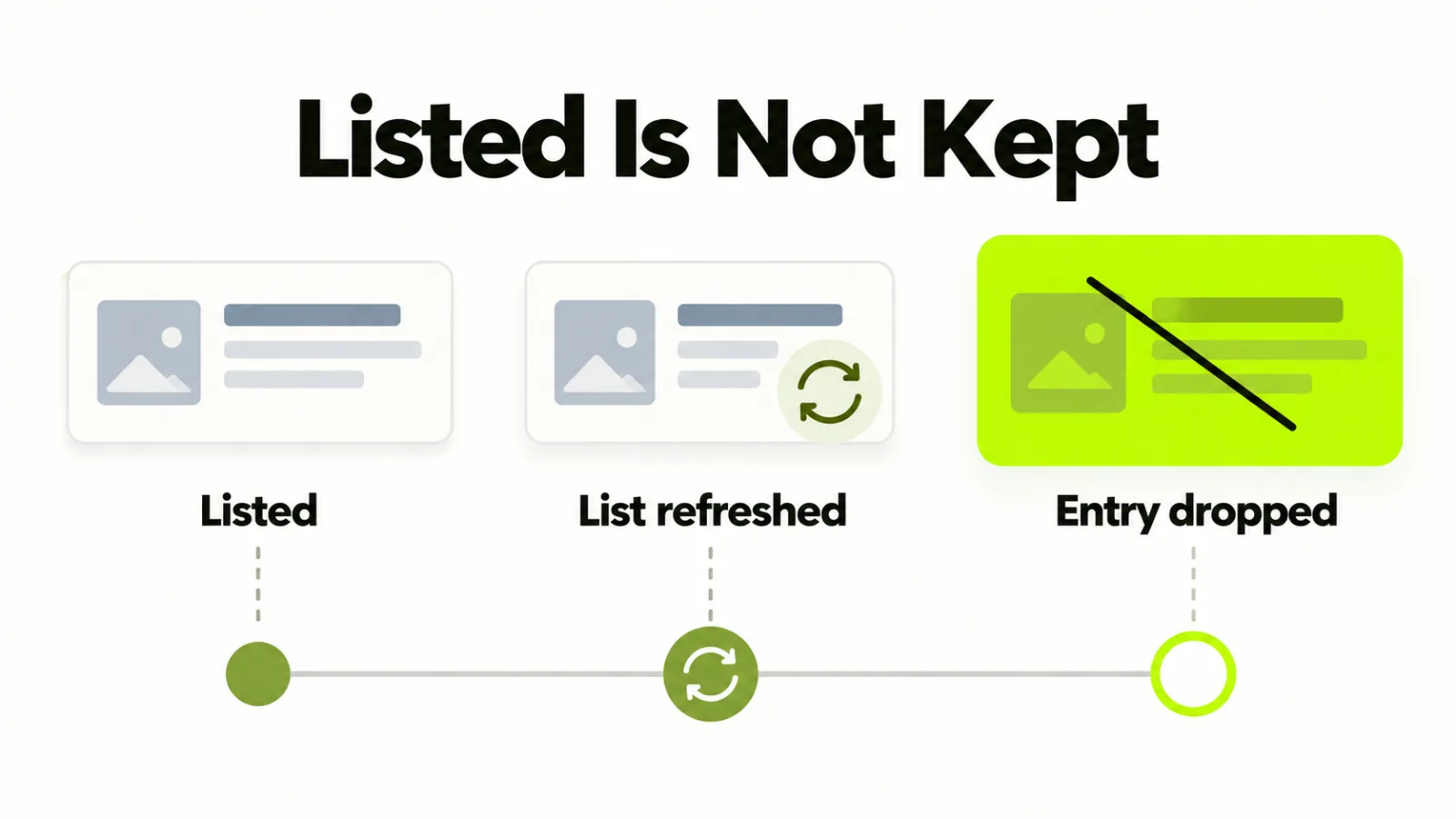
Check the page and the link at thirty days, then each quarter. Record whether the link is followed, nofollow or sponsored, so the tracker doesn’t count three different things as one.
If the list sends referral visits you can see in analytics, that’s the clearest evidence it was worth the effort. The ranking effect is slower to read.
Those re-checks sit in the last phase of our checklist, alongside the indexation check that comes first: post-placement checks for every link.
Frequently asked questions
Is listicle link building different from guest posting?
Yes. In a guest post you write the page. In a listicle you supply facts for someone else’s page, and the author decides whether you belong on it.
Do listicle links pass ranking value?
Some do, and some are nofollow or sponsored and pass little. The shortlist value holds either way, so judge the list by who reads it before you judge the link attribute.
How do you know a listicle placement worked?
To know, look at referral visits and signups from the page, which show the reader value straight away. The ranking effect of the link is slower and shows over weeks, so check that the link is still there at thirty days.
Are paid listicle placements allowed?
They exist, and they’re advertising, so they should carry a sponsored attribute. Links bought to pass ranking value are a link scheme under Google’s guidelines.