SaaS Link Building
Linkable Assets for SaaS: What Earns Links and What Doesn’t
Linkable assets are pages other writers need to make their own point. SaaS companies can build the strongest kind, because they sit on product data and engineering time that content sites don’t have.
That’s the whole argument, and it cuts both ways. A SaaS company that publishes the same roundups and guides as everyone else is throwing away the one advantage it has in link building.
Below: what makes an asset linkable, the types SaaS teams are placed to build, how to build one, and why most assets earn nothing even when they’re good.
What makes an asset linkable
Writers don’t link to things because they’re good. They link because the link does a job in their own article: it supports a claim, gives the reader a tool, or credits a source they’re relying on.
An asset can also replace something the web lost. Our guide to broken link building covers rebuilding a retired tool that publications still link to.
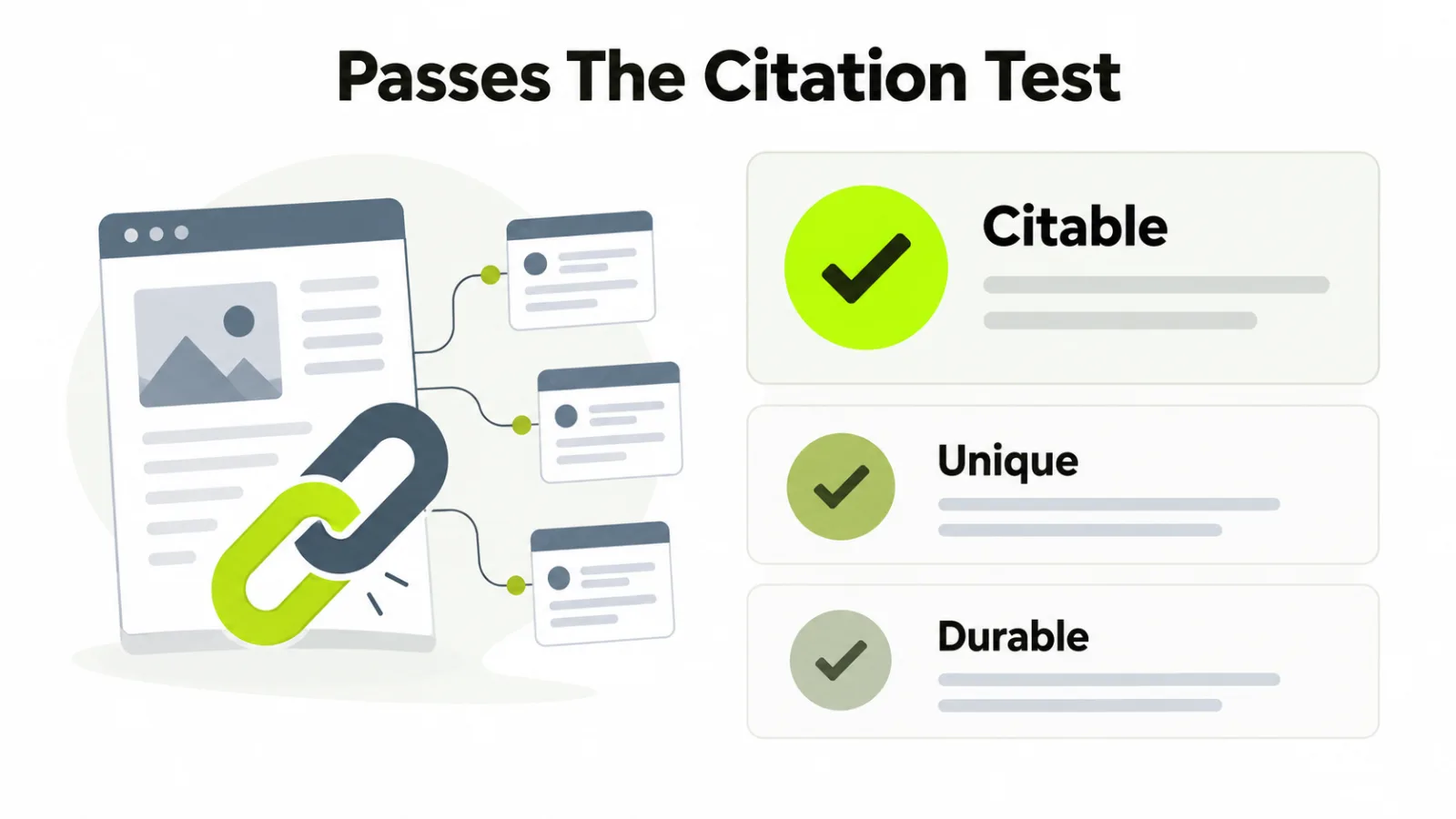
So the useful test isn’t “is this high quality”. It’s “would a writer covering this topic need to cite it”. Three properties decide that.
It’s citable: There’s a specific thing to point at: a number, a finding, a result a tool produces.
“Here’s a great guide to onboarding” is hard to cite. “The median SaaS trial converts at X, according to Y” is easy.
It’s unique: If the same fact is on fifty other pages, the writer links to whichever one they found first, or to none. Uniqueness is what makes your page the one they have to use.
It’s durable: A page that goes stale stops earning links and starts losing them, as writers update their articles and swap in fresher sources. Assets built to be refreshed keep their citations.
Most content fails the first test before it reaches the other two. It’s written to be read, not cited, and nobody needs to link to something they can paraphrase.
The assets SaaS companies are placed to build
Every type below exists outside SaaS. The difference is that a SaaS company can build the strongest version of each, because the raw material is already inside the business.
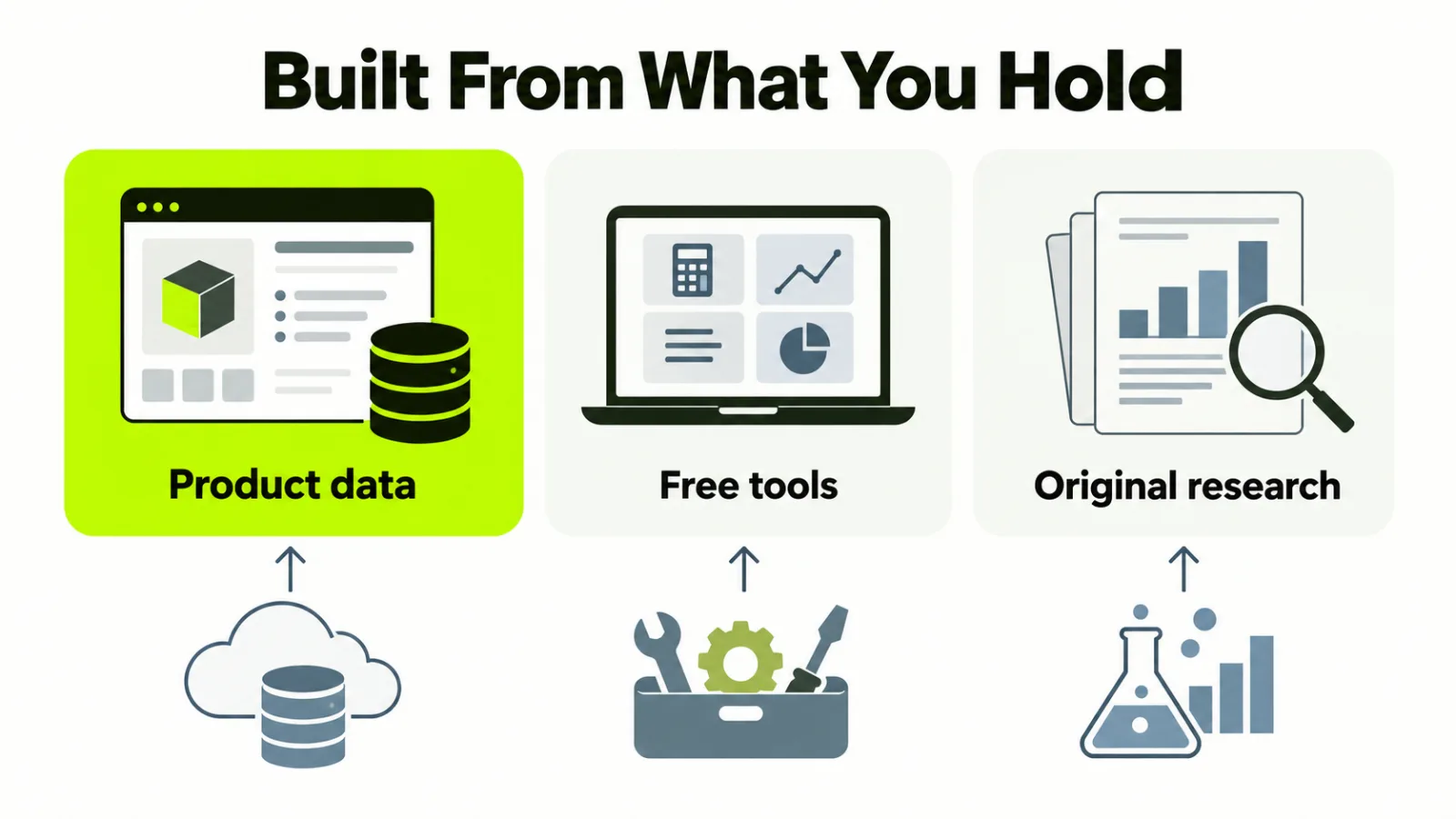
Benchmarks from your own product data. This is the strongest asset a SaaS company can publish, and the one competitors can’t copy. You already hold anonymized, aggregated data about how thousands of customers do the job your product supports.
A median, a distribution, a year-on-year change: those are the numbers writers in your category cite. An email platform publishing open-rate benchmarks by industry is the pattern. The data was a by-product of running the product, and the asset earns links for years.
Two rules keep it safe. Aggregate hard enough that no customer can be identified, and say plainly how the numbers were produced. A benchmark nobody can check gets cited once and then questioned.
Free tools and calculators: Engineering is the resource content sites lack, and a working tool is linked to for as long as it works. It also sits naturally next to what you sell.
We run four ourselves: a link building ROI calculator, a backlink value calculator, a budget calculator and an anchor text checker. Each answers one question a buyer asks, which is what makes a tool worth sending someone to.
Original research: Surveys and practitioner studies work when the question is one your category argues about and nobody has measured. They fail when the sample is small or the findings are obvious.
It’s the approach behind our own State of SaaS Link Building research: build the numbers from practitioner input rather than recycling figures from other reports. A roundup of other people’s statistics is a weaker asset, because every writer can cite the original instead.
Templates tied to the job your product does. A planning template, a scoring framework, a working spreadsheet. These earn links from people writing how-to content in your space, and they’re cheap to build when they come from how your own team already works.
Customer case studies with real numbers. A case study is linkable when it reports an outcome someone else would quote, measured in a way they can trust. Get the customer’s permission to name them and the numbers, or the asset is one a writer can’t use.
A name for something your category already does. When a pattern has no name, the company that names it well gets cited every time someone describes it. It only works if the name is useful and the page explaining it is the best definition available.
How to build a linkable asset
You build a linkable asset backwards: start from the sentence a writer would quote, then build the page that makes that sentence true. Six steps, in order.
Pick a question your category argues about. Look for claims writers keep repeating without a source, or disagreeing about. An unanswered question is a better brief than a popular topic.
Check nobody has answered it well. If a credible, recent source already exists, you’re building the second-best version, and writers will keep citing the first.
Decide what the headline finding will be. Before building anything, write the one sentence you want quoted. If you can’t, the asset has nothing to cite yet.
Choose the format that proves it. A number wants a data page, a calculation wants a tool, and a process wants a template.
The format follows the finding, not the other way round.
Put it on a page that can pass value. Give it a clean URL of its own and link it to the commercial pages it supports. An asset earns authority; internal links decide where that authority goes.
Set the refresh date before you launch. Decide now when the numbers get updated. That date is your next outreach campaign, already scheduled.
Asset types that underperform their reputation
Some formats still appear on every list of linkable assets. They earn less than that suggests, and it’s worth knowing why before spending on one.
Infographics: They worked when they were novel and embedding was the norm. Now they’re easy to copy, often reposted without credit, and rarely the source a writer needs.
An infographic built on your own original data can still work. In that case the data is doing the work, and the graphic is packaging.
The ultimate guide: Your category already has a dozen. A new one competes on being slightly longer, which isn’t a reason for anyone to switch the link they already use.
Tool roundups and listicles: They earn links, but mostly from the tools listed, and those links often come with an expectation of a link back. That’s closer to an exchange than an earned citation.
Why most linkable assets earn nothing
It’s rarely because the asset is bad. Most earn nothing because nobody told the right people about them, and they often sit on a page that couldn’t pass value to anything that matters.
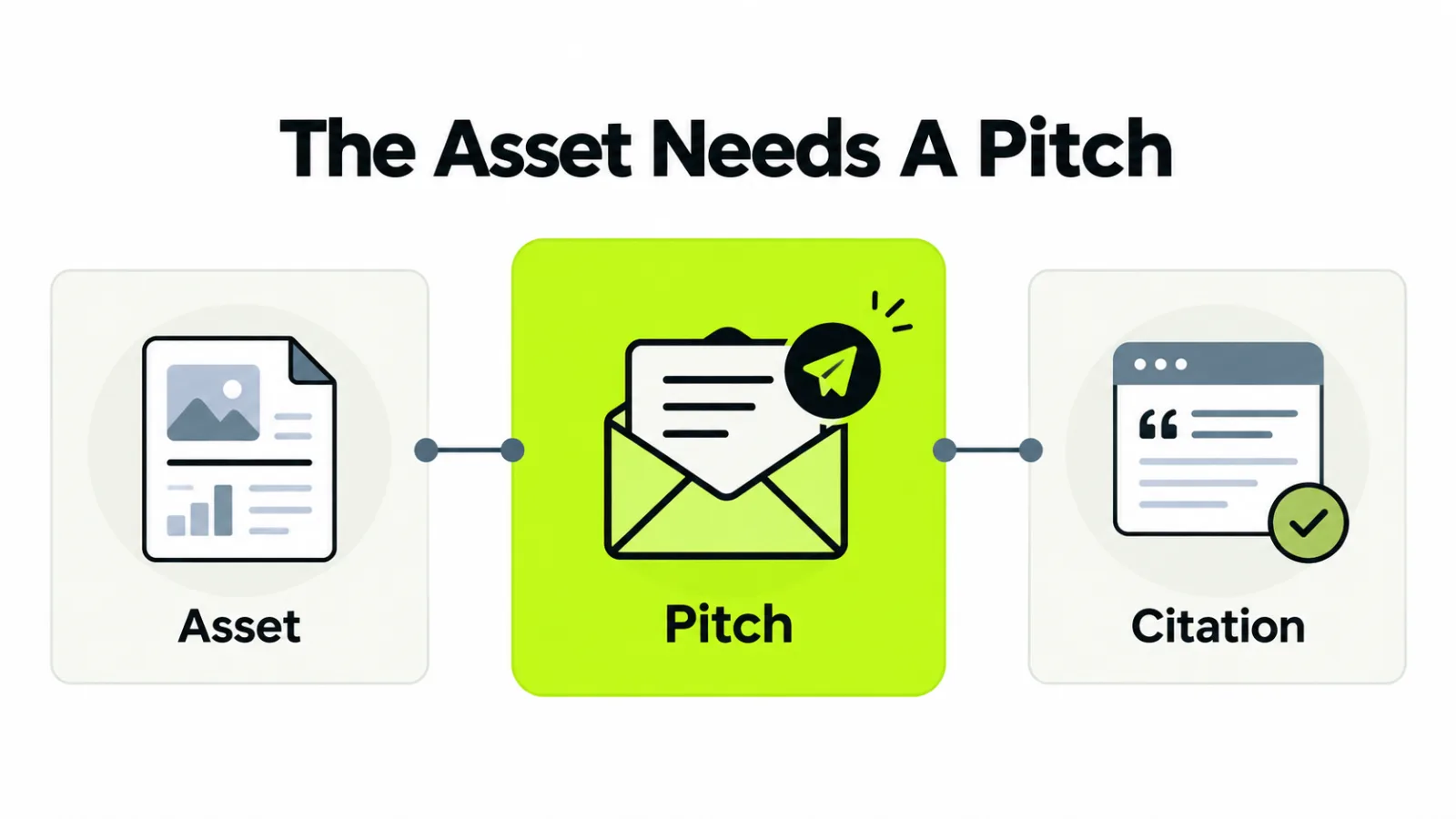
Nobody promoted it. “Build it and they’ll link” works for a handful of assets that go viral and almost none that don’t. Every asset needs the outreach step our link building checklist is built around.
There’s nothing specific to cite. The page is interesting, but a writer can’t point at a single sentence and say “that”. Assets without a clear, quotable finding get read and not linked.
It’s on the wrong page: An asset buried in a resources section, with no internal links to your commercial pages, collects authority and keeps it. The links it earns never reach the pages that sell.
It went stale: Last year’s benchmark gets replaced in writers’ articles by this year’s, from whoever published one. An asset with no refresh date is decaying from launch.
Getting links to an asset once it exists
Promotion works best when it starts from the people already writing about the topic rather than from a list of sites that accept pitches.
Find who’s already citing something weaker. Search for articles in your category that quote an old statistic, a small sample, or a vendor’s claim. Those writers have already shown they need the fact, and you have a better source for it.
Pitch the finding, not the asset. “We published a benchmark report” gets ignored. “The median time to first value in your category is shorter than the figure in your article, here’s the data” gets a reply, because it helps the writer.
Recover the mentions you already have. Once an asset circulates, some writers will cite it without linking. Those brand mentions are the cheapest links you’ll ever earn, because the publication has already decided you’re the source.
Refresh on a schedule and pitch again. A yearly update to a data asset is a new reason to contact every writer who cited the old version. Coverage through digital PR tends to cluster around those refreshes.
How to tell whether an asset worked
You tell whether an asset worked by counting referring domains to it and not total links. Ten sites that each link once are worth more than one site that links ten times.
Then look past the asset itself. The question that matters is whether the pages it links to moved, because that’s where the authority was meant to go. Our ROI calculator is built on the same principle: it values links by what they do for the pages that convert.
Give it two quarters. The first links come from outreach, and the durable ones come later, from writers who find the asset while researching something else.
Where to start
You can start with the data you already hold. Ask what your product knows about your customers’ work that nobody outside your company can see, and whether a writer in your category would need that number.
If the answer is yes, that’s your first asset. Building it and getting it cited is most of what our SaaS link building work involves.
Frequently asked questions
What is a linkable asset?
A linkable asset is a page other writers need to make their own point. It might be data they can cite, a tool for their readers, or a finding they can’t get elsewhere. It’s defined by what it does for the linker rather than by its format.
What’s the best type of linkable asset for a SaaS company?
Usually a benchmark built from your own product data, because nobody else can produce it. Free tools come second. Both beat infographics and generic guides, which are easy to copy and easy to replace.
Do linkable assets still work now that AI answers summarize content?
They matter more. An AI answer that states a number has to attribute it to someone, and a specific, original figure is exactly what gets cited. Generic advice gets summarized without credit.
How long does it take a linkable asset to earn links?
Longer than the launch week suggests. The first links come from outreach, and the durable ones come from writers who find it months later while researching. Judge it over two quarters, not two weeks.
Should a linkable asset link to product pages?
Yes, carefully. The asset earns the authority and internal links pass it on to the pages that sell. An asset with no path to a money page is a trophy, not an investment.
How often should a linkable asset be updated?
Data assets should be refreshed on a fixed schedule, usually yearly. A refresh is also a reason to pitch the same writers again with the new numbers, which a static page never gives you.