SaaS Link Building
Outreach Link Building for SaaS: What to Do With the Reply
Outreach link building is decided by what you do with the reply rather than by the pitch. Five kinds of reply come back, and each one needs a different response.
The send is the easy half, and our link building checklist already covers it: the right person, the right page, one follow-up.
This post covers the half after it, where a program either stays clean or stops being one.
The reply is the decision point
A pitch is a question. The reply is the answer, and it’s the first moment anyone outside your team tells you what your page is worth to them.
It’s also where the unwritten choices get made: whether to pay, whether to accept a condition, whether to chase silence. Nobody records those, and together they shape the link profile more than the pitch does.
A campaign that answers every “we charge” with a yes ends up with a bought profile. The pitch can be spotless and the result still isn’t.
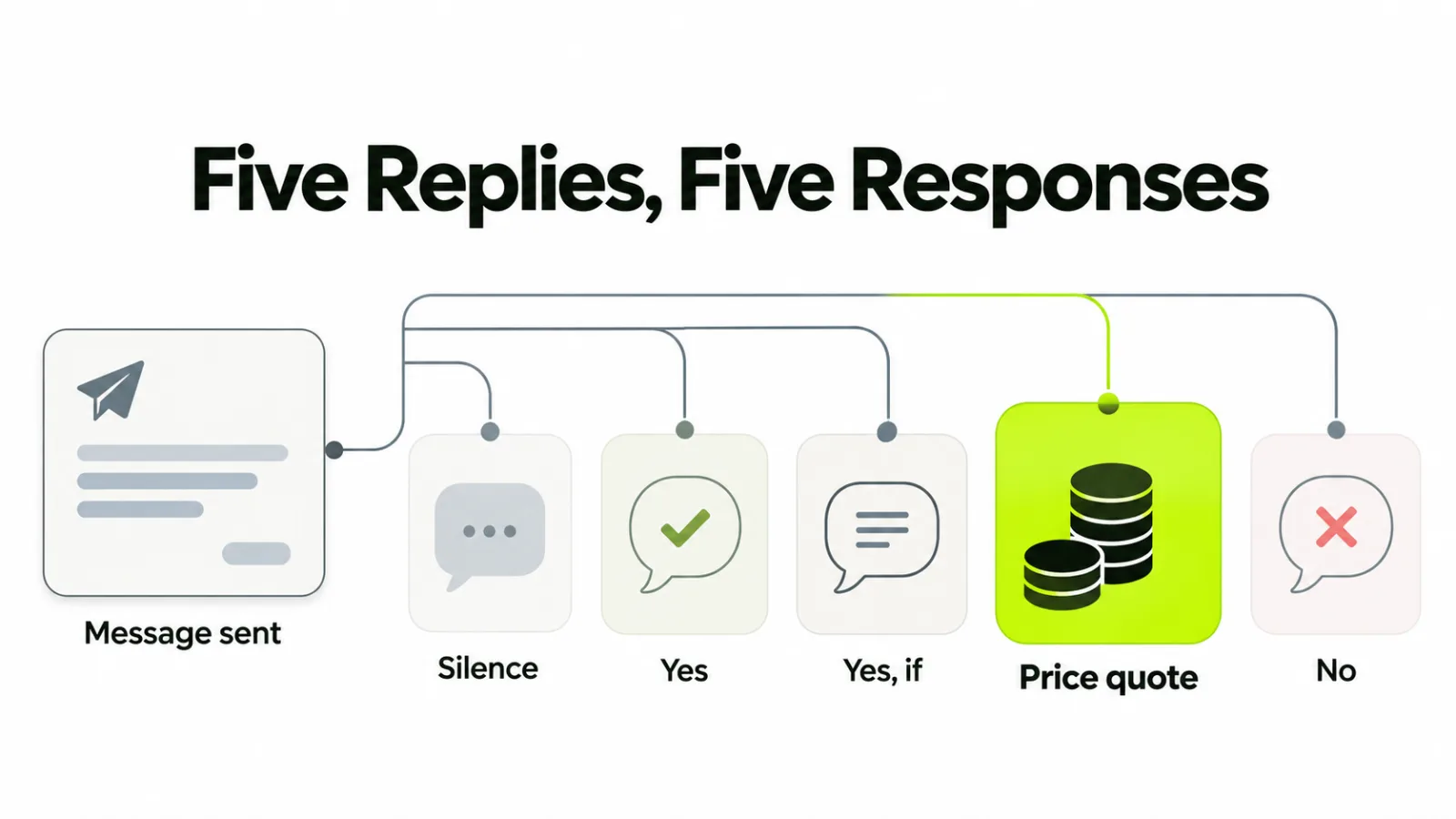
The five replies and what to do with each
Almost everything that comes back sorts into five groups. The response is worth deciding before the first email goes out, so it isn’t invented under pressure.
| Reply | What it usually means | Response |
|---|---|---|
| Silence | Wrong person, blocked mail, or no interest | One follow-up, then stop and log the likely cause |
| Yes | The page fits and the editor agrees | Confirm the exact URL, then check it went live |
| Yes, if | The editor wants a change, a source or an addition | Accept edits that improve the page, refuse conditions that make it an exchange |
| Price quote | The site sells placements | Decline, and ask about an unpaid route |
| No, or “not me” | Poor fit, or the wrong contact | Log the reason and follow any referral |
Silence is mostly a delivery or targeting problem
Silence is the most common reply and the least informative. It rarely means the editor read your pitch and disagreed.
Look at the cheap explanations first. The address is stale, the mail landed in spam, or the person who owned the page has left. The checklist covers preparing the sending domain and finding the right contact.
One follow-up, then stop: Further emails buy almost nothing and cost sender reputation. Log the silence, and recheck the contact before the next batch, because a pattern of it usually traces back to the list.
A price quote is a test of the whole program
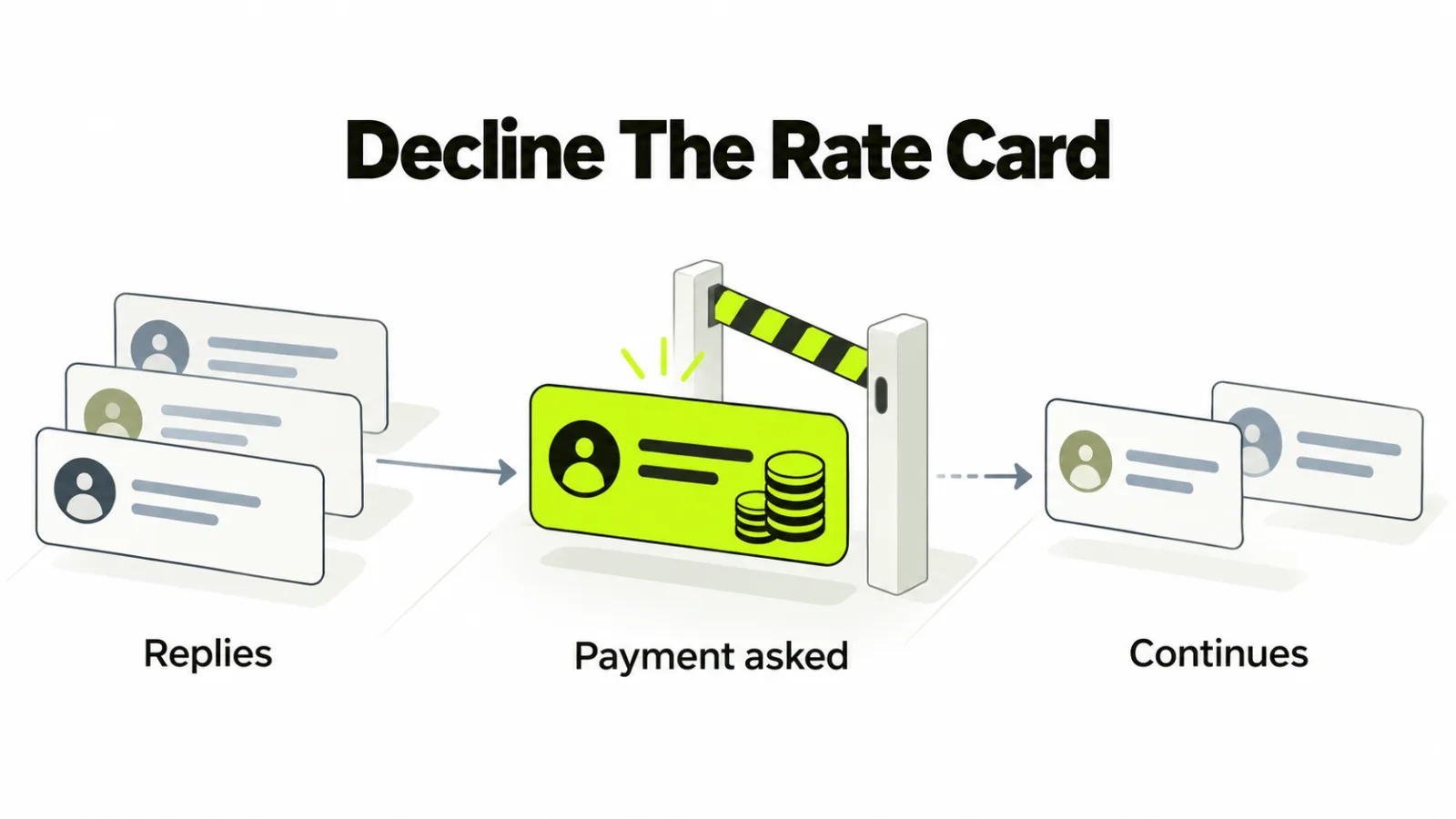
Somewhere in most campaigns an editor replies with a rate card. It usually arrives politely, and it’s the moment a clean program either holds or doesn’t.
If the link would only exist because you paid for it, it fails the test in our guide to white hat link building. Nothing about the pitch changes that.
Decline, and ask about the unpaid route. A short reply works. Thank them, say you don’t pay for placements, and ask whether a contributed piece or a citation could earn a place on the page on merit.
Some sites say yes. Others won’t, and that tells you something about the site, so record it and don’t argue.
A yes with conditions attached
A conditional yes is a good reply that needs sorting. The editor wants something changed before the link goes in.
Accept anything that improves the page for its readers: a corrected figure, a clearer example, a source added, a section shortened. An editor would make those edits anyway, and they make the placement more durable.
Refuse conditions that turn the link into an exchange. A reciprocal link back, a bundle of extra paid placements, or an anchor written to carry a commercial keyword all change what was given. The same test applies again.
Refusals and referrals
A no is cheaper than silence, because it comes with a reason. Log it: wrong topic, page not updated, a policy against outside links. The pattern in those reasons tells you more about the list than any open rate.
“Not me” replies are worth following the same day. An editor who names a colleague is vouching for the pitch. Write to the colleague, and say who sent you.
Measure the funnel by stage
A single reply rate hides where a campaign leaks. Track five stages instead, because the fix for each is different.
Delivered tells you about the sending setup, and replied tells you about the list and the pitch. Agreed tells you about the offer. Live tells you about follow-through, and indexed tells you whether the link counts at all.
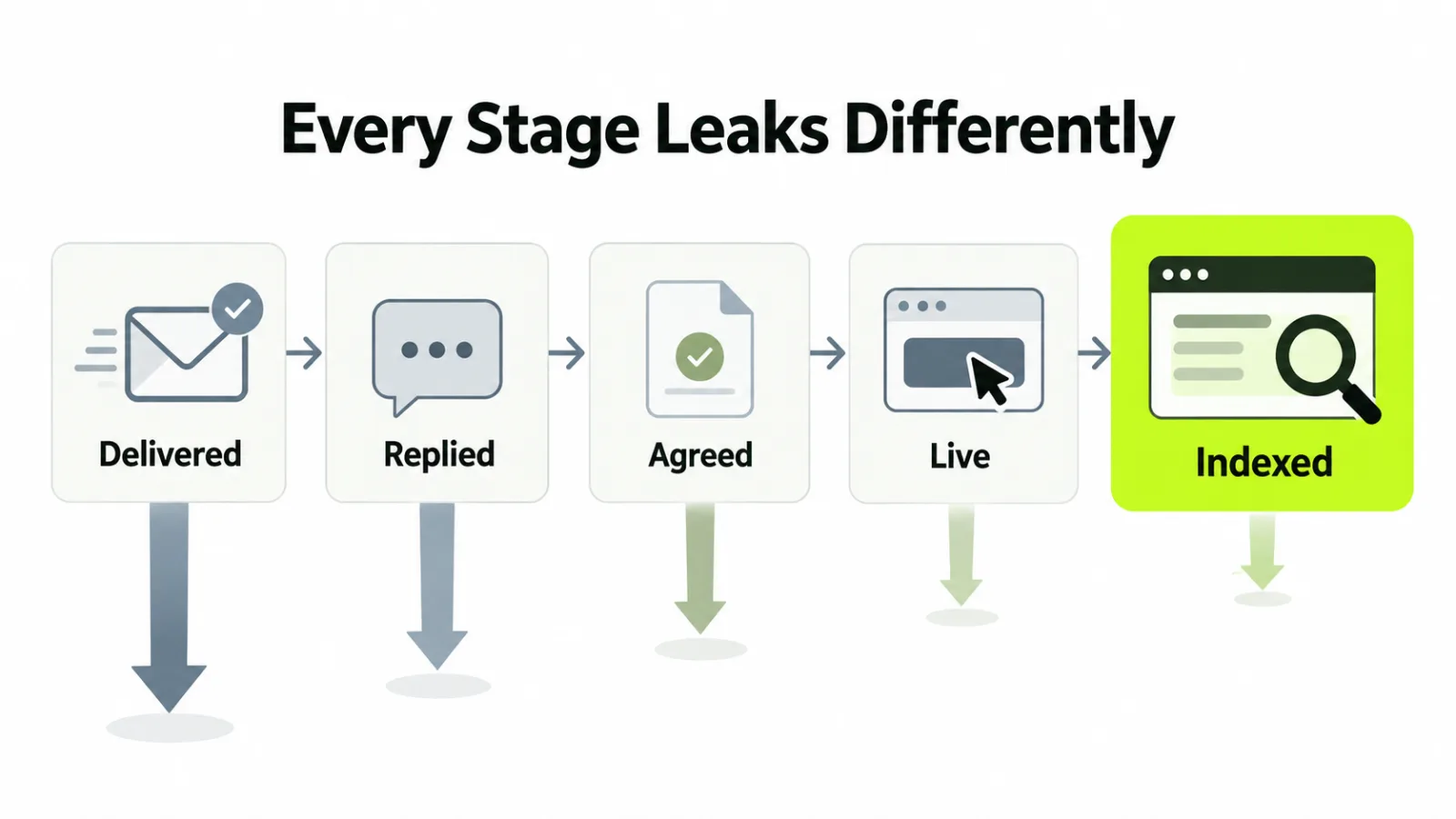
The last two are where teams stop looking. A link that was agreed and never published, or published on a page that isn’t indexed, is still a lost link. Our guide to link reclamation covers what to do when a placed link later disappears.
What outreach can’t do on its own
It can’t make a page worth linking to. If most replies are polite refusals, the page or the offer is the constraint, and rewriting the pitch won’t move it.
Our guide to linkable assets covers what SaaS teams can build to give an editor a reason to say yes. For the list itself, competitor backlinks covers where to start, and broken link building covers the one tactic with a built-in reason to email.
Sending and sorting replies every week is most of the work in our SaaS link building services. It’s the kind of job that goes wrong when it belongs to nobody.
Frequently asked questions
What’s the right number of follow-up emails?
One. A second follow-up rarely changes the outcome and costs sender reputation. If the first didn’t land, the cause is usually the list or the delivery, and a longer sequence fixes neither.
What should you reply when an editor asks for money?
You decline politely, say you don’t pay for placements, and ask whether an unpaid route exists. A contributed piece or a citation earned on merit is the legitimate version of the same request.
Is a conditional yes worth accepting?
Yes, when the condition improves the page for its readers. A corrected figure, a better source or a shorter section are edits an editor would make anyway. A reciprocal link or a bundle of paid extras is a different deal.
What reply rate is a good one?
There isn’t a number that transfers between sites. The useful comparison is your own rate at each stage against the previous batch, because that shows which stage changed and what to look at.
Should the founder send the outreach personally?
For the first placements, often yes. The replies are the fastest education in what editors think your page is worth. Once the pattern is clear, hand it to someone who can run it every week.
What if an editor asks you to stop?
You stop, remove them from every list and log it. A request like that is a targeting signal, and it’s worth checking what put them on the list in the first place.