SaaS Link Building
Broken Link Building for SaaS: Two Triggers Worth Watching
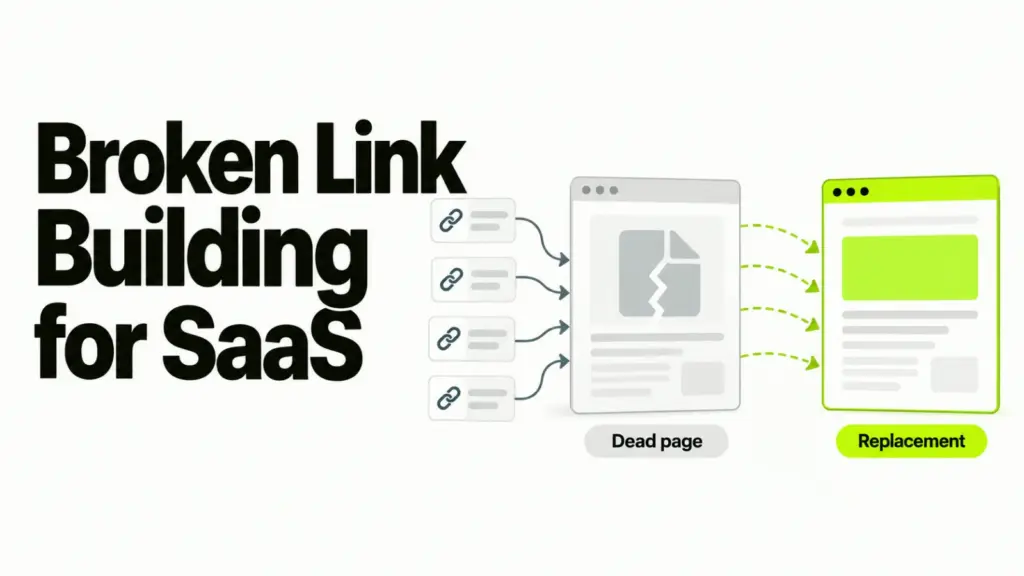
Broken link building means finding a dead page that other sites still link to, then naming your live page as the replacement. For SaaS it only pays when you already hold that replacement.
Run against the open web it converts badly, which is where the tactic’s reputation comes from. Run against the right trigger it’s one of the cheapest links you’ll earn.
Two triggers produce those pages in bulk in this market. Here’s how to work them.
How the tactic works
A page dies. The sites that linked to it keep the link, and now it points at a 404. You tell the editor, and you name a live page of yours that covers the same ground.
The editor gets a fix for a page they’d rather not leave broken. You get a link from a site that already chose to cite something on your topic, placed by its editor.
Nothing about that is unusual. It’s ordinary SaaS link building with a better reason to be in someone’s inbox, which is most of what makes outreach land.
Why most attempts fail
It fails for three reasons, and only the third is fixable by writing better emails. The standard version scans a whole niche for dead pages, then mails everyone linking to them.
The replacement doesn’t match. A dead page about webhook retries isn’t replaced by your product page, and an editor can tell in a second.
The dead page had one link. Effort per opportunity is the same whether the page had one referring domain or forty, so starting anywhere but the top wastes the list.
The pitch is about you. An editor fixing a broken link is doing maintenance, not evaluating a vendor.
Trigger one: a competitor sunsets or gets acquired
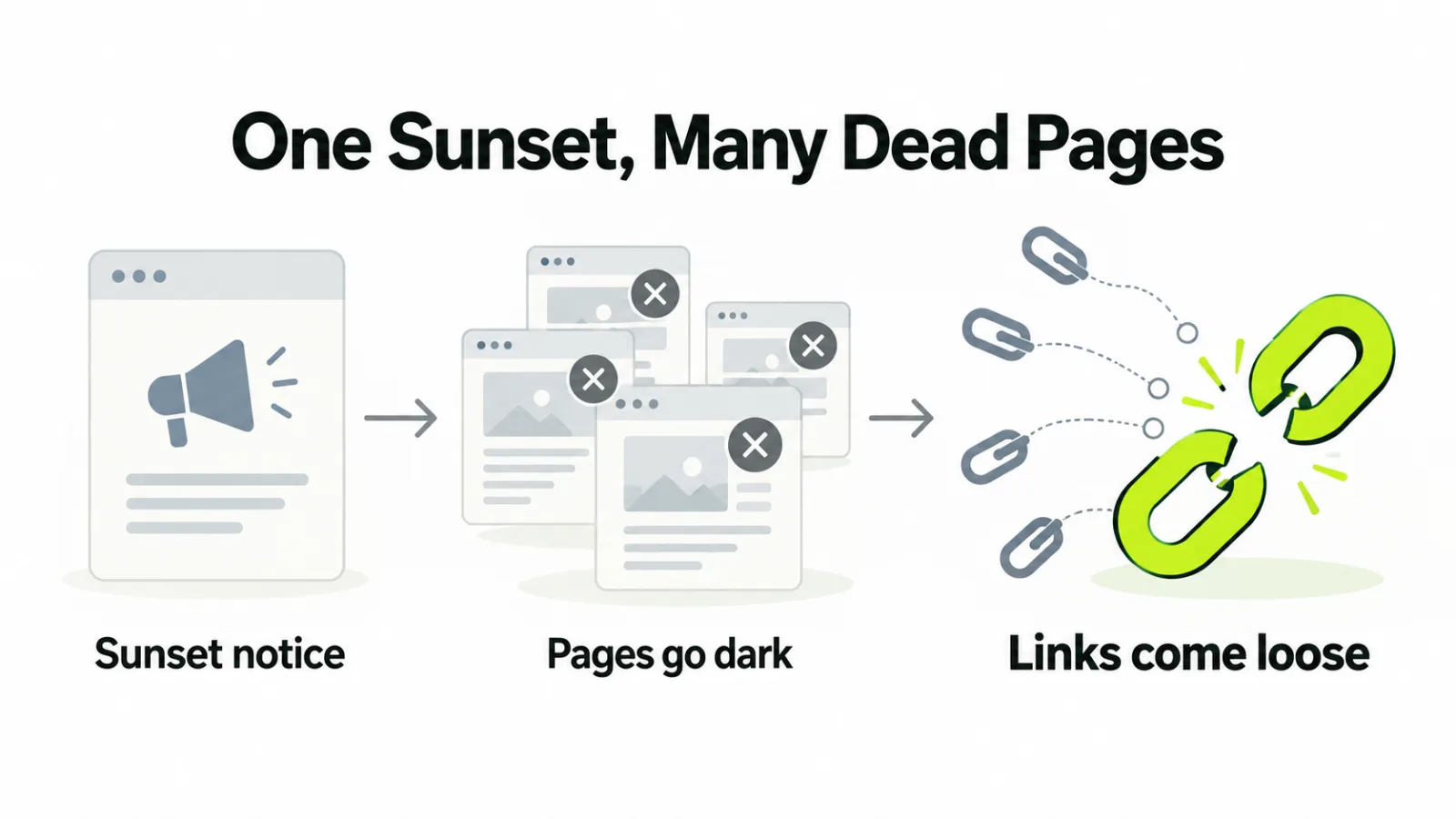
This market kills URLs constantly. A product gets sunset, a company is acquired and folded, a free tool is retired, a changelog is pruned, a docs site is restructured.
When that happens the dead pages arrive in bulk, and they’re the pages your buyers’ favorite publications linked to. Those links are claimable by whoever has the closest live equivalent.
Watch the obvious signals: Acquisition announcements, end-of-life notices, pricing-page changes and abandoned status pages all precede a wave of 404s by a few weeks.
Our guide to competitor backlinks covers the export itself. The difference here is that you’re pulling a page that’s already dead, so nobody has to be outranked for the link to move.
Trigger two: dead tools and dead docs
The second source is narrower and steadier. Free calculators, spec sheets, integration guides and API references go dark when their maintainer loses interest.
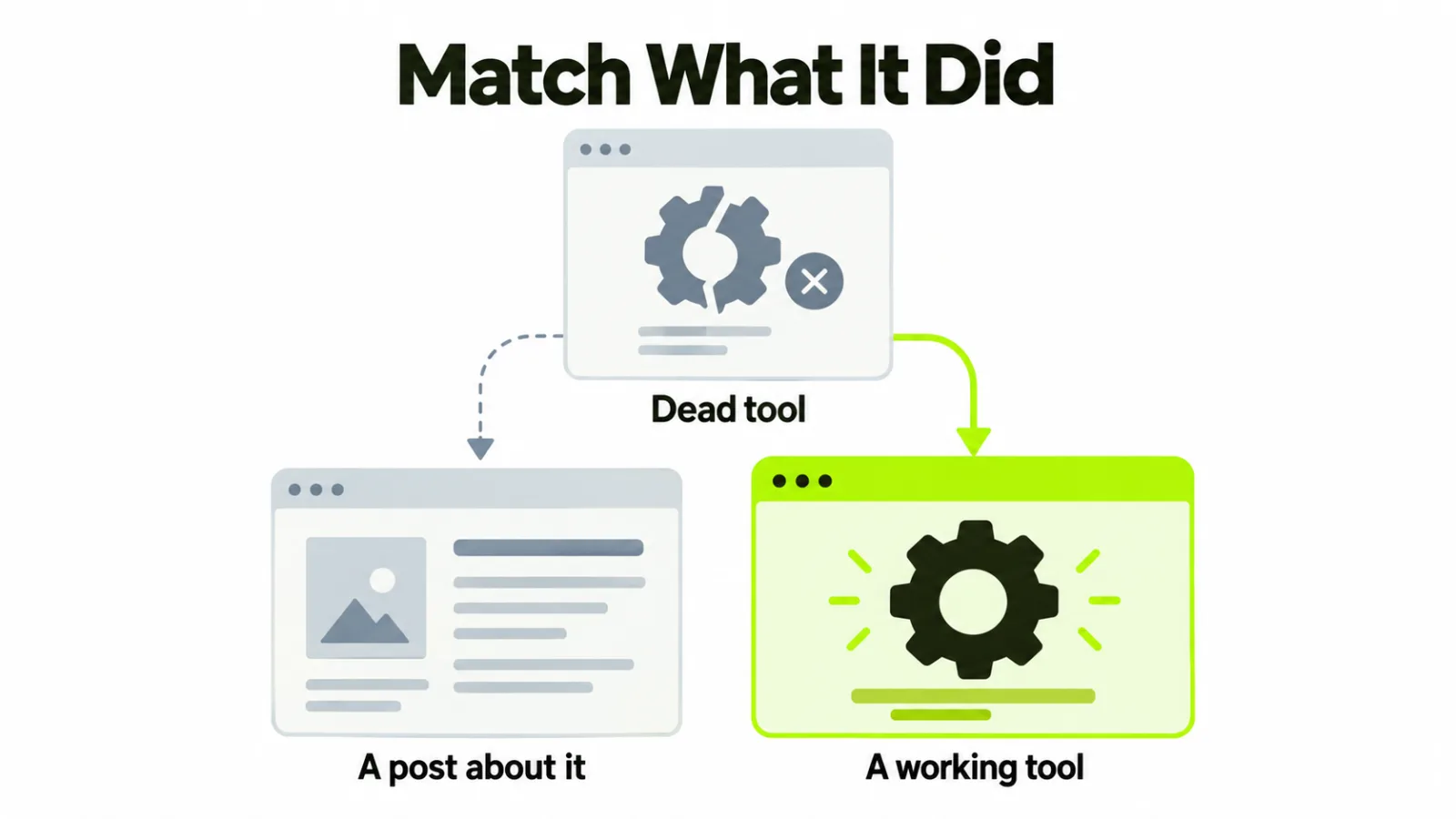
Those pages attract links from people who needed a working thing, which is why a replacement has to be a working thing too. A blog post about the topic won’t close it.
SaaS has the advantage here. You can rebuild a retired calculator or maintain the reference that lapsed, and a content site competing for the same links can’t.
Find the dead pages, not the dead links
Start from a page you suspect is gone, then check whether anyone cared. Pull its referring domains and sort by count.
That order matters more than any tool choice. One dead page with forty linking domains is worth more outreach than forty dead pages with one each.
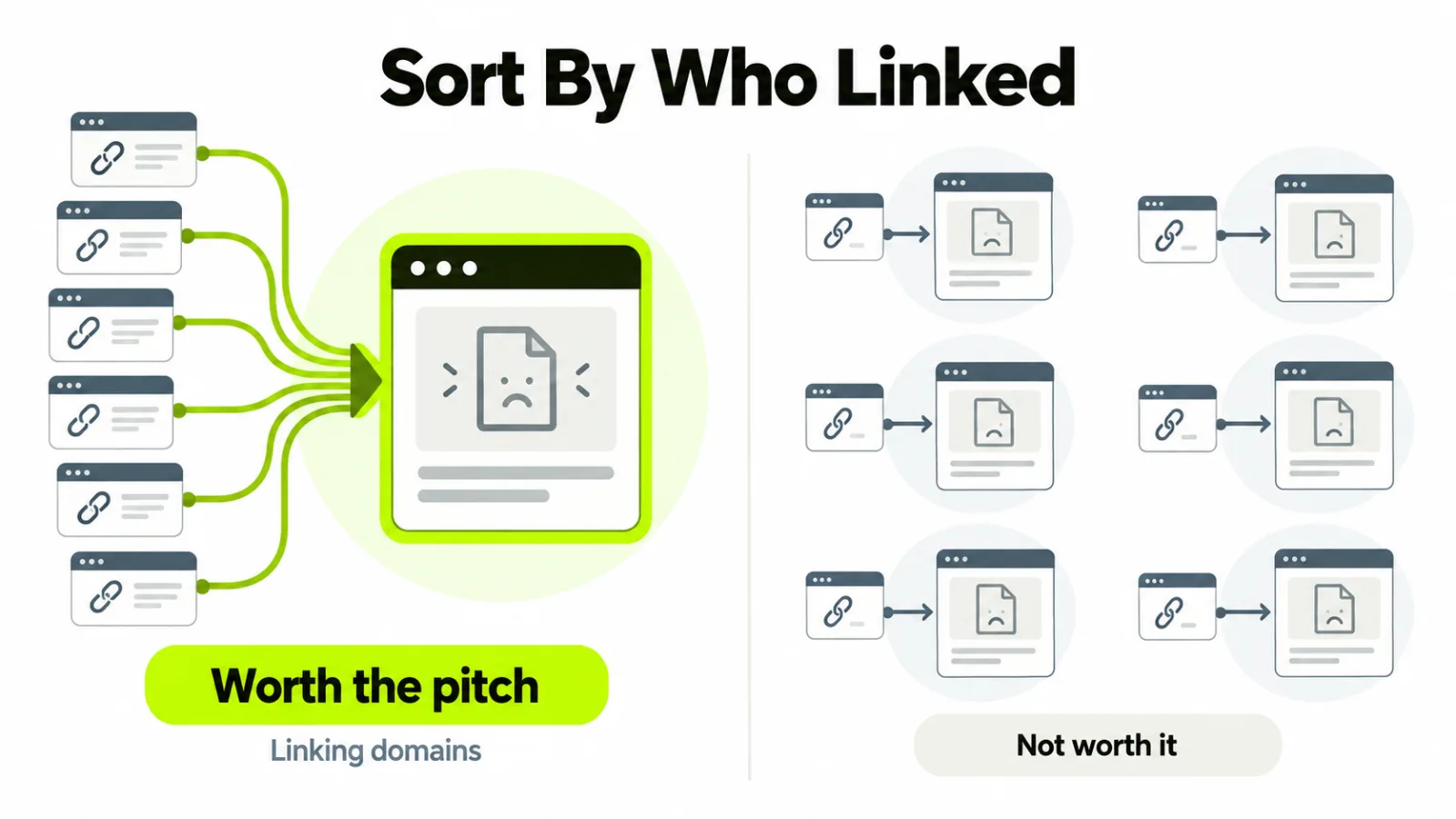
Then qualify the linking sites, not the dead page. The dead page’s own metrics are irrelevant now. What matters is whether the sites still linking to it are ones you’d want a link from, which our guide to evaluating backlink quality covers.
Build the replacement before you pitch
The replacement decides the reply rate. It has to cover what the dead page covered, at the same depth or better, on a page that loads and stays up.
If the dead page was a tool, yours is a tool. If it was a reference, yours is maintained. Our guide to linkable assets covers what SaaS teams can build here that content sites can’t.
Rebuilding something retired is legitimate. You’re restoring access to information the web lost, and that’s a stronger pitch than any template.
The pitch
Three sentences. Name the page that’s broken, say where the link sits on it, and give the replacement URL with one line on what it covers.
Skip the compliments and the pitch about your company. Editors fix broken links because broken links look bad, so make the fix the easiest thing in their inbox.
The replies need handling as well as the pitch. Our guide to outreach link building covers the five kinds of reply and the response each one needs.
Our link building checklist covers the sequence around this: the qualifying bar, one follow-up, and the indexation check after placement.
What it’s worth, honestly
Broken link building is a supplement, not a program. Here’s how it sits against the other ways to earn the same link.
| Approach | What you need first | Where it wins |
|---|---|---|
| Broken link building | A live page matching a dead one | After a sunset, acquisition or retired tool |
| Digital PR | A story or dataset | Volume and brand reach at once |
| Guest posting | An author and an angle | Depth on a topic you want to own |
| Link reclamation | Existing mentions of you | Cheapest link available, when they exist |
Judge it on hours per placed link rather than on the size of the prospect list. A trigger-led run of twenty targeted pitches beats a scan of two thousand dead pages.
What this isn’t
It isn’t fixing the 404s on your own site. Links pointing at your dead URLs already belong to you, and a redirect recovers them without asking anyone for anything.
Our guide to link reclamation covers that half: the three causes of a lost link, and which of them a deploy settles without any outreach.
Do that first, because it costs one deploy. Then spend outreach effort on other people’s dead pages, where the link still has to be earned.
Frequently asked questions
Does broken link building still work?
It works where you hold the replacement already. Run against the whole web it converts badly, because you’re asking an editor to swap a dead link for a stranger’s page. Run against a sunset product in your own category, it converts well.
How do you find broken links worth chasing?
You start from dead pages that still have links rather than from dead links. Pull the referring domains of a sunset competitor page or a retired tool, and the list arrives sorted by how sites cared.
What reply rate should you expect?
Lower than reclaiming a mention of your brand, higher than cold outreach with nothing to offer. The variable that moves it is whether your replacement covers what the dead page covered instead of the wording of the email.
Do you need to build a new page first?
Usually. A pitch that points at a rough match gets ignored, and one that points at your homepage gets marked as spam. If the replacement doesn’t exist yet, that’s the work, and the outreach comes after.
Is a redirect from the dead page the same thing?
No, and it isn’t available to you. A redirect is the publisher’s fix on their own domain. Broken link building is asking a third site to point somewhere live instead.
What about the 404s on your own site?
That’s link reclamation, and it pays better because the links already point at you. Fix those first with redirects, then spend outreach effort on other people’s dead pages.