SaaS Link Building
Link Exchange: When a Partner Link Is Fine and When It Isn’t
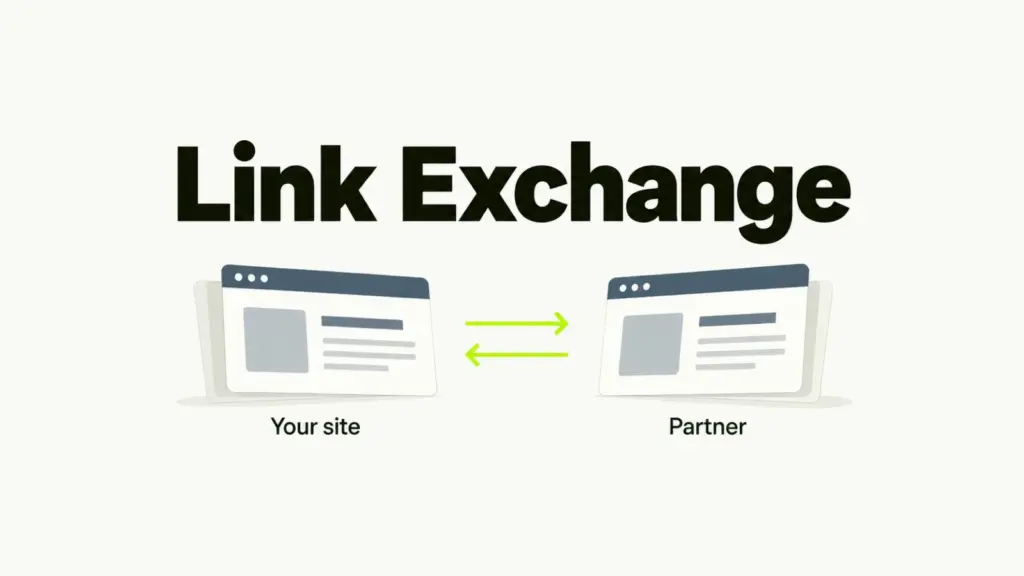
A partner emails to say they’ve linked to your integration page and would love a link back. That’s a link exchange, and whether it helps or hurts depends on what sits behind it.
A link exchange is fine when the links exist for the people using both sites, and it’s link spam when they exist to lift rankings. Google doesn’t give a count for the swaps that cross the line, so the test below works from purpose.
What counts as a link exchange
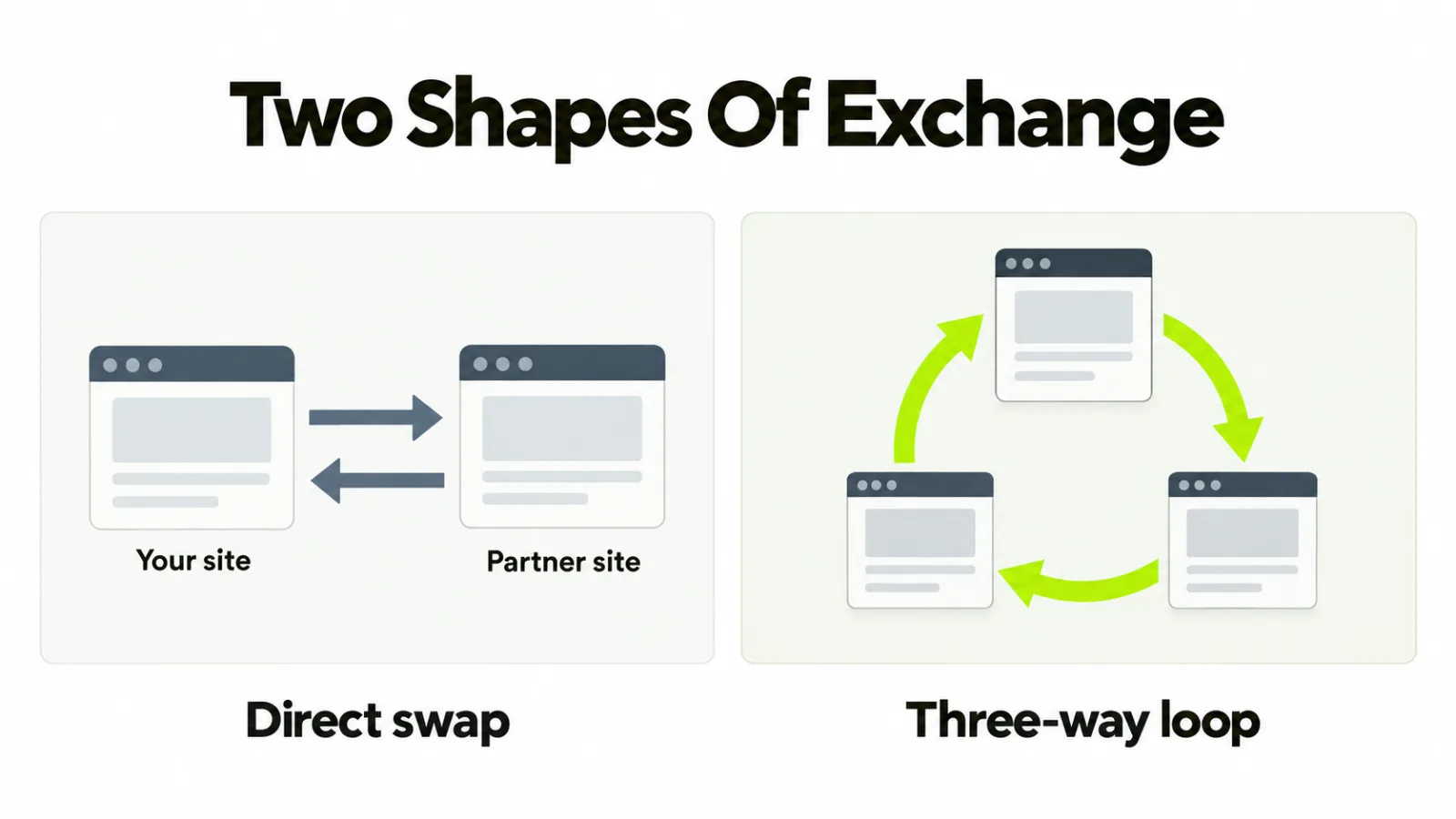
A link exchange is an agreement where two sites link to each other, either directly or through a third site, because the other side did.
The direct kind is the one in the email: you link to them, they link to you. Add a third site so no pair links to each other and you have the three-way kind, though the loop still shows in the link data.
Swap a guest post for a guest post, or a niche edit for a niche edit, and you have the traded kind.
What they share is the cause. Each link exists because of another link. That’s the question behind our test for any link tactic, which asks what changed hands.
Two sites that link to each other for separate reasons aren’t in an exchange. A customer who links your docs and a vendor who links their case study aren’t trading. The difference is whether one link was a condition of the other.
What Google’s guidelines say about link exchanges
Google doesn’t ban every link exchange, but its spam policies list excessive link exchanges, and partner pages made only to cross-link, as link spam.
Two words carry the rule: excessive, and exclusively. The policy gives no number for excessive, and it defines link spam as links made primarily to manipulate rankings. Both come down to purpose.
Our post on whether link building still works sets out what the policies name and what happens in practice.
What makes a partner link fine
A partner link is fine when the relationship exists for customers and the link would be there if search engines didn’t exist.
SaaS products connect to other products, so these links come naturally: an integration listing, a “works with” page, a joint webinar, a co-written case study, a marketplace profile. Each exists because a customer of one product needs to find the other.
When both partners link to each other, that’s reciprocal and still fine. Neither link was a condition of the other, and each sits on a page that helps a buyer.
The same page goes wrong when the reader is taken out of it. A partner page exists for the links when it shows:
- Logos and links with no description of what the two products do together
- Dozens of partners that have no integration with yours
- Keyword-rich anchors where a product name would do
- The same list copied across the partners’ own sites
If a page reads like that list, cut it back to the partners a customer would look for, and say what each one does with you.
Four checks before you accept a swap
Four checks separate a partner link from a swap: purpose, page, condition and pattern.
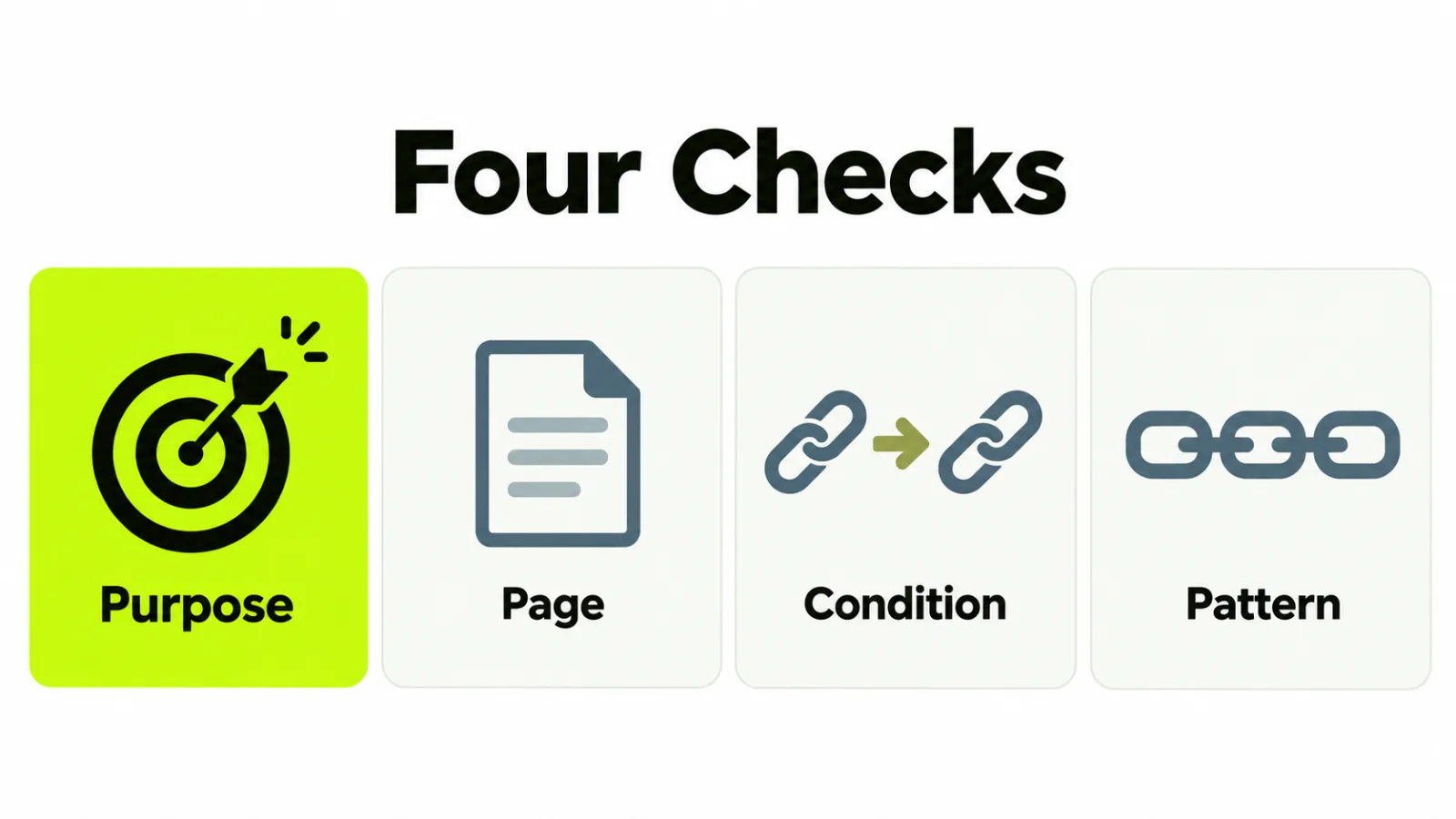
Would the link exist without search?
Take search out of the picture. A link in an integration guide still helps a customer set up the product. A link in a footer of “resources” helps nobody.
Does the page serve its readers?
Open the page that would carry your link. If it explains a workflow your customers run, it exists for them. If it lists forty unrelated sites with matching anchors, it exists for the links.
Is one link a condition of the other?
A link given because you gave one is a trade. The wording gives it away: “we’ll add you if you add us” is the exchange Google describes. A partner who linked you first, for their own readers, and asks for nothing isn’t trading.
Does the pattern repeat?
One partner link is a relationship. A sheet of forty swaps is a network, and the pattern is what stands out: the same pairs, the same anchors, added in the same weeks.
Count your own. If you couldn’t explain each swap to a customer without mentioning rankings, the list is too long.
What to say to a swap request
Decline the exchange and offer what you’d give anyway: a mention or a quote where it helps their readers, with no link owed in return.
A cold request from an SEO tool or an agency gets a short no: “We don’t trade links. If your page helps our readers, we’ll link to it on its own.”
A partner gets a different answer: ask what the link does for their customers and for yours. If there’s a reason beyond the favor, add the link where a reader would use it, and if the favor is the only reason, say no.
Conditions in a reply deserve a second look. A link back is the one this post covers, and our guide to what to do with the reply covers the others and which ones to refuse.
Frequently asked questions
Is link exchange good for SEO?
Rarely, and never on its own. A swap adds one link in each direction, and a link is worth what the page carrying it is worth, which the swap doesn’t change. The links that help are the ones sites give for their own readers, and any ranking effect follows from that.
What is a three-way link exchange?
Site A links to B, B links to C and C links back to A, so no two sites link to each other directly. The third site is there so the trade isn’t direct. In link data the three still form a closed loop.
Do nofollow or sponsored links make an exchange safe?
They make it low-risk and low-reward. A link marked nofollow or sponsored isn’t meant to pass ranking credit, and passing credit is what a swap is for. A partner link that’s only safe with the attribute on isn’t earning its place.
What should you do about link exchanges you’ve already done?
List them with site, page, anchor and date. Keep the ones a customer would find useful, and remove your side of the rest. Our guide to auditing an inherited backlink profile covers the order to work in.