SaaS Link Building
Resource Page Link Building: What to Offer First
Resource page link building means asking the person who keeps a curated page of links on a topic to add yours. The reader is already looking for more to read or use, which is why a link there is easy to justify and why the message can be short.
The pages that rank for this treat anything titled “resources” as a prospect and the email as the work. For a SaaS company the work comes earlier, because most of what you sell isn’t something a resource page lists.
Here you get what these pages want, which of them are worth a message, and how to ask without sounding like an order.
What resource page link building is
Resource page link building is asking the owner of a curated links page to add yours, because it helps the page’s readers.
These pages go by other names: “useful links”, “tools we recommend”, “further reading”. A university department, an industry association, a community wiki and an independent blog all keep them.
What they share is an owner who chose each entry, which makes the link close to the cleanest kind. Our white hat post calls that test who chose the link, and a resource page passes it more often than most tactics do.
It’s a cousin of listicle link building, with one difference. A list ranks products against each other and a resource page doesn’t. It points to things that help, and that changes what you should offer.
Why a SaaS product is rarely what the page wants
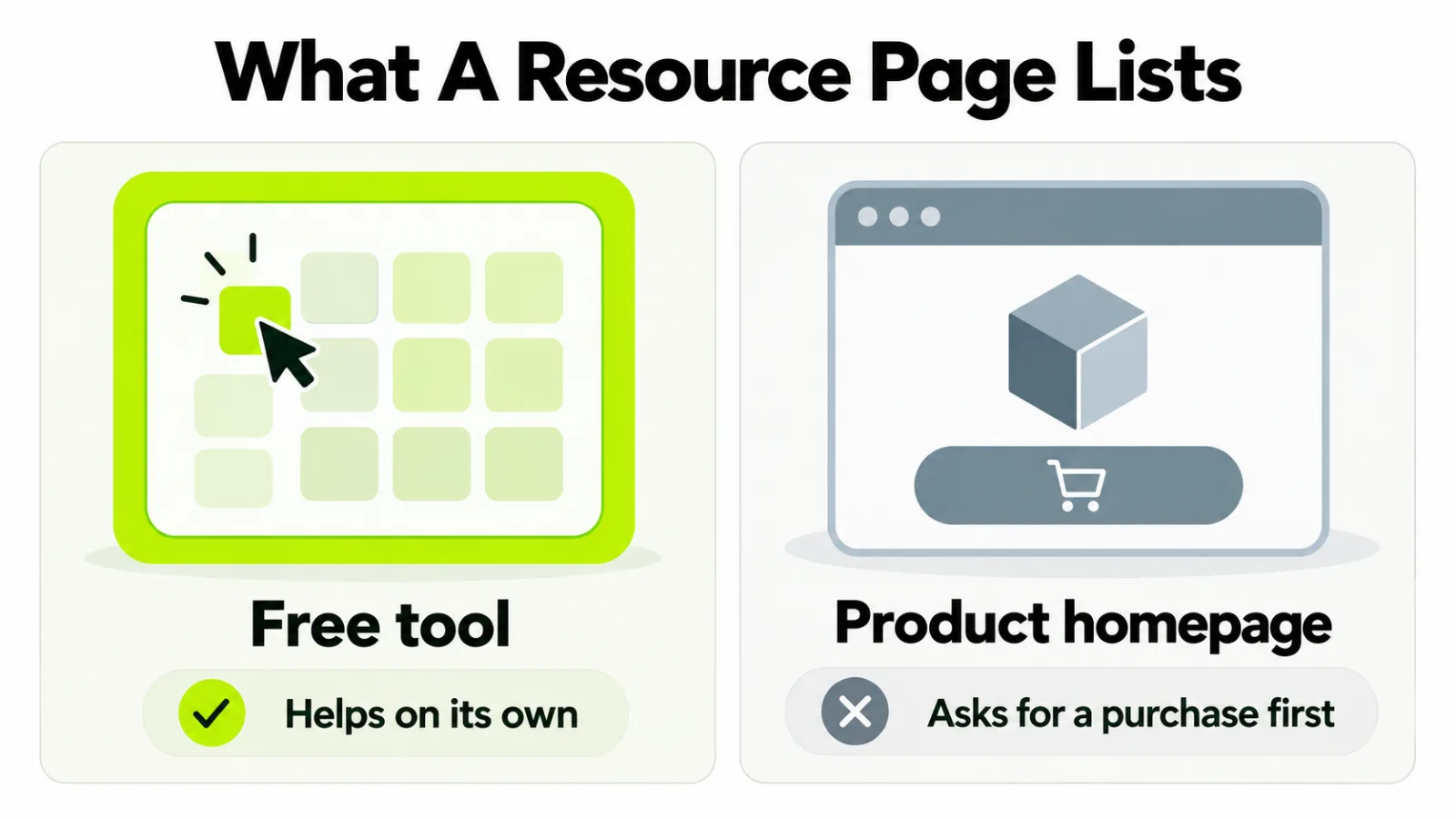
It’s rarely what the owner is looking for, because a resource page lists things that teach or help.
An owner who reads “please add our software” has to decide whether it’s a resource or an advert. A homepage is a pitch for a purchase, and one sentence in an email can’t show the owner that the page helps anyone who doesn’t buy.
That’s most of why SaaS outreach to these pages stalls. The message is fine and the thing being linked isn’t what the page collects. A guide, a free tool, a template or a page of original data is, because the owner can link it without vouching for a product.
Software does belong in one case: when the page’s own subject is the category, such as a “tools for X” page kept by someone who writes about X. A product page can fit there, and the fit checks below decide it.
What to offer instead of the homepage
Offer the one page on your site that helps the page’s readers on its own, such as a free tool, a template, a data page or a guide.
Pick it before you search. If no page on your site would help a stranger who never becomes a customer, finding resource pages is premature, and the work is building one.
Three things make a page easy for an owner to list:
- It stands alone. The useful part is there before any signup, demo form or email gate. A page that asks for something first reads as a lead form to the owner, and to their readers.
- It matches the page’s subject. A scheduling template belongs on a page about running a team, not on one about security. The tighter the match, the less the owner has to decide.
- It will still be there. A link to a URL that later moves or disappears becomes a dead link on someone else’s page, and the next company to pitch that page pitches against yours.
How to tell a resource page is worth pitching
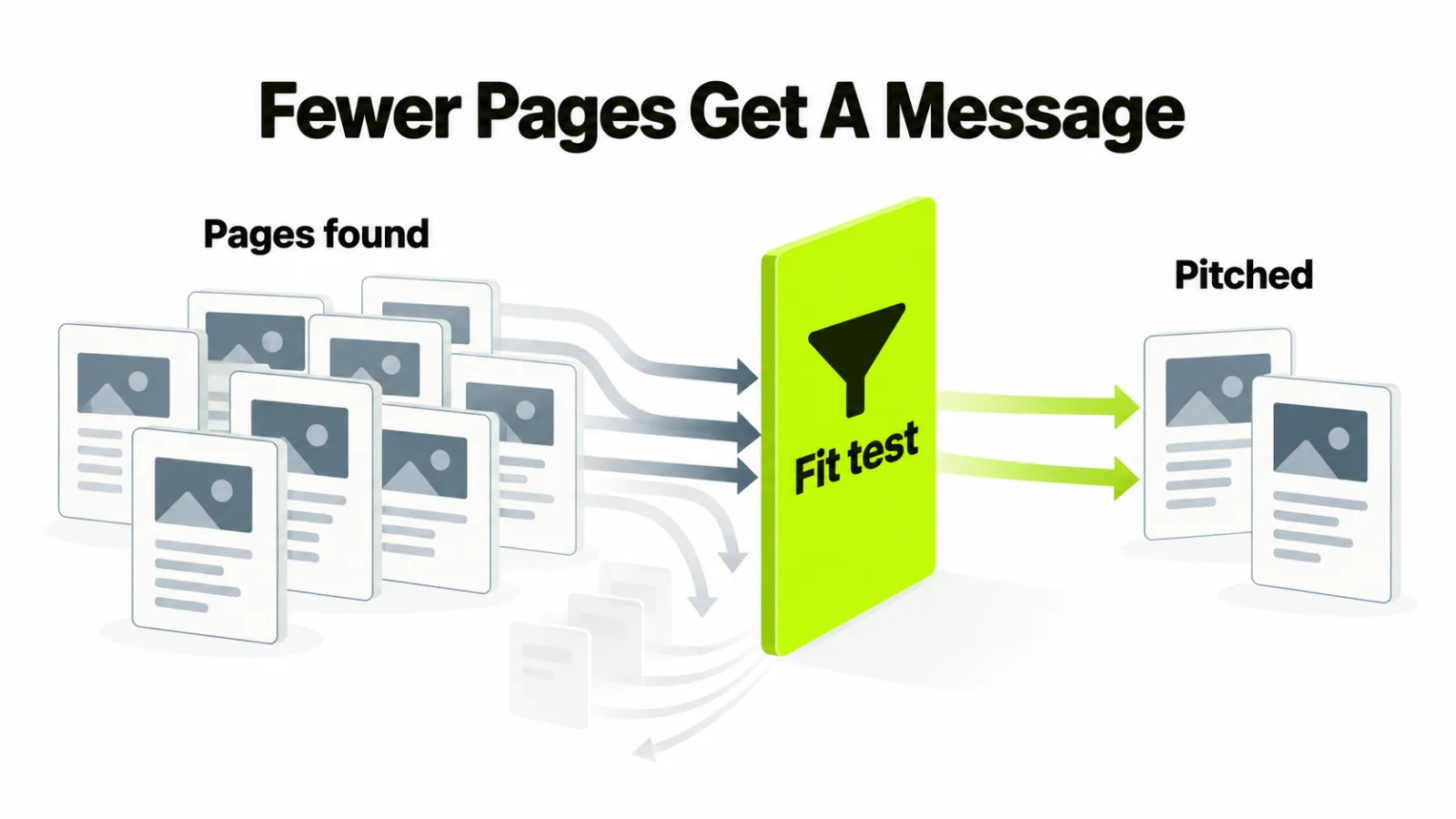
You can tell a resource page is worth pitching when someone still maintains it, its readers are your buyers, and it already links to things like yours. Five checks sort the pages, and the first two rule out most of what a search returns.
- Someone maintains it. Look for a date, recent entries, or both, then open a few of the links. A page last touched years ago whose links are dead is abandoned, and a request sent to it reaches nobody.
- Its readers are your buyers. The site should be one your buyer would visit, on the topic your page covers. A link on a page of hobby links is a link no buyer sees.
- It links to things like yours. If the page lists tools and guides in your category, your page is the next entry. If it lists only research papers, a calculator isn’t.
- It’s curated, not sold. A “submit your link” form or a sponsored label beside the entries means the owner is selling positions. That’s a different job, covered under the fee question below.
- The page itself has standing. Search for its exact title. If Google doesn’t return it, the link has little to lean on.
A page that fails the first check isn’t a prospect. One that fails the fourth is a purchase, and should be priced and tracked as one.
Finding the pages
Start with the topic of the page you’d offer and add the phrases owners use for these pages: “resources”, “useful links”, “recommended tools”, “further reading”. Limiting a search to page titles or URLs that carry one of them narrows it quickly.
Read past the first results, because independent owners often sit below the large sites.
The better source is your competitors’ links. Pull their referring domains and keep the pages that are lists of resources. They’re the “earn now” group in our guide to sorting a competitor gap, since an owner who listed a rival’s tool has already shown they list tools.
Watch for dead links while you read. A resource page that points to a missing page on a subject yours covers is a stronger prospect than a clean one, because your message fixes something.
That’s the tactic in our broken link building guide, and the offer section above still applies to it.
Asking the owner to add your page
Open with their page, not with you. Name it and say which entry sits closest to yours. Then offer your page as an addition for their readers, with the link and one sentence on what it does.
Leave out the requests that mark a message as a sale. Don’t ask for a particular anchor, a position or a followed link, because those are the owner’s decisions.
Send one follow-up after about a week, then stop. Replies fall into a few kinds, and our outreach post covers each one.
If the reply is a price, the test from the white hat post applies unchanged: would the link be on that page if nothing had changed hands? If not, it’s advertising, and it should be priced and marked as advertising.
What a resource page link is worth
Less than the tactic’s reputation suggests, and more than a bought link. Some owners mark every outbound link as a nofollow link, and one link from one page moves little on its own.
What you get is relevance: a link from a page on your topic, read by people who are looking for exactly this.
That’s why a short list beats a long one. A pile of weak pages adds referring domains that say nothing about you, while a handful of maintained pages in your category say what their owners meant.
Don’t choose pages by the ending of the domain. Choose them by the five checks.
After the link goes live
A resource page is only as permanent as its owner’s attention. Pages get pruned, rebuilt and moved, and a link that was there in spring can be gone by autumn.
Check it a month after it appears, then each quarter. Write down whether it’s followed, nofollow or sponsored, so the tracker doesn’t count three different things as one.
If it disappears, it isn’t always the end. Our guide to reclaiming lost links covers when to ask and when to let it go.
Before any of that, check that there’s a page worth listing. If there isn’t, our guide to assets SaaS teams can build is where to start.
Frequently asked questions
Is resource page link building the same as listicle link building?
No. A list ranks products against each other, so you’re asking to be part of a comparison. A resource page collects things that help, so you’re asking for a place among them, and the page you offer matters more than the product behind it.
Do resource page links pass ranking value?
Some do, and some are nofollow and pass little. A followed link from a maintained page on a related topic is worth having, and the readers it sends are worth having either way.
Can you ask a resource page to link your homepage?
You can, but it’s the weakest ask. Owners hesitate to vouch for a homepage because it sells something, so offer the page that helps their readers and keep the homepage one click behind it.
What if the owner asks for money?
Treat it as advertising, mark it sponsored and keep it out of your earned-link count. The test is whether the link would be on that page if nothing had changed hands.
How long should your list of resource pages be?
As long as the set that passes the fit test, which is usually shorter than a search returns. A short list of maintained, relevant pages beats a long one of abandoned pages, and each message should name something on the page it goes to.