SaaS Link Building
Backlink Profile Audit for an Inherited SaaS Domain
A backlink profile audit on a domain you didn’t build asks what a normal audit doesn’t: where did each link come from, with nobody left to say?
A standard audit assumes you know the history. An inherited profile comes without it, so you read the history from the evidence instead.
Here’s the order that keeps you safe, and what to do at each step.
Three ways a SaaS team inherits a profile
The causes are ordinary. A new head of growth takes over from an agency that’s leaving, or a rebrand puts an old site’s links under a new one. Sometimes a company is acquired and its domain joins the buyer’s.
In each case you now own links you didn’t choose, built by people who may not be reachable. Some are assets and some are liabilities. Most are neither.
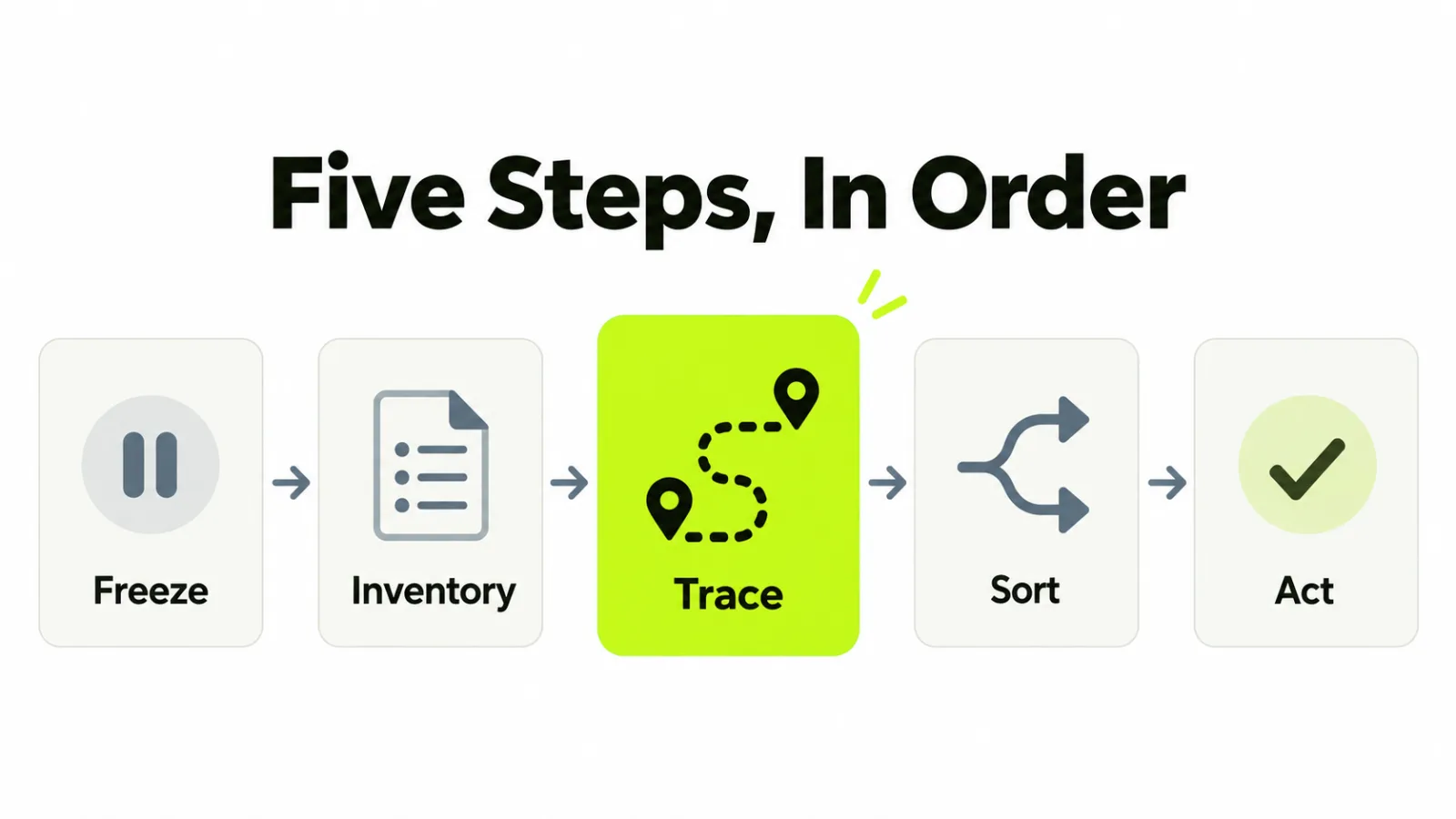
The audit has five steps, and the order matters. Freeze new links, take inventory, trace each link’s origin, sort into decisions, then act.
Step one: freeze new links
Pause any live link building before you read anything. A running campaign adds to the pile you’re trying to explain, and it may be what produced the problem.
Ask the outgoing vendor or team for whatever they’ll give you: reports, order sheets, invoices, outreach logs and the tracker. Those become your paper trail in step three, and they’re easiest to get while the handover is still warm.
Freezing costs a few weeks of momentum. Carrying on costs you the ability to tell old damage from new.
Step two: take inventory in domains
Export the referring domains, not the links. Fifty links from one site is one relationship, and our page on referring domains covers why the domain is the unit.
Group them by the kind of site each one is: publications, communities, directories, partner pages, and sites that look like they exist to sell links. You aren’t judging yet. You’re making the pile legible.
Step three: trace where each link came from
This is the step that’s specific to inheriting. With no builder to ask, read four kinds of evidence, and weigh them together rather than one at a time.
Timing: Links that arrived in one burst and then stopped look like a campaign. Links that arrived steadily look like a profile that grew.
Anchors: A cluster of identical commercial phrases points to a purchased pattern. Our guide to anchor text penalties covers the ratios.
Source: Sites that accept any topic, have no real readership, or link out to unrelated businesses are the usual signature of a network. Our page on private blog networks covers how to recognize one.
Paper trail: An invoice line or an outreach log that matches a link answers the question outright, and it’s the strongest evidence you’ll get.
Then apply the test from our guide to white hat link building to whatever’s left: would this link still be here if nothing had been exchanged for it?
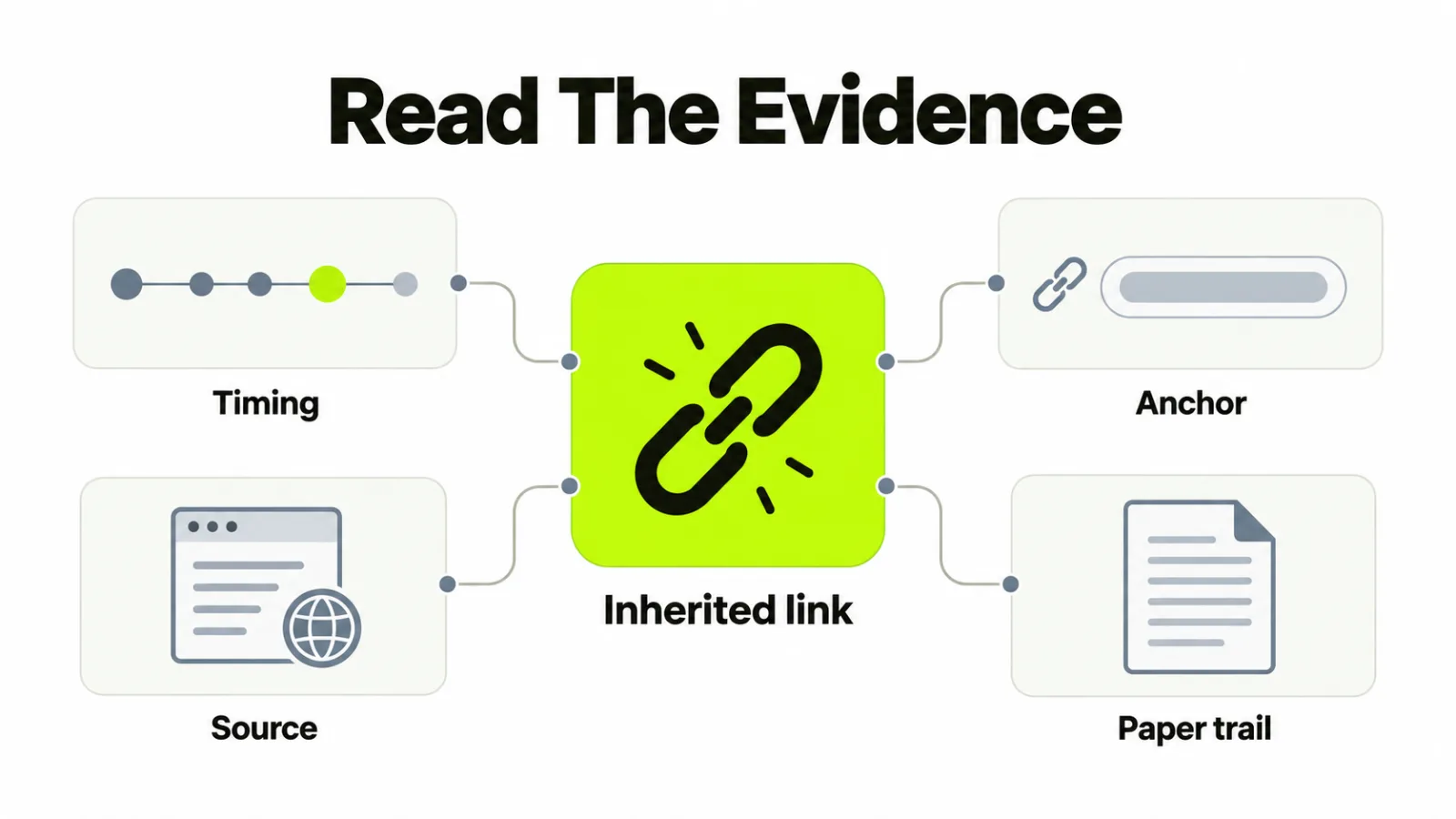
One trace rarely settles a link. Two or three that agree usually do, and a link with no evidence either way stays in the neutral pile.
Step four: sort into four decisions
Every domain lands in one of four groups. The signal decides the action, and the action is usually smaller than people fear.
| Decision | Signal | Action |
|---|---|---|
| Keep | Relevant site, editorial context, matches a known placement | Leave it, and log why |
| Fix | A good link pointing at a dead or wrong page, or with a skewed anchor | Redirect the address, or ask for a corrected link |
| Disavow | Clearly manufactured, with two or more traces agreeing | Add it to a disavow file, deliberately |
| Ignore | Weak, odd or unexplained, but harmless on the evidence | Leave it and revisit at the next audit |
Most of it needs no action
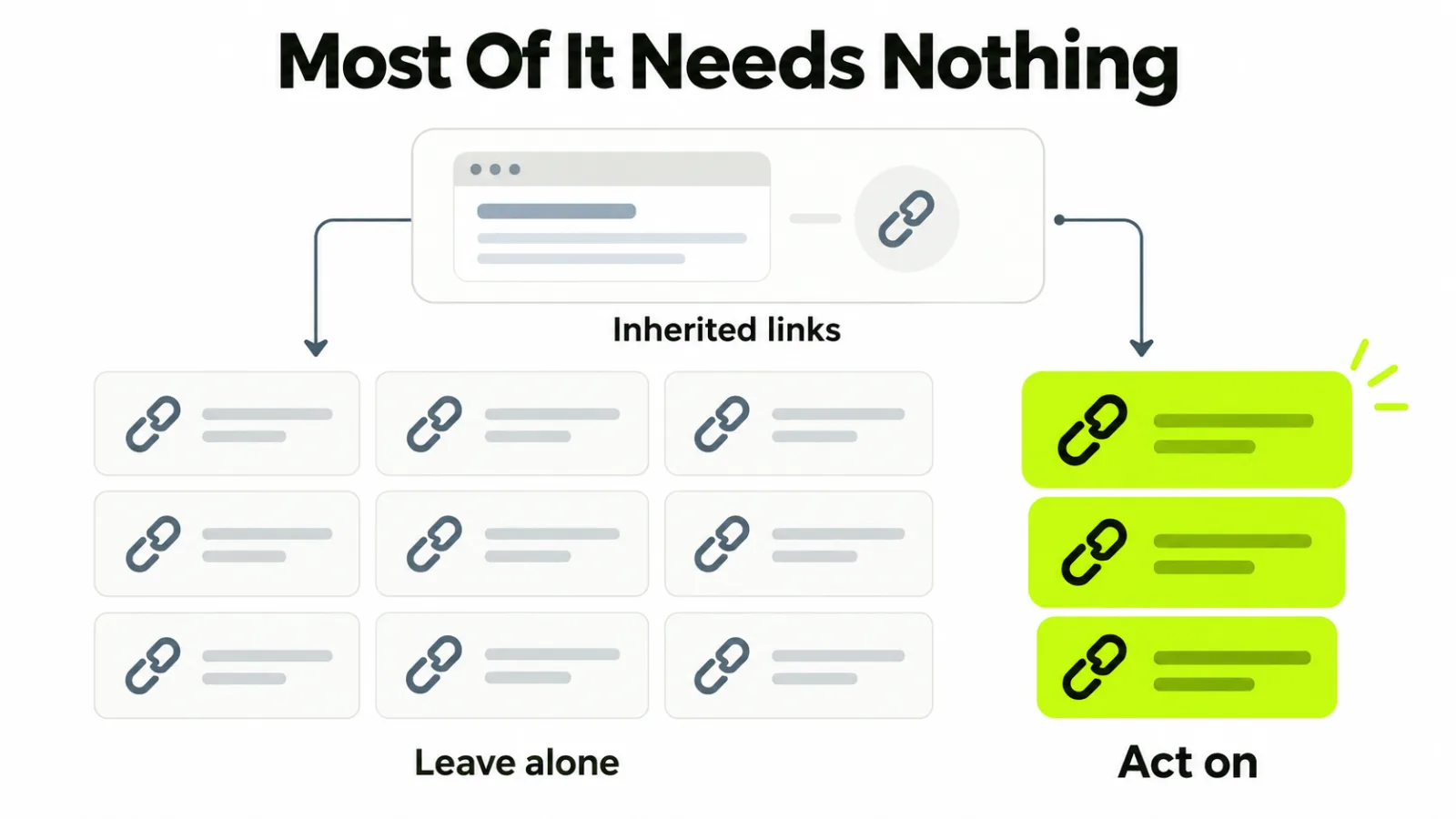
The largest group is usually ignore. Most inherited links are weak or unexplained rather than harmful, and treating unexplained as guilty is how an audit does more damage than the profile did.
Broad disavowing is the common mistake. It discards links that were doing quiet work, in exchange for the feeling of having cleaned up. Our guide to recovering from anchor text penalties covers when a disavow file is warranted.
Disavow only what two or more traces agree on. Reserve it for the small set that’s clearly manufactured, and record why each domain went in.
Step five: act, then set a baseline
Fix the fixable first, because it costs least. A good link pointing at an address that no longer exists is recovered by a redirect, and our guide to link reclamation covers that.
Then write down what the profile looks like now: the referring domains, the anchor mix, and the domains you decided to keep. That snapshot is the baseline every later change gets measured against.
Re-run the audit every quarter. It takes less time each round, because the pile only has to be explained once.
What the audit can’t tell you
It can’t tell you what the profile is missing. A clean inherited profile can still be thin on the sources your buyers read, and that’s a separate question. Our guide to competitor backlinks covers how to find the gap once the profile is trustworthy.
It also can’t restore a decision nobody documented. Where the evidence is thin, that’s the cost of inheriting, and the fix is to document your own choices better than they were.
A profile audit is the first phase of the work in our SaaS link building services, for teams that would rather not run it themselves.
Frequently asked questions
Should you disavow an inherited backlink profile?
Only the small set that two or more traces agree is manufactured. Disavowing broadly throws away links that were doing quiet work, and most inherited profiles are weak rather than harmful.
What if the previous agency won’t share their reports?
You can still audit. Timing, anchors and source type carry most of the evidence, and the paper trail is a bonus rather than a requirement. Where it’s missing, keep more links in the neutral pile.
How long does an inherited profile audit take?
It scales with the referring domains and not the links, which is why the inventory works in domains. The first pass is the slow one, and later rounds only cover what changed.
What if the domain was migrated or rebranded?
Check first that the old addresses redirect to the closest new page. Links pointing at the old site only count when the redirect carries them, and a chain or a homepage landing loses some.
Is an unexplained link a bad link?
No. Unexplained is a neutral starting point, and it only becomes a problem when the pattern around it says so. Treating it as guilty is how audits do more damage than the profile did.
How often should you re-run the audit?
Quarterly, plus once after any migration, rebrand or vendor change. Each round is shorter than the last, because the pile only has to be explained once.