SaaS Link Building
Directory Link Building for SaaS: Which Directories Are Worth It
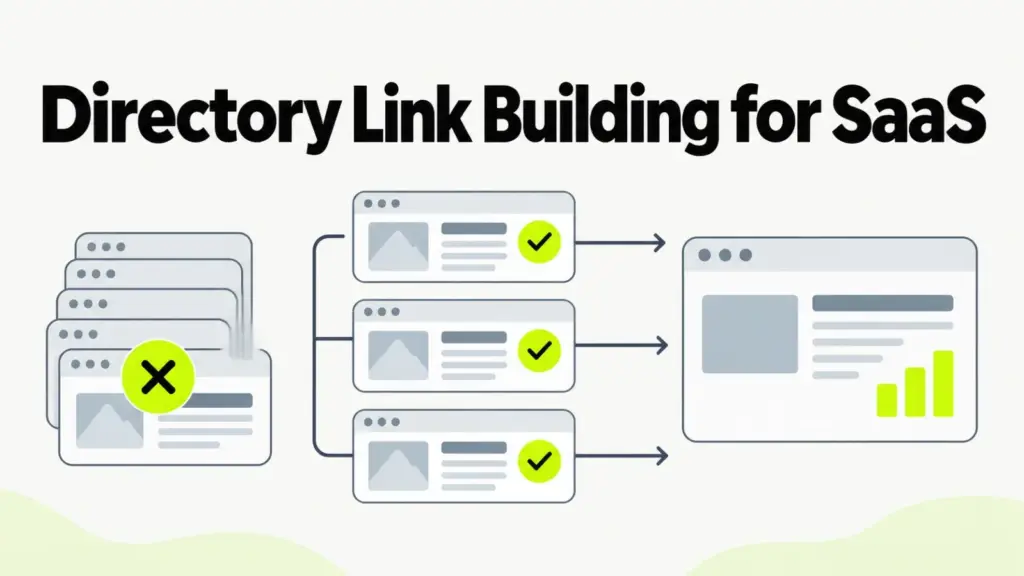
Directory link building for SaaS is worth it only where buyers already browse: software review platforms, the app marketplaces of tools you integrate with, and curated lists in your category. Generic web directories and bulk submission services add risk and nothing else. Judge each directory by its readers, never by its domain rating.
What is directory link building for a SaaS company?
Directory link building is listing your SaaS product on sites that catalogue software, apps or companies, so each listing points back to your domain. For a SaaS company, the directories that matter are the ones a buyer uses to shortlist tools. That makes them closer to a sales channel than a link source.
The term covers very different sites. A G2 or Capterra profile collects verified reviews and gets compared against rivals. A HubSpot or Slack marketplace listing appears inside a product your buyer already pays for. A generic “submit your site” directory accepts anything with a URL, and that last group gave directory link building its bad name.
Expect many useful directory links to carry rel=”nofollow”, rel=”sponsored” or a redirect. Check the page source of a live listing on each platform you target to see which attributes it uses. That’s fine. The listing earns its place through the buyers it sends and the brand mentions it creates, and any ranking credit is a bonus.
Which directories are worth it for SaaS?
Four kinds of directory are worth a SaaS company’s time: software review platforms, integration marketplaces, curated category lists and launch communities. Each one has an audience that compares or adopts software. Free general directories, article directories and bookmarking sites fail that test, so leave them out of the plan.

The four types that hold up, roughly in order of buyer value:
- Software review platforms such as G2, Capterra and TrustRadius, where buyers read peer reviews before a demo.
- Integration marketplaces such as the HubSpot App Marketplace, Slack App Directory and Zapier, where partner users find add-ons.
- Curated category lists, including niche industry directories and GitHub “awesome” lists, where a maintainer decides what gets in.
- Launch communities such as Product Hunt and BetaList, which bring one burst of attention around a release.
Review platforms deserve the most care because your profile is a page prospects will read before they talk to sales. Fill every field, list your integrations, and collect reviews from real customers through the platform’s own process. Many review platforms also sell paid placement in their category pages. That buys visibility, and any link that comes with it is advertising.
Integration marketplaces work best as part of a partner program. The listing, the partner’s integration docs and any co-marketing post can all point back to you, and our guide to link building through SaaS integrations covers how to plan them.
What does Google’s spam policy say about directory links?
Google’s spam policies list “low-quality directory or bookmark site links” as an example of link spam, next to buying links that pass ranking credit. The policy targets directories that exist to sell or swap links. A review platform or marketplace that buyers use for its own sake sits outside that description.
Paid listings are where the line sits. If a directory charges for a listing and the link passes ranking credit, Google treats it as a paid link. Google’s guidance on qualifying outbound links asks sites to mark paid links with rel=”sponsored”, and a directory that won’t do so is selling the risk to you.
Bulk submission packages fail on every count. A flat fee for hundreds of directory listings buys exactly the pattern the policy describes. Skip it, and apply our test for any link building tactic to other shortcuts that promise volume.
Do directory links help rankings at all?
Directory links rarely move rankings on their own, and the useful ones often pass little ranking credit by design. Their value for a SaaS company is discovery and consistency: a presence where buyers compare tools, one accurate description of your product across the sites that catalogue software, and referral visits from people already shopping.
That changes how you measure them. Track referral sessions, demo requests and review volume from each listing, then check whether the category page you sit on shows up when you search your category term. A listing nobody visits is worth nothing, whatever its domain rating says.
Directory profiles also feed other work. A strong review profile supports award entries and roundup pitches, and our guide on which lists are worth getting on picks up from there.
How do you test a directory before you submit?
Test a directory with three questions before you submit: who browses it, who decides what gets listed, and what your money buys. A directory worth joining has real buyers in your category, an editor or review step that rejects some submissions, and no fee tied to a followed link.
| Signal | Worth listing | Skip it |
|---|---|---|
| Who browses it | Buyers or users in your category, with visible reviews or comments | No visible audience, only listings |
| Who decides what gets in | An editor, maintainer or verification step | Instant approval for any URL |
| What you pay for | A free listing, or paid visibility marked as sponsored | A fee for a followed link |
One more check takes a minute: open a category page and read the other listings. If casinos, essay writers and SaaS tools share one list, the directory sells links, and your listing would sit in that company. Then ask whether you’d want the listing if links didn’t count. If the answer is no, skip it.
Take a hypothetical scheduling tool for dental clinics. G2 and Capterra pass, because practice managers read reviews there before a demo. The app marketplace of the practice management software it integrates with passes too, since that’s where its users look for add-ons.
A dental industry association’s vendor directory passes if the association vets members. A “top business directories” package that lists the tool on hundreds of general sites fails all three questions at once.
How do you run a directory pass for a SaaS product?
A directory pass for a SaaS product is a one-time project with light upkeep: pick a shortlist, write one accurate profile, submit, and review the listings every quarter. Most of the effort goes into review profiles and partner listings, because those are the pages buyers read.
- List the directories buyers in your category use: review platforms, marketplaces of tools you integrate with, and niche lists.
- Run each one through the three-question test and drop any that fail.
- Write one master profile with your description, category, pricing model, integrations and screenshots.
- Claim or create each listing yourself, through the platform’s own form and verification.
- Ask current customers for reviews through each platform’s approved process and review guidelines.
- Add every listing URL to your link tracking and check it each quarter for stale pricing or changed link attributes.
The pass is one line item in a wider campaign. Our SaaS link building checklist shows where it sits next to outreach, digital PR and partner work.
Frequently asked questions
Free directories are worth it when they pass the same test as any other: real buyers, an editorial gate and a relevant category. Price tells you little about value. Plenty of free listings send nobody, and a few send qualified buyers every month.
Treat any paid tier as an ad buy and judge it against your own sales data. Check each platform’s own pricing page for what its free profile includes. A paid upgrade buys visibility, so measure it by demos and pipeline, and expect any link in it to be marked as sponsored.
Yes, when they come in volume from directories that sell links. Google can ignore links that break its link spam policy or take manual action against a pattern of them. Relevant, editorially reviewed listings don’t fit that pattern.
There’s no target number. List on every directory that passes the test in your category, which for most products is a short list, and stop there. Adding weaker directories to reach a count only adds risk.
No. Local citations are name, address and phone listings for businesses that serve a location. SaaS directory work is about software categories and the buyers who compare them, so a SaaS company without a local storefront gets little from citation sites.
Shortlist your category’s directories this week
Open a spreadsheet and list every review platform, marketplace and curated list a buyer in your category would check. Run each through the three-question test, then claim the ones that pass, starting with your strongest review profile. After that, the links that move rankings come from editorial coverage, and our explainer on what SaaS link building covers is the next read.