SaaS Link Building
Competitor Unlinked Brand Mentions: Which Ones Become Backlinks
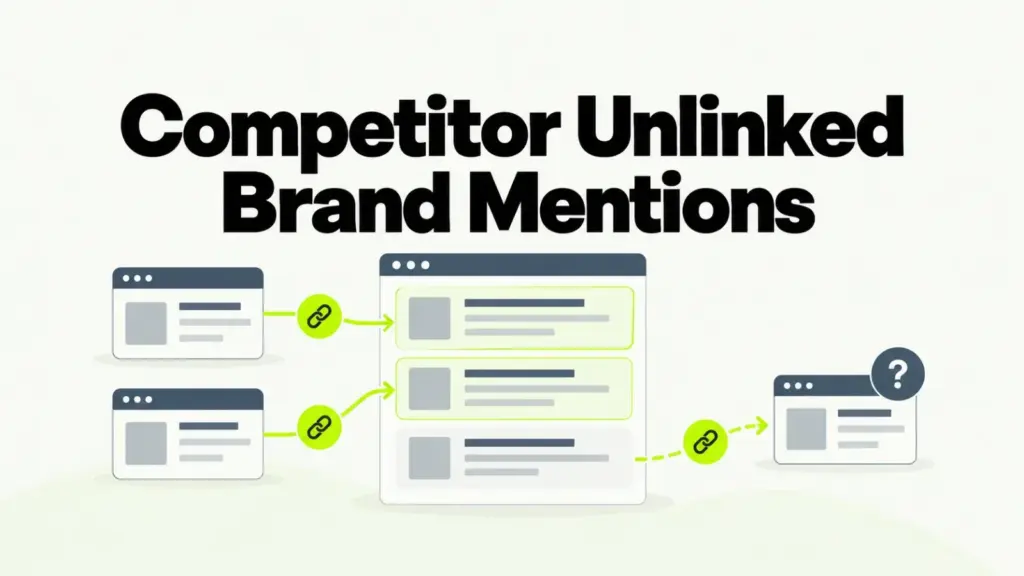
Competitor unlinked brand mentions are pages that cite your rivals and either name you without a link or leave you out. The ones worth converting already link a competitor and mention you in plain text, because the editor already links vendors and only needs to close the gap. Pages that link nobody give you a mention, and rarely a link.
What counts as a competitor unlinked mention?
A competitor unlinked mention is a page in your category that cites a rival and names you without a link, or skips you. The idea of a brand mention and why unlinked ones matter applies here, seen from the competitor’s side of the page.
Three situations fall under the term, and each one plays out differently. The first is a roundup that links two rivals and names you in plain text. The second is a comparison post that names every vendor and links none. The third is a review that links a rival and never mentions you.
Treat the first as a link request, the second as a mention you already have, and the third as an inclusion pitch. Putting all three in one outreach list is the usual reason mention campaigns stall.
How do you find pages that cite competitors but not you?
Pages that cite competitors but leave you unlinked turn up through five sources: search operators, mention alerts, content research tools, competitor backlink exports and AI answer sources. Run all five once to build the list. After that, keep the alerts running so new pages reach you while the editor still remembers writing them.
Each source catches pages the others miss:
- Google search operators, such as “Rival” “YourBrand” -site:rival.com, to find pages that name you both.
- Mention alerts on each competitor’s brand name in Google Alerts or a monitoring tool such as Brand24 or Mention.
- Content research tools such as Ahrefs Content Explorer, searched for pages that name a rival and your brand.
- Your competitors’ backlink exports, checked for pages that already mention you somewhere in the text.
- The pages ChatGPT, Perplexity and Google AI Overviews cite when you ask for the best tools in your category.
Then filter hard. Drop pages with no traffic, no author, or outbound links to unrelated niches. Run the same checks you’d use for evaluating backlink quality for B2B SaaS before you send a single email.
Which competitor mentions convert into backlinks?
Competitor mentions convert into backlinks when the page already links vendors and treats you as a peer of the rivals it links. Your argument is parity: you ask the editor to apply the page’s own linking pattern to you. When the page links nobody, you have no pattern to point to.
| Situation | What the page shows | What to ask for | Realistic outcome |
|---|---|---|---|
| Rival linked, you named | Linked competitors, your brand in plain text | A link on your existing mention, to the page that fits the sentence | Your strongest case: the change matches the editor’s own choices |
| Everyone named, nobody linked | A no-vendor-links policy, or a writer who never links out | Nothing, or a factual correction if a detail is out of date | Rarely a link, but the mention still reaches buyers and AI answers |
| Rival linked, you absent | A list or review that skips your product | Inclusion, backed by something new: data, a feature, a fair comparison | Depends on what you bring, so treat it as new outreach |
The third row overlaps with earning links from rival profiles. The guide to which competitor backlinks you can earn covers how to judge those pages. Put most of your effort into the first row, where you’re already on the page.
Work first on pages that AI assistants already cite for your category. A link there helps search, and the mention keeps you in the answer either way. The playbook on how to get cited by AI explains how assistants pick their sources.
How do you convert a competitor mention into a backlink?
You convert a competitor mention into a backlink with a short, specific request to the person who controls the page. Point to the exact sentence and name the page you’d like linked. The request works because it fixes an inconsistency the editor can see in seconds.

- Confirm that the page links at least one competitor and names you without a link.
- Pick the URL that fits the context, often a feature or integration page instead of your homepage.
- Find the editor or author who maintains the page through the byline or the site’s contact page.
- Write two to four sentences that quote your mention, note the linked rivals and give your suggested URL.
- Add something useful to the request, such as a corrected detail or a product update.
- Log the reply, follow up once, and recheck the page later to confirm the link stayed.
Here’s a worked example. A trade blog’s scheduling software roundup links three rivals to their feature pages and names your product in one sentence, unlinked.
The email that fits that page is three sentences long:
Hi, your scheduling roundup mentions us next to three tools that link to their feature pages. Our matching page is the team-scheduling page linked here, if it helps your readers. One note: calendar sync launched after the piece went live, in case you’re updating it.
The email has no discount code, no guest post offer and no anchor text request. The editor gets a reason to link that serves readers, and that’s the whole pitch.
Which competitor mentions should you leave alone?
Some competitor mentions look like openings and turn out to be traps: paid list spots, sponsored rankings and sites that sell inclusion. Chasing them wastes outreach time. When money buys a followed link, you’re inside a link scheme. The warning signs show on the page itself.
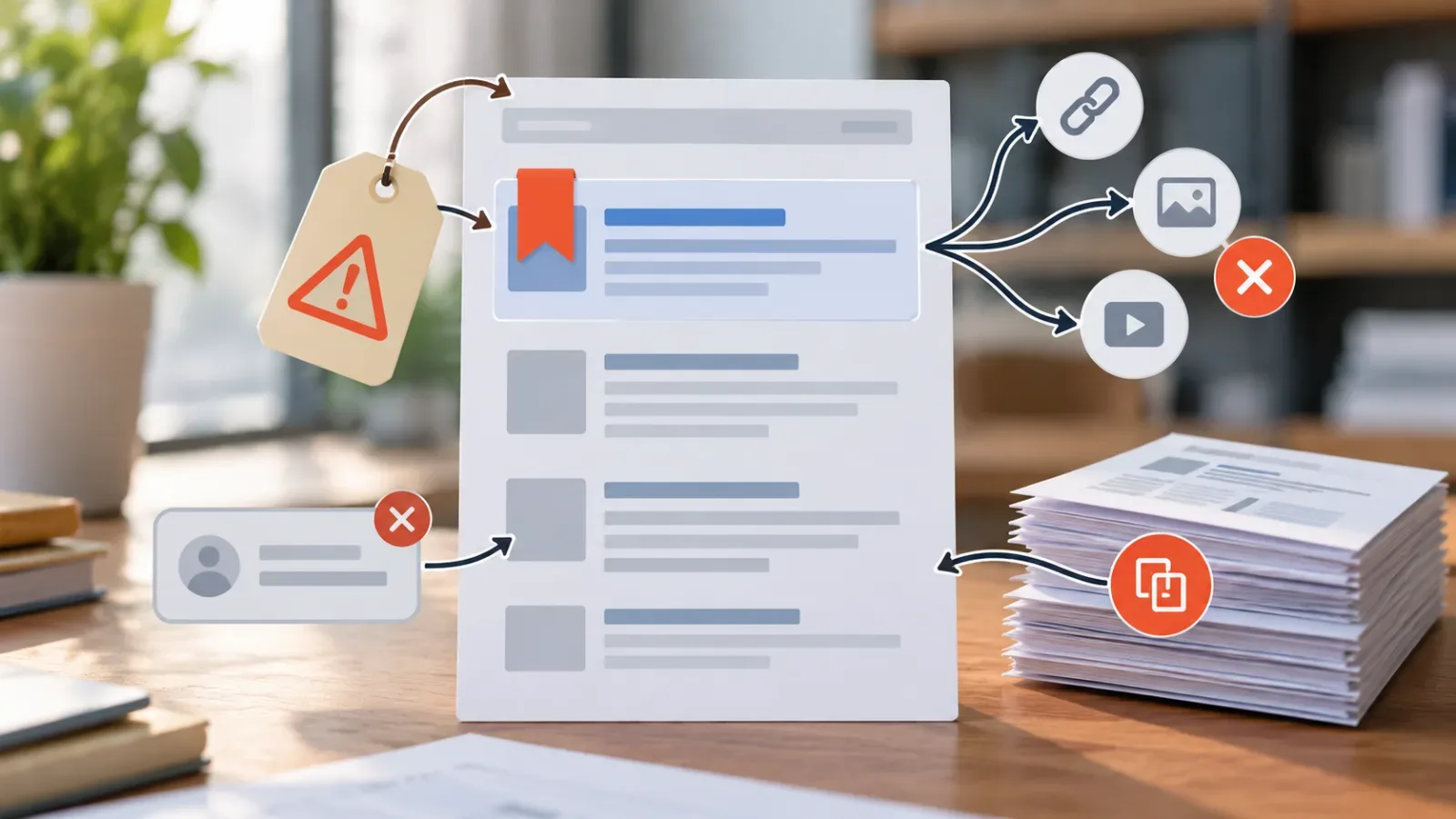
- The page offers a listing, or a better position, for a fee.
- Rival entries carry rel=”sponsored” or a disclosure that vendors paid to appear.
- The site links out to casinos, loans or other niches unrelated to software.
- The page has no named author, and the same list appears on several sister sites.
- The competitor’s link runs through an affiliate tracking URL, so the list earns commission.
Google’s spam policies treat buying or selling links that pass ranking credit as link spam. If you pay for a spot, the link needs rel=”sponsored” or rel=”nofollow”. Count on referral value from it, and nothing more.
Not sure where a request crosses the line? Run it through the white hat link building test before it goes out.
Should you run this tactic in-house or hand it off?
Competitor mention conversion suits an in-house team when the list is short and someone knows the category well enough to spot outdated details. Outside help makes sense when the list spans dozens of pages across several rivals and nobody owns follow-ups. The work is light per page and heavy in total.
Keep it in-house when:
- You track a small set of direct competitors.
- Your product marketer already reads the trade blogs that cover your category.
- Someone can send and follow up on a handful of emails every week.
- Your feature pages are current enough to link with confidence.
Hand it off when:
- Rival mentions appear faster than your team can review them.
- Mass outreach from your domain has already strained publisher relationships.
- You want the mention work tied to digital PR and AI citations.
We handle this work inside our SaaS brand mention services, where every link is earned, never guaranteed.
Start with the pages that already link a rival
This week, pick your two closest competitors and search for pages that name both of them and you. Keep only the pages that link a rival and leave you in plain text. Send each editor a three-sentence note with the right URL and one useful update. The replies will tell you quickly whether the rest of the list deserves the time.
Frequently asked questions
Yes, for referral traffic and visibility with buyers. Google’s documentation on qualifying outbound links describes nofollow, sponsored and ugc as hints, so the ranking effect is Google’s call. Ask for the link and leave the attribute to the editor.
Link reclamation recovers links you once had, such as links lost when you moved a page. Competitor mention conversion targets pages where you were never linked and a rival was. The outreach looks similar, but the argument differs: repair in one case, parity in the other.
Ask for none. The editor’s existing sentence, usually your brand name, is the anchor. Requesting a keyword-rich anchor on a mention turns a reasonable request into a manipulative one.
Yes, briefly and without criticizing the rival. Noting that the other tools are linked gives the editor the reason for the change. Never ask them to remove a competitor’s link, because that request ends the conversation.
Work a batch small enough to personalize every email, such as the strongest pages for your two closest rivals. Widen the list once you see which page types reply. Volume without personalization turns a fair parity request into spam.