SaaS Link Building
Competitor Backlink Analysis for SaaS: How to Find and Use It
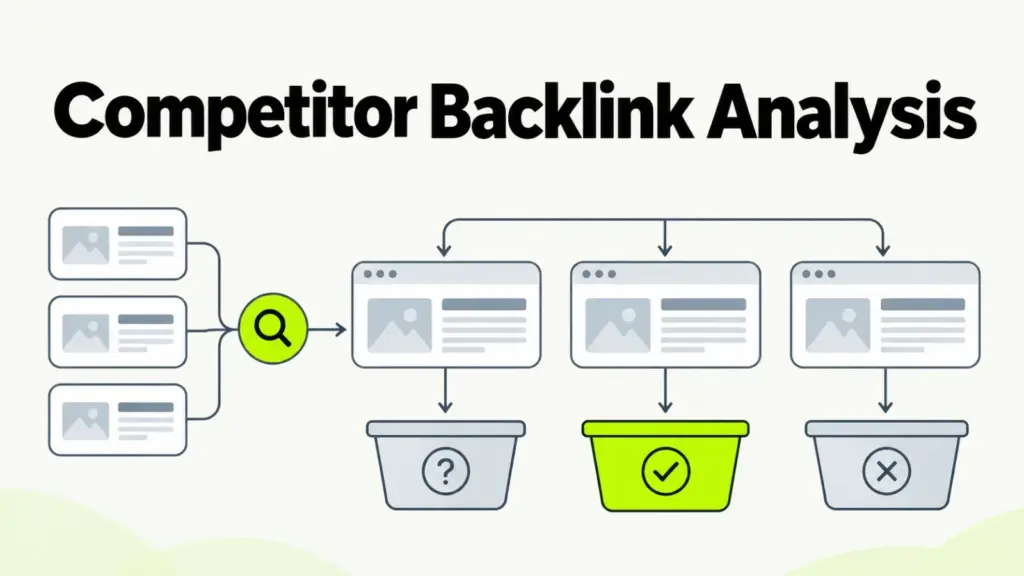
Competitor backlink analysis pays off when you stop counting a rival’s links and start asking how each one was earned. Pull the backlinks pointing to two or three SaaS sites that outrank you, sort them by acquisition channel, and copy only the channels your product qualifies for. The output is a short list of repeatable link sources.
What is competitor backlink analysis?
Competitor backlink analysis is a review of which sites link to your rivals, which of their pages earn those links, and why. A backlink is a link from another site to yours. The analysis turns a rival’s link profile into a map of channels open to your category.
Three questions drive the work. Who links to the competitor? Which competitor pages attract those links? How did each link come about: a product fact, a piece of content, a relationship or a payment?
The third question holds most of the value. Two rivals can show similar referring domain counts and opposite profiles, one built on integration partners and analyst coverage, the other on paid guest posts. Only the first is a pattern worth following.
Which competitors should you analyze?
The competitors to analyze are the sites that rank for the pages you want to grow. They are often different from the rivals your sales team names. A template library or a larger platform can outrank your direct rival on the queries that matter, so pick two or three rivals per page type.
Each source surfaces a different kind of rival:
- The top organic results for your category and feature keywords, leaving out review platforms such as G2 and Capterra.
- The rivals your sales team loses deals to, checked for whether they rank at all.
- Adjacent tools that share your buyer, such as a CRM when you sell sales engagement software.
- Smaller challengers whose rankings have climbed, since their recent links show what earns coverage today.
- The vendors ChatGPT, Perplexity and Google AI Overviews name when you ask for the best tools in your category.
Skip giants with years of press behind them, such as Salesforce or HubSpot. Their profiles come from brand size and news coverage you can’t copy. A rival at your stage teaches you more.
How do you sort a competitor’s backlinks by how they were earned?
Sorting a competitor’s backlinks means tagging each referring domain with the reason the link exists. A link earned by a product fact, a link earned by content and a link someone paid for each call for a different action. Tag the strongest domains first, and open single pages only when the class is unclear.
| Link class | Typical sources | Can you earn it? | What to do |
|---|---|---|---|
| Earned by product facts | Integration directories, partner pages, award lists, customer stories | Yes, when you share the fact: the same integration, award entry or customer type | List the facts you share and claim each placement first |
| Earned by content | Citations of a data study, a free tool, a glossary or a template | Yes, if you publish something newer or more useful on the same subject | Note the asset type and who cites it, then build your version |
| Bought or swapped | Paid guest posts, sponsored roundups, link exchanges, private blog networks | No. These carry policy risk and give you nothing to replicate | Log them as noise and leave them out of your plan |
The first row is the cheapest win. If a rival sits on a partner’s integration page and you have the same integration, your request is a simple update. The guide to competitor backlinks you can earn covers how to judge single pages in each row.
Award lists deserve their own pass, because every program runs on its own entry calendar. The walkthrough on getting backlinks from SaaS awards explains how recognition programs turn into links.
How do you run a competitor backlink analysis step by step?
A competitor backlink analysis runs in six steps, from a raw export to a ranked list of channels. Use one backlink tool for every rival, because Ahrefs, Semrush, Moz and Majestic crawl the web differently and report different counts. Mixing tools makes rivals look stronger or weaker than they are.
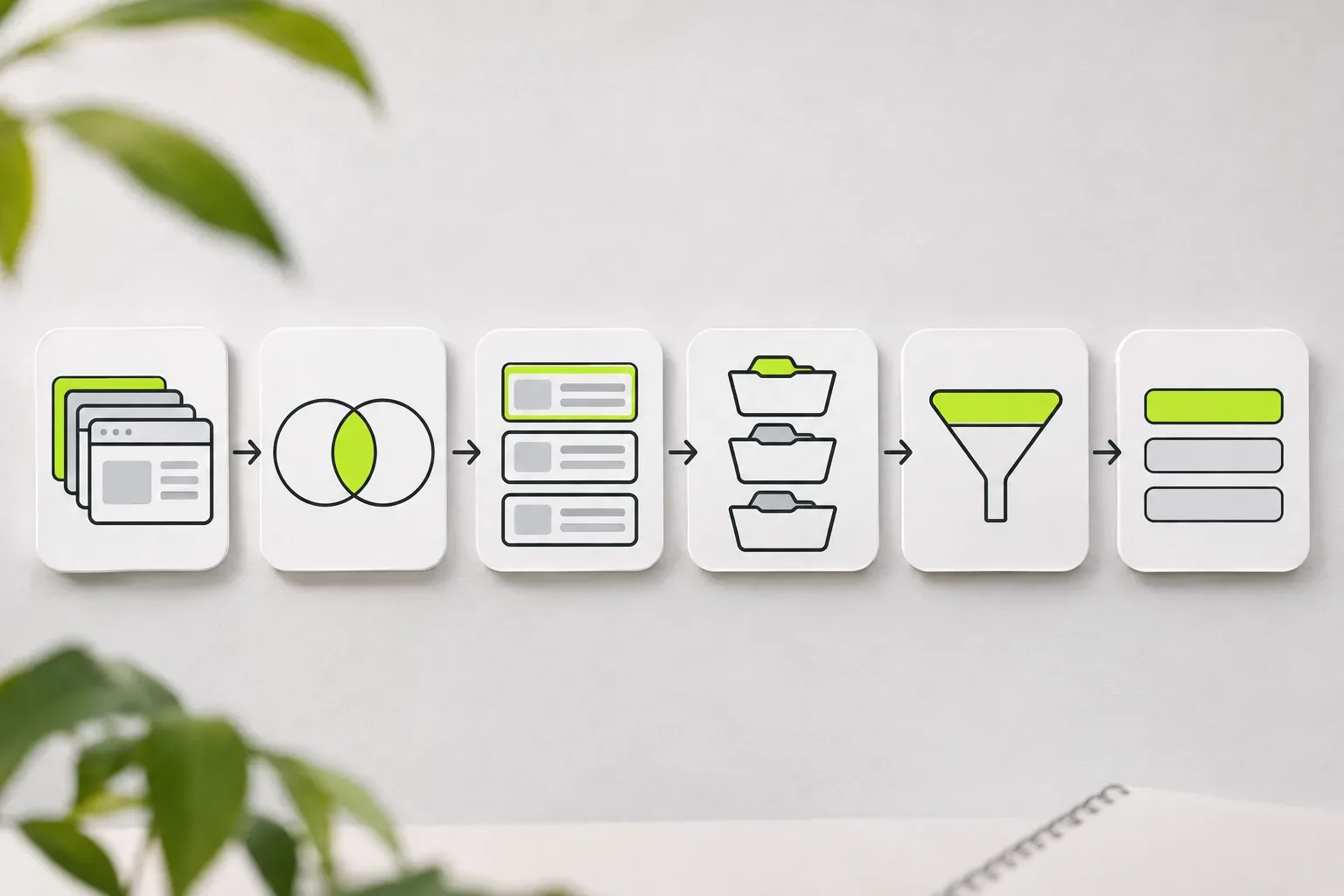
- Export referring domains for each rival from one tool, such as Ahrefs Site Explorer or Semrush Backlink Analytics.
- Run a link intersect (Ahrefs Link Intersect or Semrush Backlink Gap) to find sites linking to two or more rivals and not you.
- Sort each rival’s pages by referring domains to see which page types attract links.
- Tag the top referring domains by link class: product fact, content or paid.
- Filter out spam, unrelated niches and sites with no real readership.
- Rank the remaining channels by how many rivals share them and whether your product qualifies.
Here’s a worked example. A scheduling SaaS compares two rivals that outrank it on its core feature pages. The intersect shows a cluster of sites linking to both rivals and not to it.
Tagging that cluster reveals three channels: calendar app integration directories, HR software roundups, and citations of one rival’s remote-work survey.
The plan follows from the tags. Claim the integration directory listings first, since the product already syncs with the same calendars. Pitch the roundups next with a fair comparison, and treat the survey as a content brief: publish newer data before asking anyone to cite it.
The rival’s sponsored list spots stay off the plan. They explain part of the gap, and none of them is worth copying. Before any outreach, run each target through the checks for evaluating backlink quality for B2B SaaS.
Which competitor links should you not copy?
The competitor links you should not copy are the ones created by a payment, a swap or a network: paid guest posts, sponsored list spots, reciprocal link pages and private blog networks. Copying them repeats the rival’s risk without its brand strength. The warning signs show on the linking page itself.
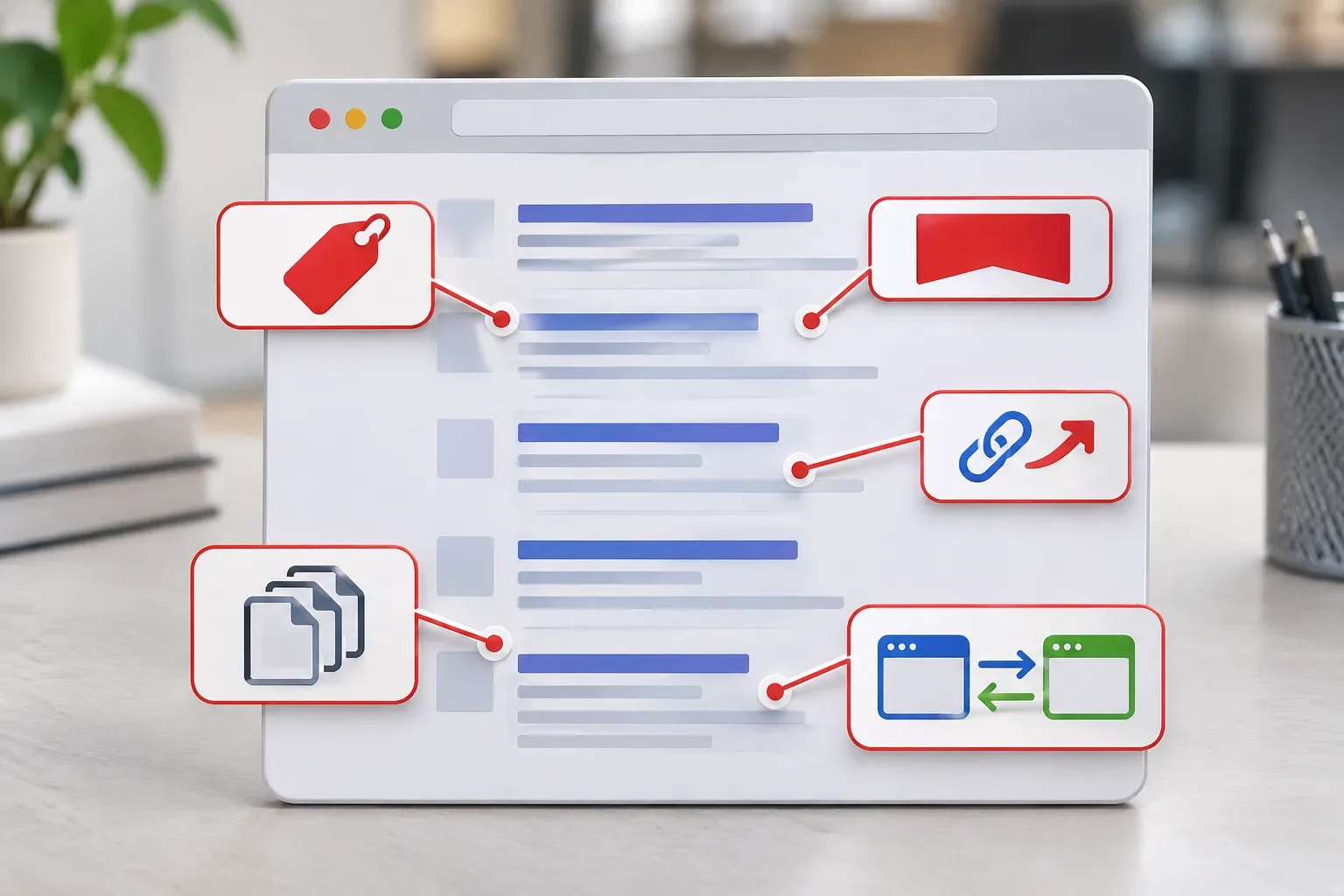
- The post carries a “sponsored” or “contributed” label, or the site sells guest posts from a rate card.
- The rival’s link carries rel=”sponsored”, or the page discloses that vendors paid to appear.
- The linking site also links out to casinos, loans or other niches unrelated to software.
- The same article, lightly edited, appears on several sister sites.
- The rival links back to the same site from a partners or resources page, which points to a swap.
Google’s spam policies treat buying or selling links that pass ranking credit, and excessive link exchanges, as link spam. A paid placement needs rel=”sponsored” or rel=”nofollow”. When a rival’s lead rests on unqualified paid links, Google’s systems can ignore those links at any time.
Those paid links also explain why a rival’s profile can look bigger than its rankings suggest. Leave that part of the gap alone and compete on product facts and content.
What can a competitor backlink analysis not tell you?
A competitor backlink analysis cannot tell you which links moved a rival’s rankings. Backlink tools show a sample of the web, Google doesn’t publish which links it counts, and rankings also depend on content and intent match. Read the profile as a list of options to test.
Keep these blind spots in mind:
- Each tool’s index misses links that another tool finds.
- Exports mix followed links with nofollow, sponsored and ugc links, which Google treats as hints.
- Lost links can linger in reports after the linking page has changed.
- Domain Rating, Authority Score and similar scores are vendor estimates, separate from anything Google uses.
And watch for these planning traps:
- Matching a rival’s referring domain count instead of its channels.
- Chasing links to a rival’s homepage when your gap sits on feature or comparison pages.
- Treating one viral study as a repeatable channel.
Fold the shortlist into your wider SaaS backlink strategy, so each channel supports a page you’re trying to rank.
Run a link intersect on two rivals this week
This week, pick two rivals that outrank you on one feature page and run a link intersect against your domain. Tag the top referring domains by link class. Circle the product-fact channels you already qualify for and claim those first. The replies will show whether the content channels deserve a bigger share of your time.
Frequently asked questions
Rerun the full analysis about once a quarter, and after a major launch from a rival. Between runs, set new-link alerts on each competitor in your backlink tool. The alerts catch fresh roundups and partner pages while editors are still updating them.
Only partly. Google Search Console and Ahrefs Webmaster Tools cover sites you verify, so they show your own links and none of a rival’s. Free tiers of paid tools give a limited preview of competitor data (check the current limits in the Moz and Semrush help centres), so a full intersect needs a paid plan for at least a month.
Yes, when the page is a list, comparison or directory where your product fits. Pitch inclusion with something new, such as a feature, data or a fair comparison. If the page already names you in plain text, the guide to competitor unlinked brand mentions covers that case.
No. On earned links, the editor picks the anchor, usually your brand or product name. Requesting the exact-match anchors you see in a rival’s profile turns a fair request into a manipulative one.
Yes, as a signal of where your category gets covered. A nofollow link from a respected trade publication still sends buyers and shows the outlet writes about tools like yours. Google’s documentation on qualifying outbound links treats nofollow as a hint, so keep those outlets on your list.