SaaS Link Building
Link Building Statistics for SaaS: What the Numbers Mean
Link building statistics are useful only when you know what each number measured. Most published figures describe all websites, not B2B SaaS, and many show correlation rather than cause. This page covers the few figures worth knowing, how to read them, and which numbers to track yourself.
What do link building statistics actually show?
Link building statistics describe patterns in large samples of pages, links or surveyed marketers. They show what tends to sit alongside rankings or traffic. They do not show what a specific link will do for your site.
That gap matters when a vendor quotes a number to sell you something. A statistic that says top-ranking pages have more backlinks cannot tell you that buying backlinks will rank you. Pages with strong content and a real audience attract links and rankings both.
Which published statistics are worth knowing?
Two studies from major SEO tool vendors come up most often, and both are worth reading at the source.
Ahrefs analyzed about 14 billion pages and reported that 96.55% get no organic traffic from Google. The study also found that pages with no backlinks are far more likely to get none.
Backlinko analyzed 11.8 million Google results and reported that the top result had several times more backlinks than results in positions 2 to 10.
Both findings are correlations. Neither says links cause rankings on their own.
Google's own position is firmer on the other side. Its spam policies define link spam as links meant to manipulate rankings, including buying or selling links that pass ranking credit. Its guidance on qualifying outbound links says paid links should carry rel="sponsored". That is the rule behind every statistic about "safe" link building.
Why do SaaS numbers differ from general ones?
B2B SaaS sites differ from the average site in three ways: long sales cycles, small buyer pools and heavy competition for the same product terms. A general statistic averages in blogs, stores and local businesses that behave differently.
Three differences change how you should read a figure:
- SaaS category terms are contested by funded competitors, so the link gap you need to close is often larger.
- Relevant publications are fewer, so volume figures from broad studies overstate what is reachable.
- Buyers are few, so one placement that reaches the right readers can outweigh ten generic ones.
Skip any SaaS "average links per month" figure that does not name its sample and method. Without those it is a guess dressed as data. For pacing, the link velocity guide explains healthy patterns without inventing a universal number.
How should you read a link statistic?
Read a statistic by checking who published it, what they measured, who they sampled and how old it is. Four checks take under a minute and filter out most weak figures.
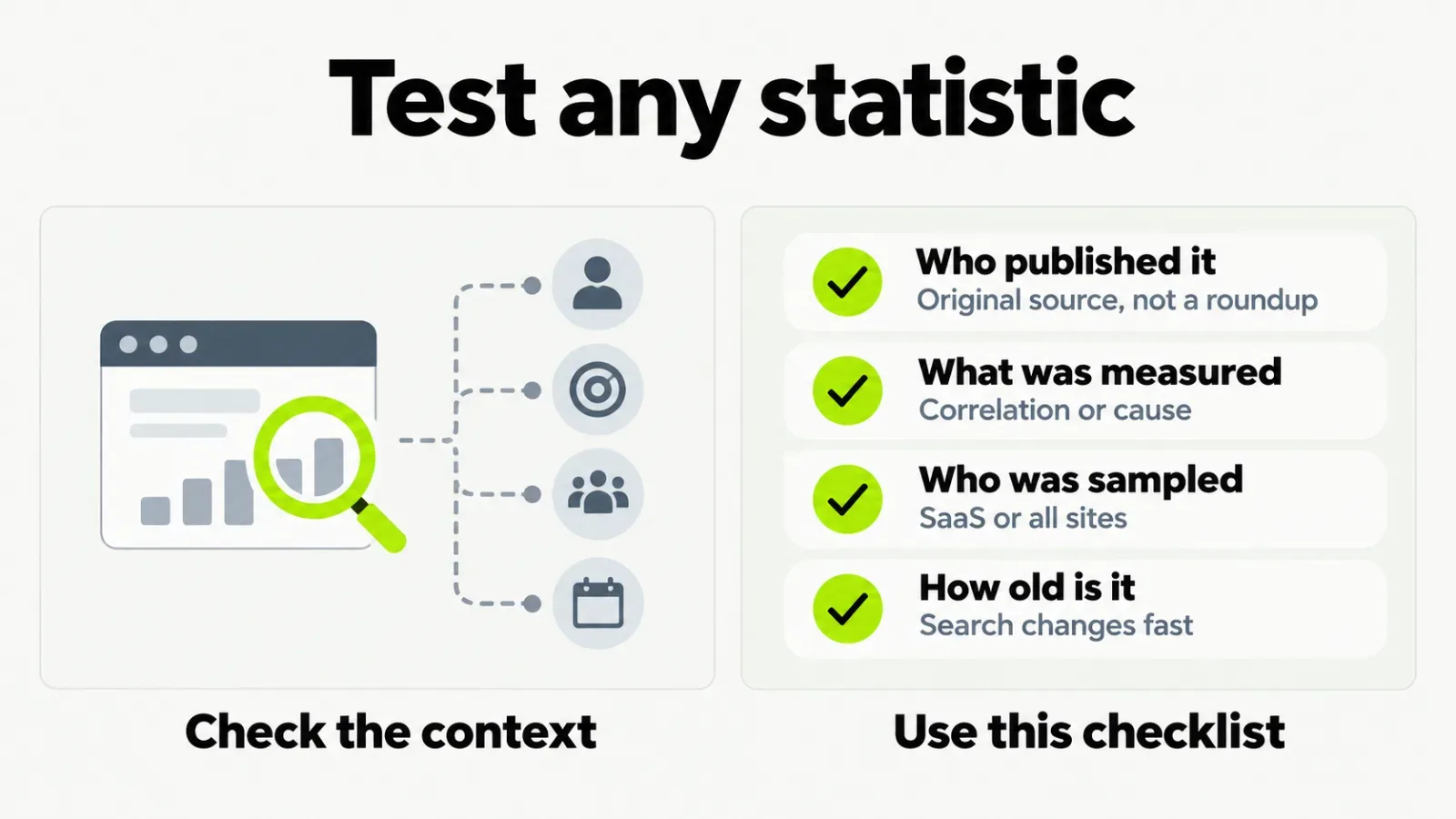
- Source: Is it the original study, or a roundup repeating a roundup? Go to the first publisher.
- Measurement: Does it show correlation (pages with more links rank higher) or a tested cause?
- Sample: Does it include SaaS sites, or all sites?
- Age: Search changes quickly, so a figure from years ago may describe a different algorithm.
If a number fails two checks, don't put it in a budget deck. A statistic you can't trace is an opinion.
Which numbers should you track yourself?
Your own data beats any industry average because it reflects your market, your content and your links. A small set of metrics is enough.
- Referring domains gained per month, split by relevance to your category.
- Rankings and organic signups for the pages you built links toward.
- The share of new links from pages with real traffic and a SaaS-relevant audience.
- Referral visits and demo requests from placements.
- Domain Rating movement, read as a trend. The Domain Rating definition explains what that score does and doesn't measure.
Track them monthly. Quarterly is the earliest point where trends mean much, because links take time to be found and weighed.
A statistics check before you act
Pick one number you currently rely on, such as a target link count or a "typical" cost, and run the four checks above on it this week. If you can't trace it to an original source with a comparable sample, replace it with a measurement from your own site. Then use the SaaS link building checklist to turn that measured baseline into a campaign plan.
Frequently asked questions
Not by themselves. Studies find that top results tend to have more backlinks, but that is a correlation. Strong pages attract links, and links help strong pages. Quality and relevance of the linking pages matter more than the count.
Few are public with a clear method. Treat any SaaS figure that doesn't state its sample, timeframe and measurement as unverified. Your own referring domain, ranking and signup data is the most reliable benchmark you can get.
No honest universal number exists. The right target depends on the links your direct competitors hold for the terms you want, which you can see in a competitor backlink comparison. Aim to match relevance and quality first, volume second.
Often, yes, and that skews them. Many studied links came from tactics Google treats as link spam, so a correlation may include links that carry risk. Paid links that pass ranking credit break Google's policy unless qualified with rel="sponsored".
No. Placements are earned, never guaranteed, and no statistic can promise rankings, Domain Rating gains or traffic. Use statistics to set expectations and ask better questions of vendors, including when you read about what SaaS link building is.