SaaS link building
Link Velocity: Definition, Healthy Patterns, and SaaS Benchmarks
Link velocity is the rate at which a website acquires new backlinks and referring domains over time. It’s used as both a health indicator (is the authority program working) and a manipulation detector (sudden spikes can signal unnatural patterns).
What it means
Velocity is typically measured as new referring domains per month or new backlinks per month. Search engines monitor velocity patterns as one signal in their broader algorithmic spam detection.
Healthy patterns: gradual, sustained growth, possibly accelerating as content matures and authority grows. Risky patterns: large sudden spikes followed by drops, especially with low-quality sources.
How it works
Both Google’s ranking systems and third-party tools (Ahrefs, Semrush) track velocity. When velocity spikes unusually for a given site, algorithmic systems investigate whether the new links are organic. Spikes from genuine viral content or major PR moments are typically detected as legitimate; spikes from coordinated link schemes are not.
Why it matters for SaaS
For SaaS SEO, sustained velocity above your category’s top competitors is the goal. If competitors are adding 15 new referring domains per month and you’re adding 5, you’re losing competitive ground regardless of absolute counts.
How to evaluate or use it
Track new referring domains monthly in Ahrefs or Semrush. Set targets: 8-25 per month at Series A-B, 25-40 per month at Series C+. Watch for velocity drops as a leading indicator that the program needs renewed investment or strategic adjustment.
Related terms
Learn more
See the SaaS SEO metrics framework for how velocity sits alongside other authority KPIs.
Healthy vs unhealthy velocity patterns
Healthy patterns: Sustained month-over-month growth, gradual acceleration during active campaigns, occasional spikes from major PR wins (followed by sustained baseline growth), velocity that matches or exceeds top competitors in the category.
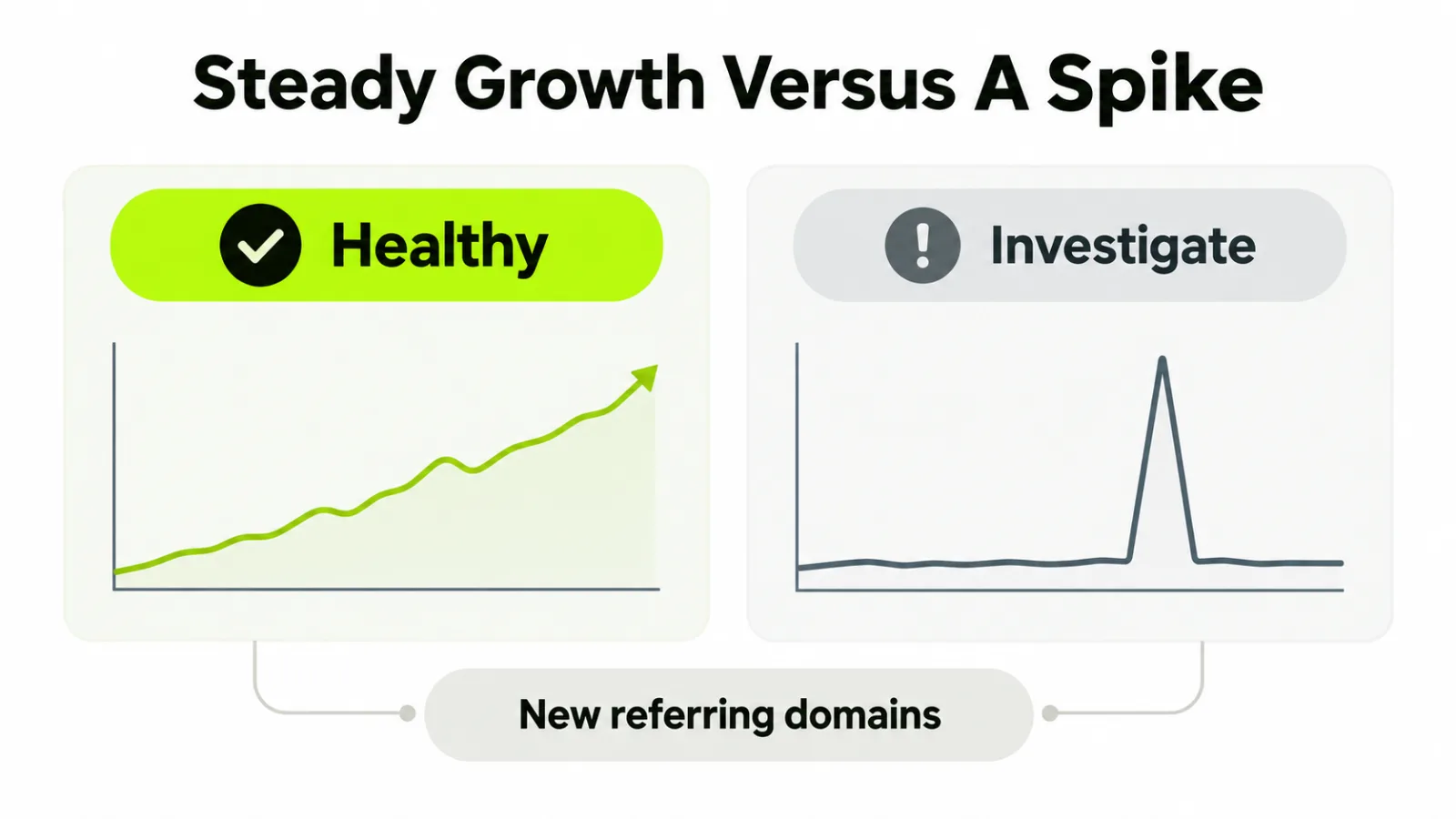
Unhealthy patterns to investigate:
1. Sudden 5-10x spikes from previously unknown low-DR sources. Often indicates a competitor running negative SEO against your domain, or a third-party link scheme that found your site.
2. Sustained velocity drops without strategic change. Usually signals that an active program stopped working or a content source dried up. Investigate which content was earning links and whether it stopped.
3. Velocity concentrated in 1-2 sources. If 60% of new referring domains in a month come from a single source’s syndication network, the velocity isn’t building diversified authority. It’s building fragile concentration.
Frequently asked questions
What’s a healthy link velocity for SaaS?
8-25 new referring domains per month for Series A-B SaaS in active programs. 25-40 per month for Series C+ at scale.
Can fast link growth trigger penalties?
Fast growth from low-quality sources can. Fast growth from genuine PR moments (a viral post, a major announcement) typically does not. The algorithmic systems distinguish them by source quality.