SaaS Link Building
What Is Link Baiting?
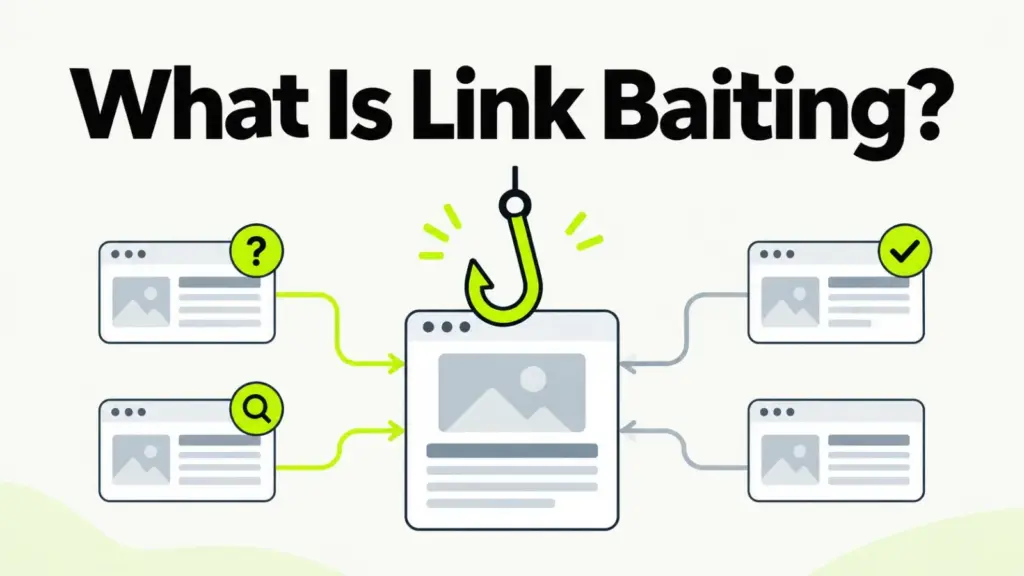
Link baiting is creating content whose main job is to attract backlinks, usually through a hook such as surprising data, a free tool or a sharp opinion. For a B2B SaaS company, link bait pays off only when the people it hooks are the writers who already cover your category.
How does link baiting work?
Link baiting works by giving a writer a reason to cite you in their own story. A study, tool or opinion piece reaches journalists, bloggers and newsletter editors, and the ones who reference it add a link as attribution. The link is a by-product of a writer needing a source.
The hook is what makes that writer stop. Common hooks are a number nobody had before, a tool that saves an hour of work, a ranking that names names, or a position that contradicts the usual advice.
A hook earns links only if someone sees it. Plenty of link bait fails with a decent idea and no distribution: it goes live, gets one round of social shares and sits there.
How is link bait different from a linkable asset?
Link bait is a piece built around a hook to win a burst of links, while a linkable asset is a resource built to stay the page people cite for months or years. The two overlap, and a yearly benchmark report can be both. The difference shows in what drives the links and how long they keep coming.
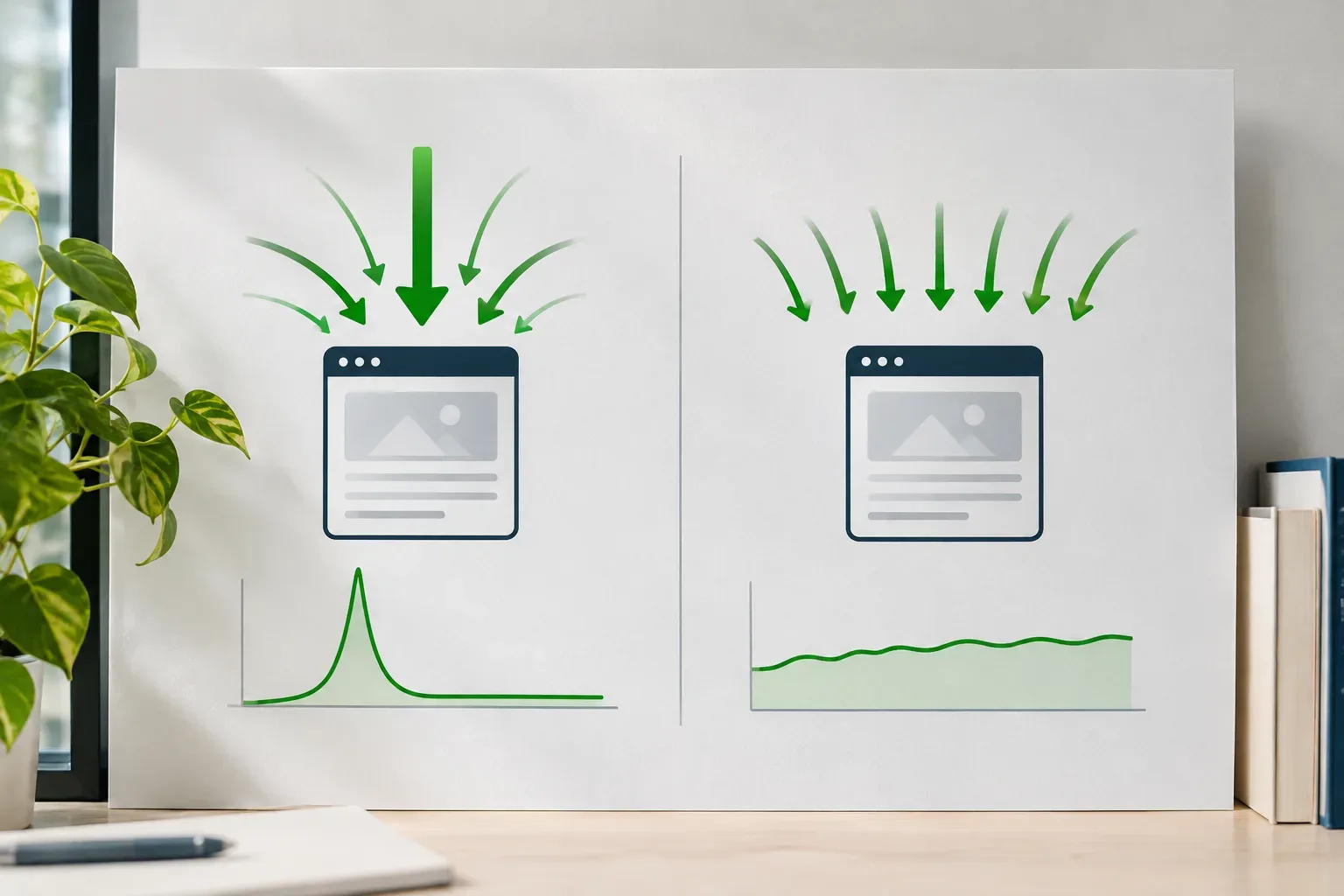
Four traits separate them in practice:
- Goal: link bait chases a burst of attention, while an asset aims to stay the source people cite.
- Hook: bait leans on surprise, controversy or humor, and an asset leans on usefulness.
- Shelf life: bait links arrive in a few weeks, and asset links keep coming while the resource stays current.
- Linkers: bait often draws sites outside your category, and an asset draws people who write about your problem.
The strongest SaaS pieces sit in the overlap: a useful resource with one finding sharp enough to pitch. Pure bait with no lasting use earns its links early and then stops.
Our guide to linkable assets that earn links covers the durable side: which formats keep earning for SaaS companies and which ones stall.
What does link bait look like for a B2B SaaS company?
Link bait for a B2B SaaS company is a piece that hooks writers who already cover your buyer’s problem. A finance automation tool hooks finance and procurement reporters. A security product hooks security researchers and IT trade press. Relevance decides whether the links help.
Picture a hypothetical accounts payable automation company. It gathers public records on how fast large US cities pay their suppliers, publishes which cities pay slowest, and shows its method on the page. Local business reporters, procurement newsletters and small-business blogs all have a reason to cite it, and each of them reaches people who pay or chase invoices.
Now picture the same company launching a funny quiz about spreadsheet personalities. Say the quiz spreads further. The links come from entertainment and meme sites that never reach a finance buyer, so they add little topical signal for an accounts payable product.
Common link bait formats and how they fit SaaS
| Format | Why writers link | SaaS watch-out |
|---|---|---|
| Original data study | A number they can quote | The method must survive a skeptical editor |
| Free tool or calculator | Their readers can use it directly | Needs upkeep, or it breaks and the links go stale |
| Contrarian take | An opposing view to cite in their story | Works only with real expertise behind it |
| Ranking or index | It names names and invites local coverage | The method has to be fair to those ranked |
| Newsjacking response | A timely expert angle on a live story | Short window, so sign-off has to be fast |
| Embeddable chart or infographic | A ready-made visual for their post | The embed code link must stay plain and branded |
Is link baiting white hat or black hat?
Link baiting is white hat when editors choose to link because the content earns it. Nothing in Google’s spam policies objects to making content people want to cite. The trouble starts with distribution: the policy lists keyword-rich, hidden or low-quality links embedded in widgets spread across many sites as link spam.
Embeddable charts and infographics are where SaaS teams slip. An embed code that drops a keyword-rich link to your pricing page into every copy is the pattern that policy describes. Keep the attribution link plain and branded, point it at the source page, and accept that some publishers will mark it as a nofollow link.
Bait and switch is the other trap. Earning links to a useful resource and then redirecting it to a product page, or swapping out the content, misleads the editors who cited you. Expect removed links and burned relationships once they notice.
Paying for ads that promote link bait is fine. Paying a site to link to it is buying links, and Google’s guidance on qualifying outbound links asks that paid links carry rel=”sponsored” so they pass no ranking credit.
How do you judge a link bait idea before you build it?
A link bait idea is worth building when it passes three questions: who would link, whether the hook holds up, and where the earned authority goes. Run each idea through this table before anyone writes a word.
| Question | Passes when | Fails when |
|---|---|---|
| Who would link? | Writers who cover your category or reach your buyers | Only general viral, humor or meme sites |
| Does the hook hold up? | The method and data are on the page for anyone to check | The claim works only as a headline |
| Where does the authority go? | A page tied to your product topic through internal links | A dead-end page with no path to your product pages |
An idea that fails one row needs rework. An idea that fails two belongs in the social calendar, where reach matters more than links.
How do you get link bait in front of the people who link?
Getting link bait in front of linkers is an outreach job: you pitch the finding to specific writers at launch, the way digital PR campaigns pitch a story. Publishing and waiting rarely works in a B2B niche, because the writers who cover it form a short, specific list.
Pitch the finding, never the page. A writer wants the one sentence that improves their story, and the link follows when they cite the source. Coverage from that work is earned, never guaranteed, so judge a campaign on who covered it as well as how many linked.
- Build a list of writers who covered a similar topic recently.
- Cut the most surprising finding down to one pitchable sentence.
- Offer each writer something specific: a local cut, a chart or an expert quote.
- Publish the method on the page so editors can check it before citing.
- Track which coverage linked and which mentioned you without a link.
- Follow up on unlinked mentions of your data with a polite attribution request.
Frequently asked questions
No. Clickbait promises something the page doesn’t deliver to win a click. Link bait has to deliver, because an editor checks the source before citing it, and a misleading headline gets the piece cut from the story.
No standard number exists, and anyone quoting one is guessing. A niche B2B study cited by the main trade publications in your category can beat a viral piece with far more links from unrelated sites. Judge it on who linked and whether they reach your buyers.
Original data and clear definitions give AI answer engines what they give editors: a specific source to cite. No one can guarantee an assistant will cite a page, but coverage across trusted publications makes your finding easier to find and repeat. Our page on answer engine optimization covers that side.
Give link bait a stable URL with no date in the slug, so you can update it and keep the links it earned. A yearly study works best on one page you refresh, with past editions below. A new URL each year splits the links across pages.
Pressure-test one link bait idea this week
Take the content idea your team likes most and run it through the three questions above. Then write down, by name, five writers in your category who would cite it. If you can’t name five, rework the hook before you build anything. For the terms around this one, the SaaS link building glossary defines the rest.