SaaS Link Building
7 Best SEO Link Building Communities for SaaS Marketers
The best SEO link building communities for a SaaS marketer are Reddit's r/SEO, Women in Tech SEO, SEO Signals Lab, Traffic Think Tank, RevGenius, Indie Hackers and Google's Search Central Help Community. Join them to learn, ask questions and build relationships. Don't join them to collect links.
How we picked these communities
A good link building community is a place where practitioners share what worked, correct each other and answer questions in public. That is the bar here.
We picked each one on three criteria: it has real practitioners rather than vendors selling links, it is relevant to B2B SaaS or general SEO work, and it has norms against spam. We haven't joined or tested every group for this article, so treat our notes as orientation. Membership rules, platforms and prices change, and we mark the ones to confirm.
The 7 communities
Each entry below covers what the community is, who it suits, its strengths and its limits.
Reddit r/SEO
Reddit's r/SEO is a large public forum where SEOs of every level ask questions and trade opinions. It suits marketers who want quick, unfiltered reactions to a tactic or a Google change.
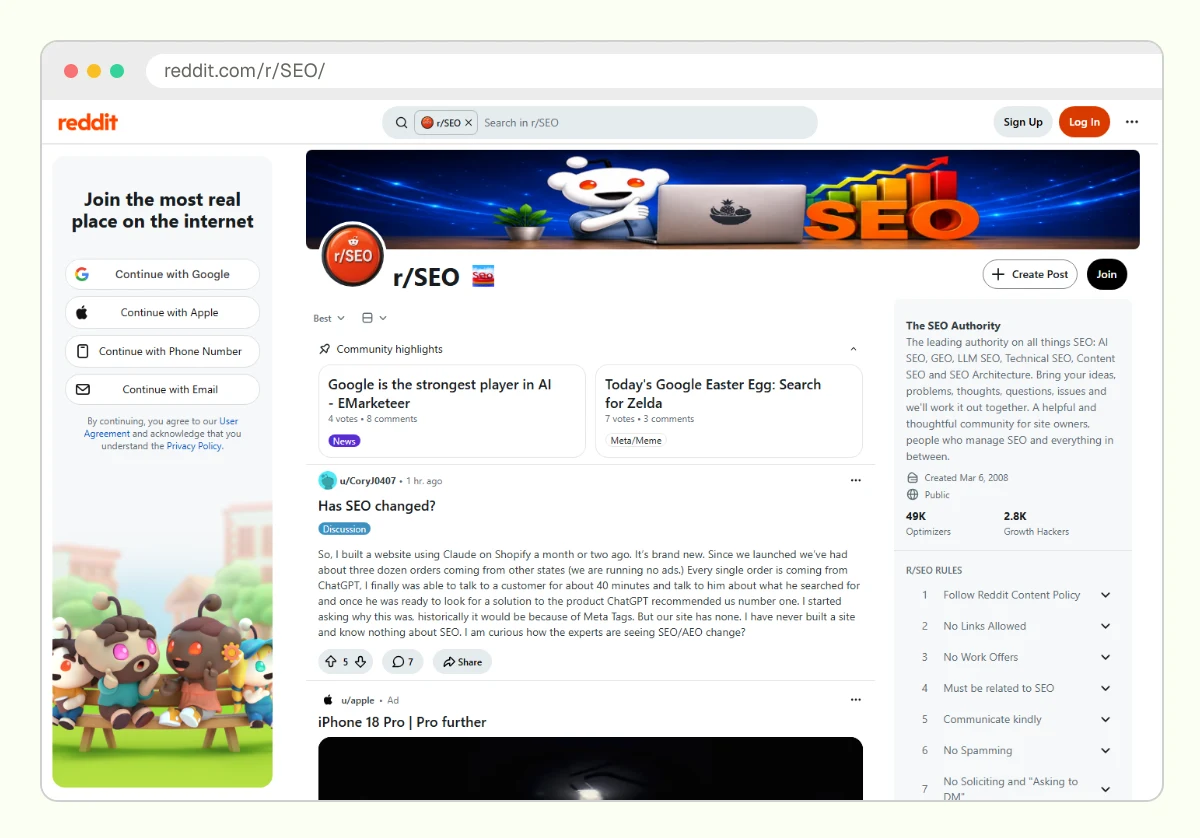
Strengths: it is free, searchable and open without an invite. Old threads often hold useful arguments about outreach and link quality.
Limits: quality swings widely, and self-promotion gets removed or mocked. Posting your link rarely works. Check the current rules in the subreddit's sidebar before posting.
Women in Tech SEO
Women in Tech SEO is a professional community, best known for its Slack group, for women and non-binary people working in technical and general SEO. It suits SaaS marketers who want a supportive peer group and honest answers.
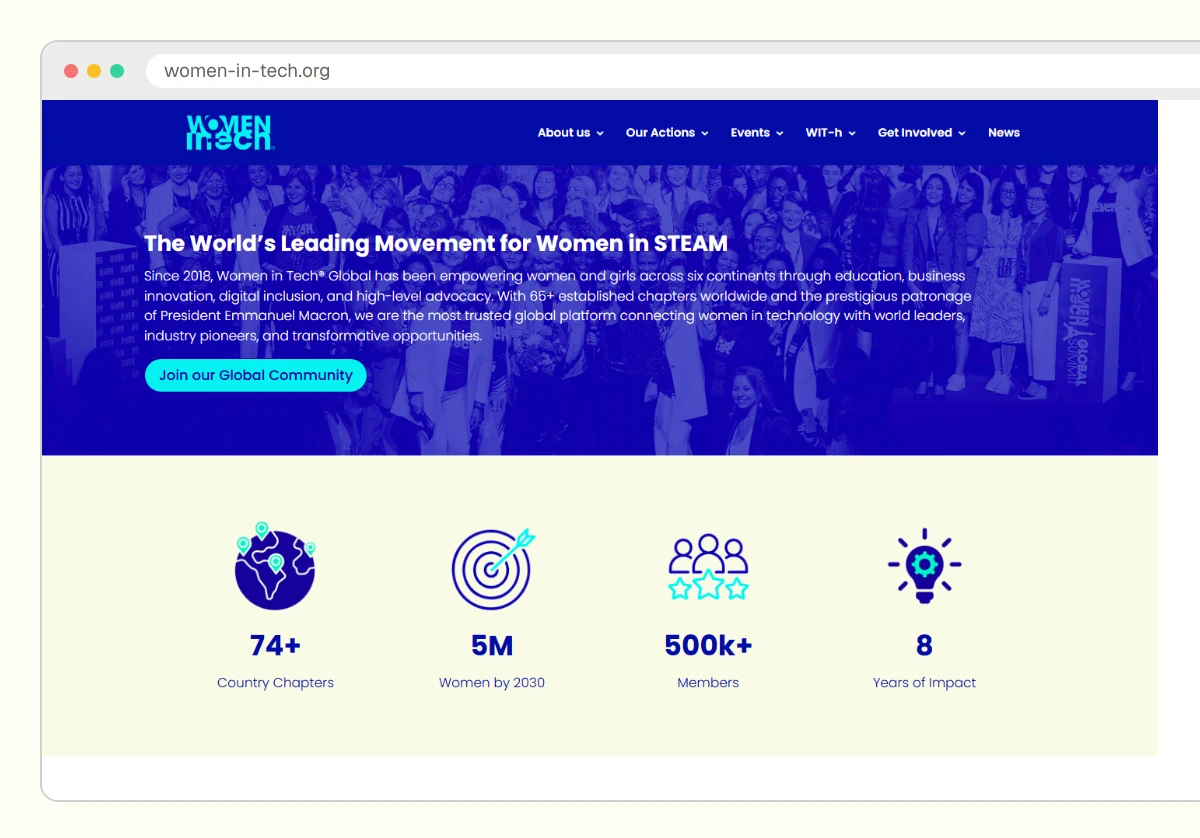
Strengths: strong norms, a mentoring culture and people who work in-house at software companies. Limits: it is not a link-trading place, and access terms apply, so check the community's own site for how to join.
SEO Signals Lab
SEO Signals Lab is a Facebook group where SEOs discuss tests, tools and tactics. It suits practitioners who want a constant stream of opinions and experiments.
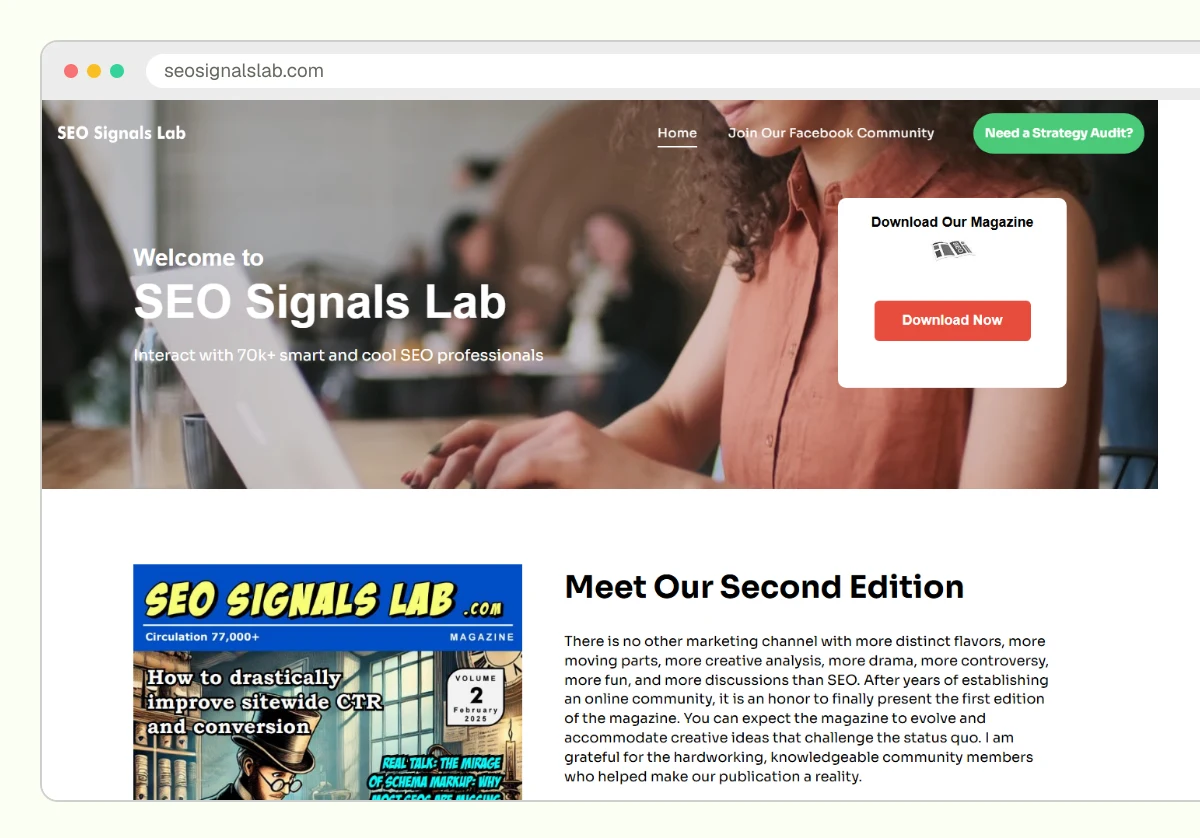
Strengths: very active, with many agency and affiliate voices. Limits: it skews toward affiliate and local SEO, advice is uneven, and link sellers lurk. Ignore any direct message that offers links for a fee. Check the group's pinned rules before joining.
Traffic Think Tank
Traffic Think Tank is a paid membership community focused on SEO and content for site owners. It suits marketers who prefer a gated space with fewer drive-by posters.
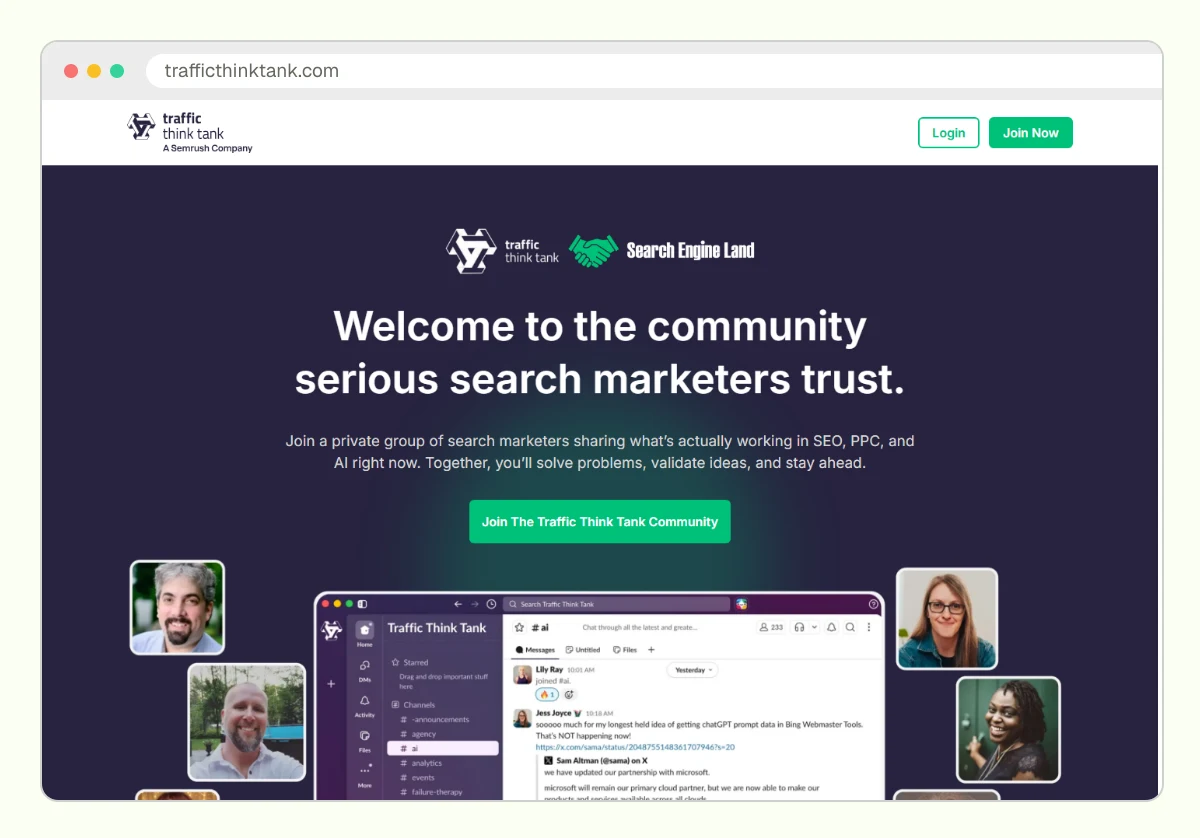
Strengths: members have skin in the game, so discussions tend to stay on topic. Limits: it costs money, it isn't SaaS-specific, and you should check what is included on the official membership page before paying.
RevGenius
RevGenius is a B2B revenue and go-to-market community, run largely on Slack, with channels for marketing and growth. It suits SaaS marketers who want peers in the same business model.
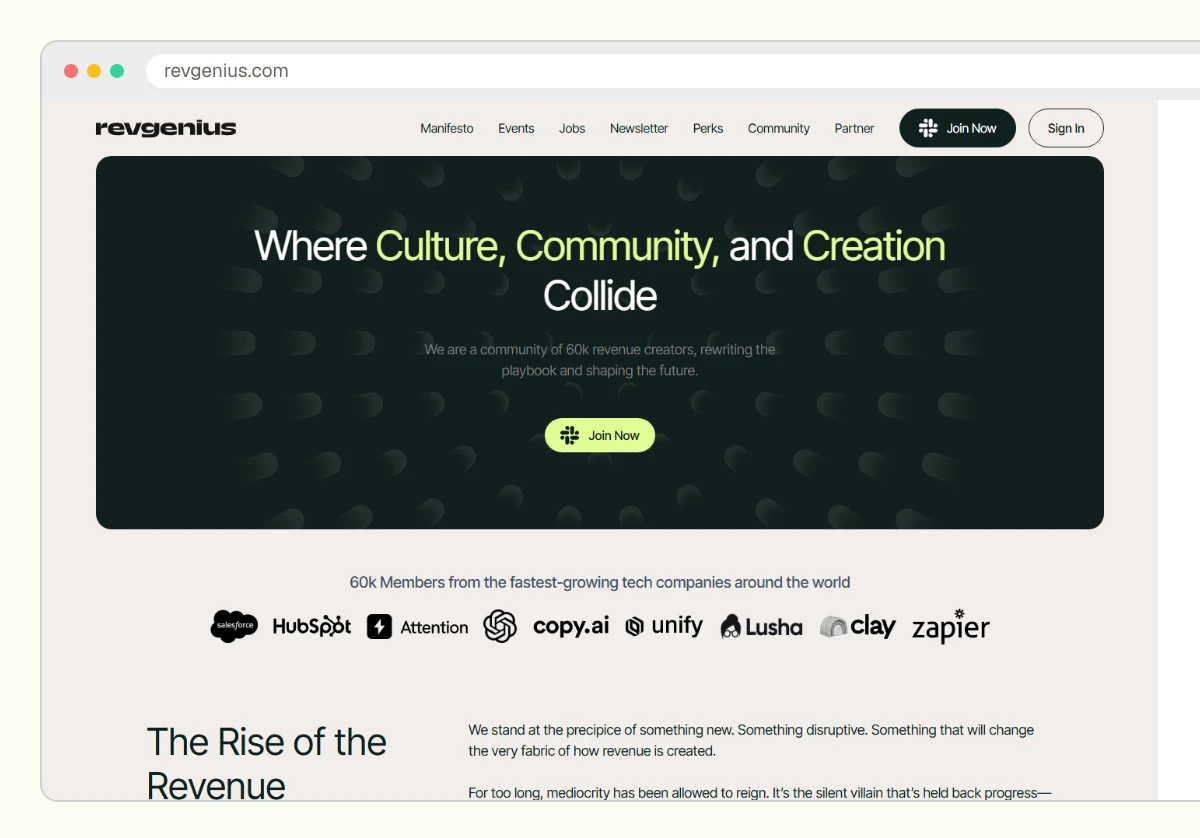
Strengths: members share B2B SaaS playbooks, and you will meet people who can introduce you to podcasts, webinars and co-marketing partners. Those are real sources of links. Limits: SEO is one topic among many, so link building threads are thin. Check the community's own site for how membership and channels work.
Indie Hackers
Indie Hackers is a community of founders who build and market small software products. It suits early-stage SaaS founders who want to share launch lessons and find audiences.
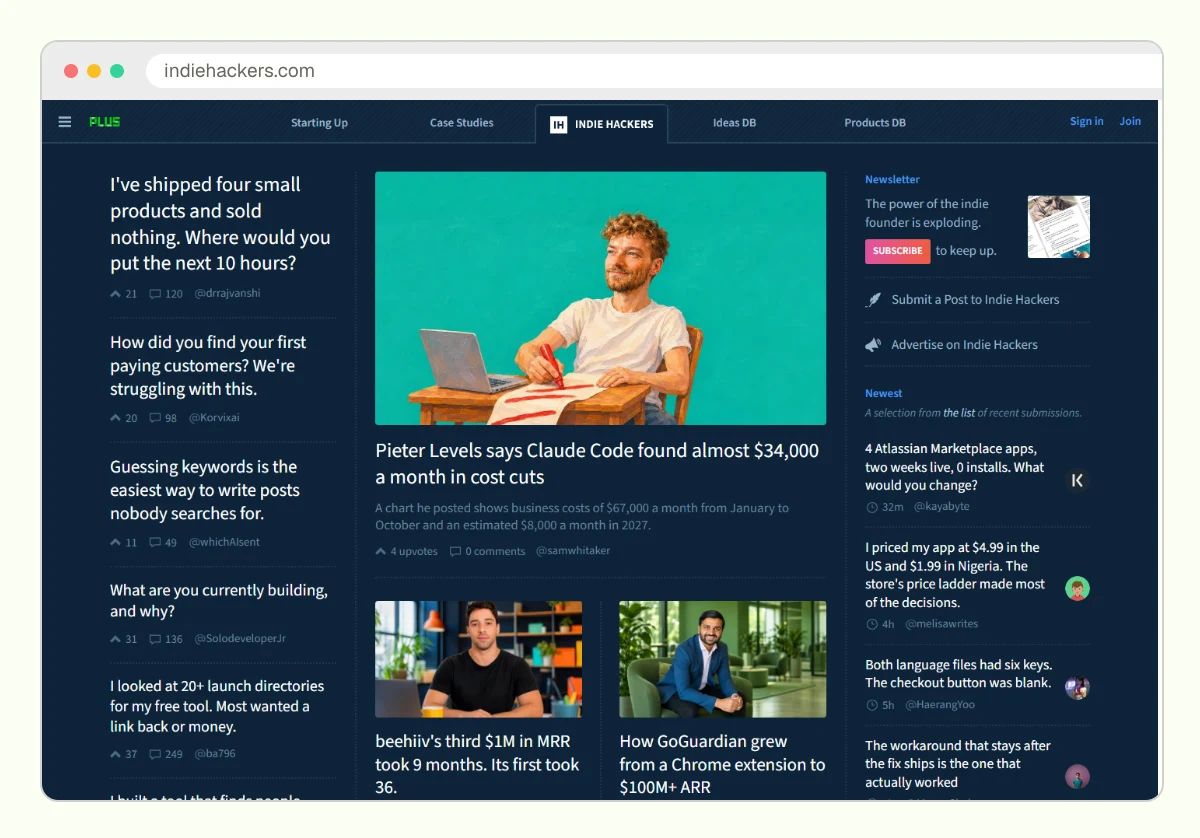
Strengths: founders write openly about what drove traffic, and posts on the site can be read and shared. Limits: most of the audience is other makers, so you get feedback rather than editorial links. Treat any link you earn there as a referral source, not a ranking lever.
Google Search Central Help Community
The Google Search Central Help Community is Google's own forum, where site owners ask about crawling, indexing, spam policies and manual actions. It suits anyone who needs a documented answer instead of an opinion. Find the current forum through Google Search Central's support pages.
Strengths: answers come from experienced volunteers who cite Google's documentation. Limits: it won't teach outreach, and it won't give a verdict on your link strategy. It is the place to check a rule, not to learn a tactic.
Summary table
| Community | Best for | Cost | Main limit |
|---|---|---|---|
| Reddit r/SEO | Quick opinions | Free | Uneven quality, strict on promotion |
| Women in Tech SEO | Peer support | Check the community's site for access | Not for link trading |
| SEO Signals Lab | Tactic chatter | Free | Affiliate skew, link sellers |
| Traffic Think Tank | Focused discussion | Paid | Not SaaS-specific |
| RevGenius | B2B SaaS peers | Check the community's site for access | Little SEO depth |
| Indie Hackers | Early-stage founders | Free | Audience of makers |
| Google Search Central Help Community | Policy answers | Free | No tactics |
How to choose the right community
Choose a community by the job you need done: learning tactics, meeting peers or checking a rule. One community rarely does all three well.
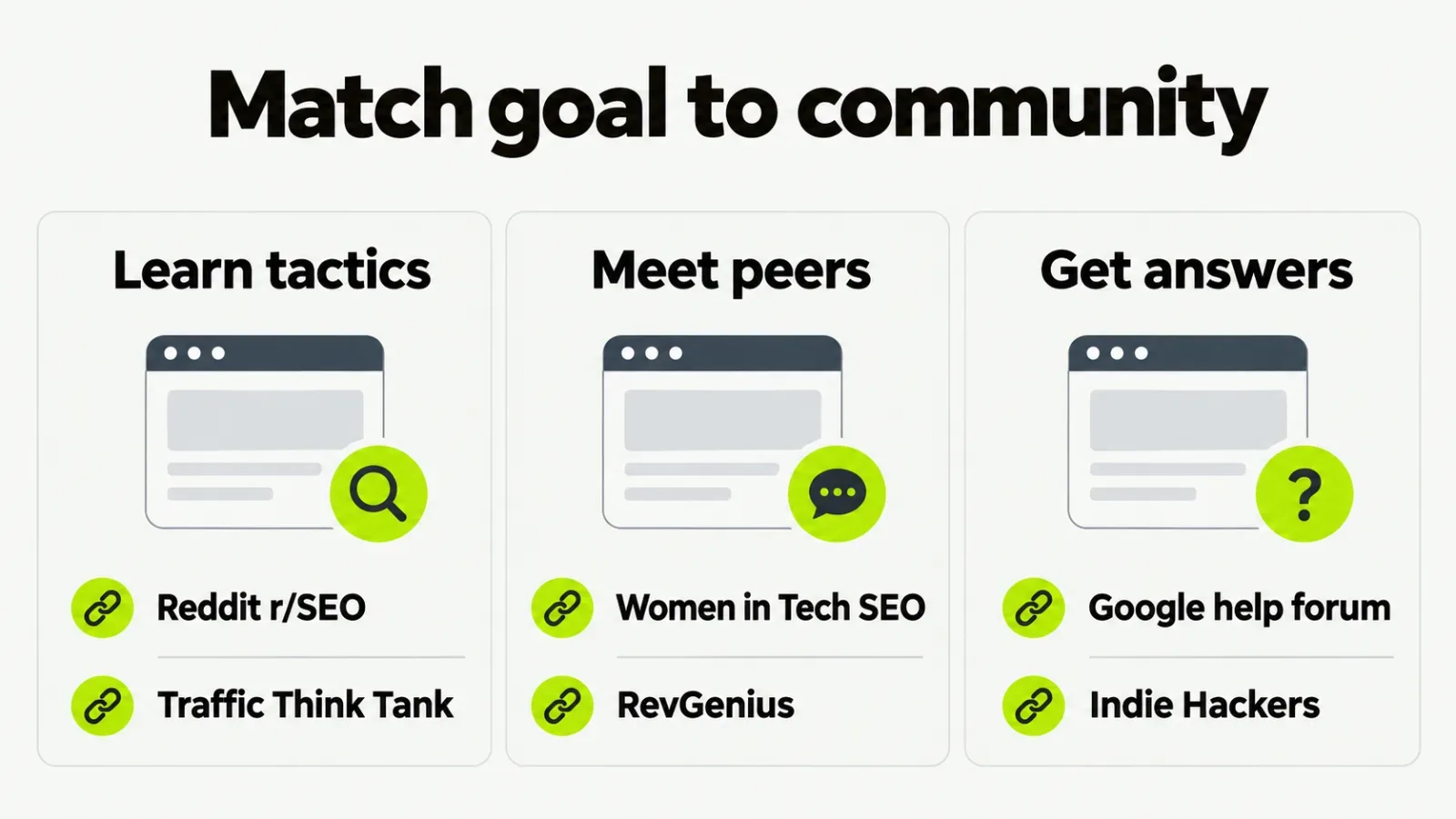
If you run SEO alone, start with r/SEO for reading and the Google forum for rule checks. If you lead a small SaaS marketing team, add RevGenius for peers who buy and sell in your market. If you are a founder, Indie Hackers gives you audience and feedback. If you want a gated room and can budget for it, test Traffic Think Tank for a month and leave if the threads are thin.
Limit yourself to two. A community you skim daily beats five you never open.
What a community will not do for your links
A community will teach you and introduce you to people, but it will not give you rankings. Links posted in forums and groups are usually user-generated, and Google's documentation says to mark them with rel="ugc" or nofollow. Read Google's guidance on qualifying outbound links for the exact attributes.
Two habits cause trouble. Asking for link swaps in a group is link exchange, which Google's spam policies list under link spam when done at scale to manipulate rankings. And buying a "guaranteed" placement from someone who slides into your messages is paid linking that passes ranking credit. Skip both.
What works is slower. Answer questions well, share a small original finding, and let people come to you. Editors, podcast hosts and journalists notice who shows up repeatedly. That is how a community leads to earned links, through podcast guest appearances or a reply to an outreach email that finally lands.
Frequently asked questions
Yes, if you use them to learn and build relationships. They shorten the time it takes to spot bad advice and bad vendors. They are not worth joining if you expect them to supply links.
Rarely. Most communities remove self-promotion, and links you do post are typically nofollow or ugc. Share useful answers first, and link your own work only when it directly answers the question and the rules allow it.
Only after you've used free ones for a few weeks and know what you're missing. Paid groups filter out casual posters, which helps, but confirm what you get before paying. Ask for a trial or a refund policy if one is offered.
No. A community gives you advice and contacts. An agency does the outreach and placements for you. If you are weighing that choice, see how to choose a link building agency.
Pick one community and lurk for a week
This week, join one community from the list above and read before you post. Note which members give answers that cite sources, and follow them. Then answer one question with real detail. If that goes well, check the glossary for any terms that came up, and keep going from there.