SaaS Link Building
The Skyscraper Technique for SaaS: How It Works and When It Fails
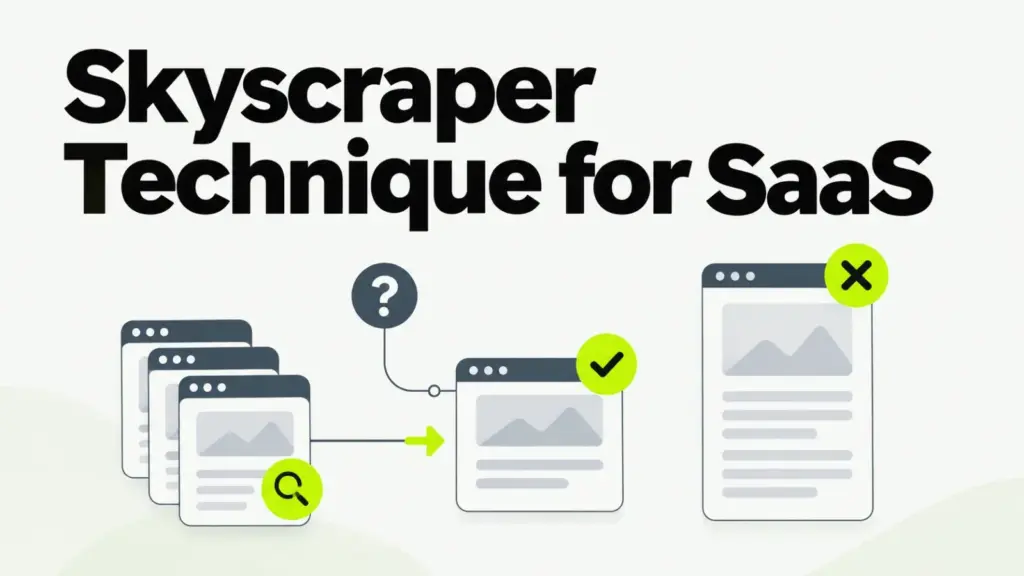
The skyscraper technique is a link building method: find a page that already earns many backlinks, publish a better version, then ask the sites linking to the original to link to yours. For SaaS it works only when the better version adds something new, not just more words.
What is the skyscraper technique?
The skyscraper technique is a three-part outreach method: find a heavily linked page, build a stronger page on the same topic, and pitch the people who linked to the original. Brian Dean of Backlinko popularized it.
The logic is simple. Someone who already linked to a page on your topic has shown they care about it. If you show them a more useful resource, some will add or swap a link.
The method grew out of an era when "10 more tips" or a longer guide could win. That is where the trouble starts.
Why does the skyscraper technique work less well for SaaS?
The skyscraper technique works less well for SaaS because most linked pages in software niches earn links for a reason length cannot copy: original data, a free tool, or an author's reputation. A longer rewrite offers the linker nothing they don't already have.
Three problems show up again and again:
- Editors have received hundreds of "I made a better version" emails and treat them as template spam.
- The linking page often cites the original for a specific statistic or definition, so your version has no reason to replace it.
- Your audience is narrow. The number of sites that link to a topic in B2B software is small, so the pool of people to pitch is small too.
Our guide on why generic link building fails SaaS companies covers the same pattern across other tactics: volume tactics built for consumer niches underperform when the audience is a few thousand buyers.
When does the skyscraper technique still work for SaaS?
The skyscraper technique still works for SaaS when the original page is outdated, thin on a specific point, or built on stale data, and your version fixes that point. The fix has to be something a linker can see in ten seconds.
Use this decision rule before you build anything:
| Why the original earned links | Skyscraper fit | What to do |
|---|---|---|
| Original data or research | Poor | Publish your own data instead |
| A free tool or template | Poor | Build a better tool only if you can maintain it |
| Outdated list or guide with dead links | Good | Refresh with current, verified entries |
| A definition or explainer | Mixed | Win only with a clearer or more accurate version |
| A regulatory or process walkthrough that changed | Good | Update for the current rules |
The pattern: skyscraper works when the original lost accuracy, and fails when the original has authority you cannot match.
How do you run the skyscraper technique step by step?
Running the skyscraper technique takes five steps: find linked pages, check why they earned links, build something meaningfully different, pitch the linkers, and review results. Skip the second step and you will build the wrong thing.
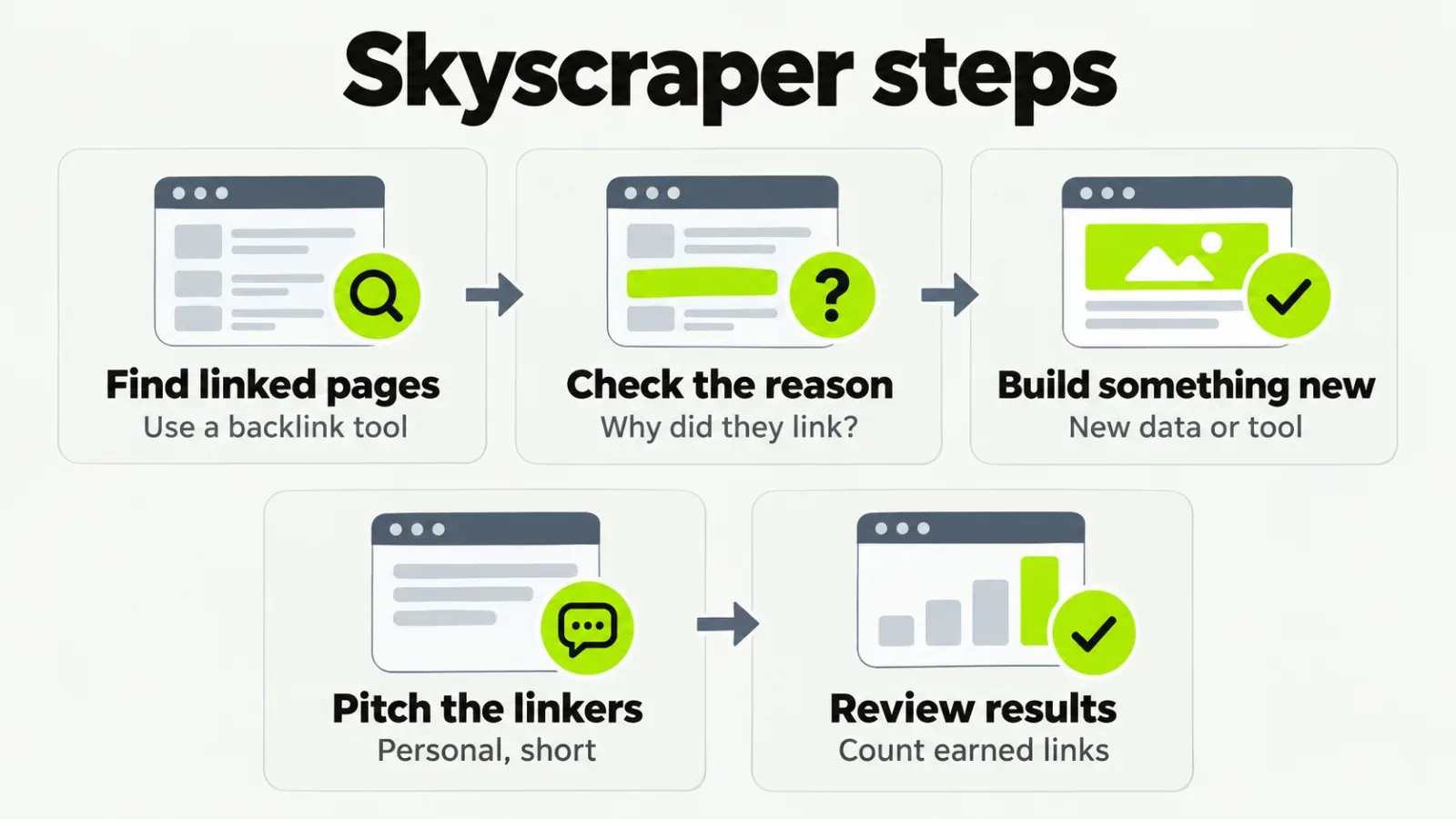
- Find linked pages. Use a backlink tool to list pages on your topic with many referring domains. Our guide to competitor backlink analysis for SaaS walks through this.
- Open ten of the linking pages and note why each one cites the original. Group the reasons.
- Build only for the reasons you can beat: freshness, accuracy, a clearer structure, or a new data point.
- Pitch each linker with two or three sentences: what you noticed, what changed, and the link. No flattery, no attachments.
- Review after a few weeks. Count links earned, and note which reason produced them.
Expect a low reply rate. Earned means earned: no outreach produces guaranteed links.
What should you build instead of a longer version?
Instead of a longer version, build the asset that gave the original its pull: a dataset, a calculator, a template, or an expert-reviewed explainer. These give a linker a concrete reason to cite you.
Our post on linkable assets for SaaS lists which formats earn links and which don't. A good skyscraper project is usually a linkable asset with a list of known linkers attached.
What are the risks of skyscraper outreach?
The main risks are wasted build time, a damaged sender reputation, and drifting into link schemes. Google's spam policies treat paid links and excessive link exchanges as link spam, so never offer payment or a swap for the link. Check the current wording in Google Search Central's spam policies documentation.
Keep the pitch honest. If your page is not better in a way you can state in one sentence, don't send it.
Run one test this week
Pick one linked page in your niche, open its ten best linking pages, and write down why each one cites it. If most reasons are "data" or "tool", skip skyscraper and plan an original asset. If most are "good overview", and the page is stale, build the update.
Frequently asked questions
No, but it is narrower than it was. It works when the original is stale or inaccurate and you can show the fix quickly. It fails as a generic "longer and prettier" play.
Send as many as there are real linkers whose pages your update helps, often a few dozen. Sending thousands of near-identical emails harms your sender reputation and brings few links.
The method itself is editorial outreach, so it can be. It stops being acceptable when you pay for the link or trade links. Our white hat link building test gives a quick check.
No. Skyscraper outreach targets existing linkers to one page. Digital PR earns new coverage through stories and data. Many SaaS teams use SaaS PR services for the second and run skyscraper tests alone for the first.