SaaS Link Building
SaaS Authority Building: The New SEO Moat
SaaS authority building is the practice of becoming the most trusted, most-referenced source in your category, and it has become the new SEO moat because it is the one advantage competitors cannot buy, copy, or shortcut their way around. Features get cloned. Ad budgets get matched. Content gets out-published before lunch. But the trust you bank by getting cited in the right publications, recommended in the right communities, and named by AI answer engines builds over years into something rivals cannot write a check for. As search splinters across Google, AI Overviews, and assistants like ChatGPT and Perplexity, authority decides who shows up everywhere at once.
Why authority is now a more durable moat than content or links alone
Authority is durable because it is earned slowly and validated externally, which makes it expensive to build and nearly impossible to fake. A competitor can ship more blog posts than you next quarter. They can buy a pile of links next month. What they cannot do on a deadline is earn the years of credible references, brand mentions, and topical depth that teach search engines and AI models to treat a brand as the definitive source.
That gap is the difference between a tactic and a moat. Content volume and link counts are tactics: easy to copy, commoditized, and discounted when they have nothing to do with relevance. Authority is what stacks up when you do the right things over and over: cover a topic all the way through, earn real coverage, and get recommended by people and sources others already trust. It is built from signals you do not fully control, so you cannot conjure it on demand. That is exactly why it holds.
What actually builds a SaaS authority moat
An authority moat is built from four reinforcing assets: topical depth, earned external validation, entity strength, and brand recognition. Any one of them is hard to win alone. Together, they form a position competitors struggle to attack.
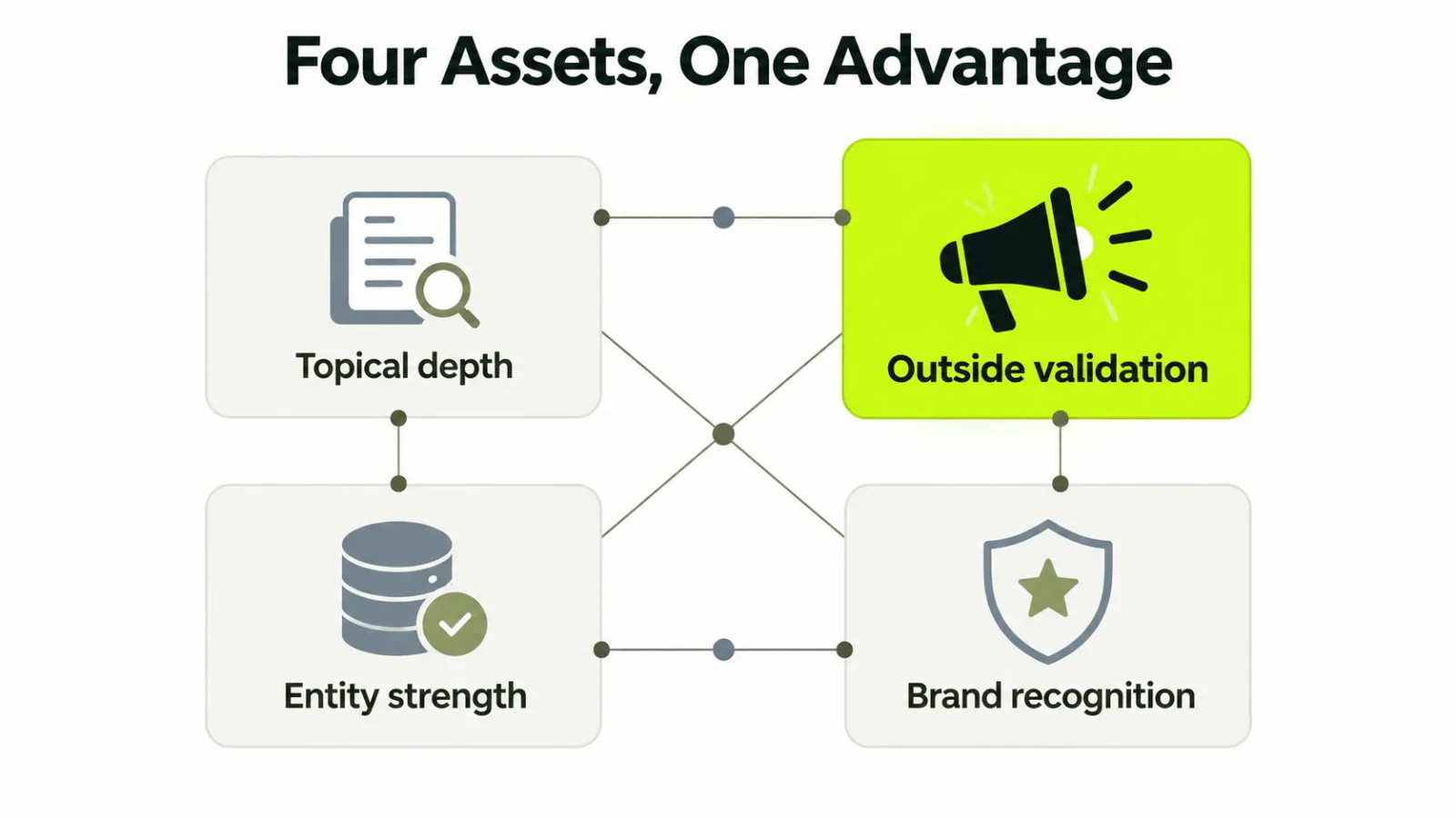
Topical depth
Coverage that answers your category’s real questions, entities, and use cases end to end, the kind of completeness that reads as genuine expertise to search engines and AI models.
Earned external validation
Links and mentions from credible publications, peers, and communities. This is the part that proves your authority is real instead of self-declared.
Entity strength
Consistent, well-referenced signals that let search and AI systems recognize your brand as a distinct, trustworthy player in its category.
Brand recognition
The familiarity that makes a buyer click your result, accept your citation, and believe an AI recommendation that names you.
These assets feed each other. Topical depth makes you worth citing. Citations build entity strength. Entity strength and brand recognition push the next article up the rankings and put your name in the next AI answer. A deliberate authority-building program is what wires them into a system instead of leaving four good efforts disconnected.
Why AI search makes the authority moat even stronger
AI search raises the value of authority because answer engines collapse many results into a few recommendations, and they choose those recommendations based on trust. Ask an assistant for “the best tool for X” and you get a short list rather than ten blue links. Making that list comes down to one thing: whether the model has learned, from credible sources across the web, that your brand is an authority worth naming.
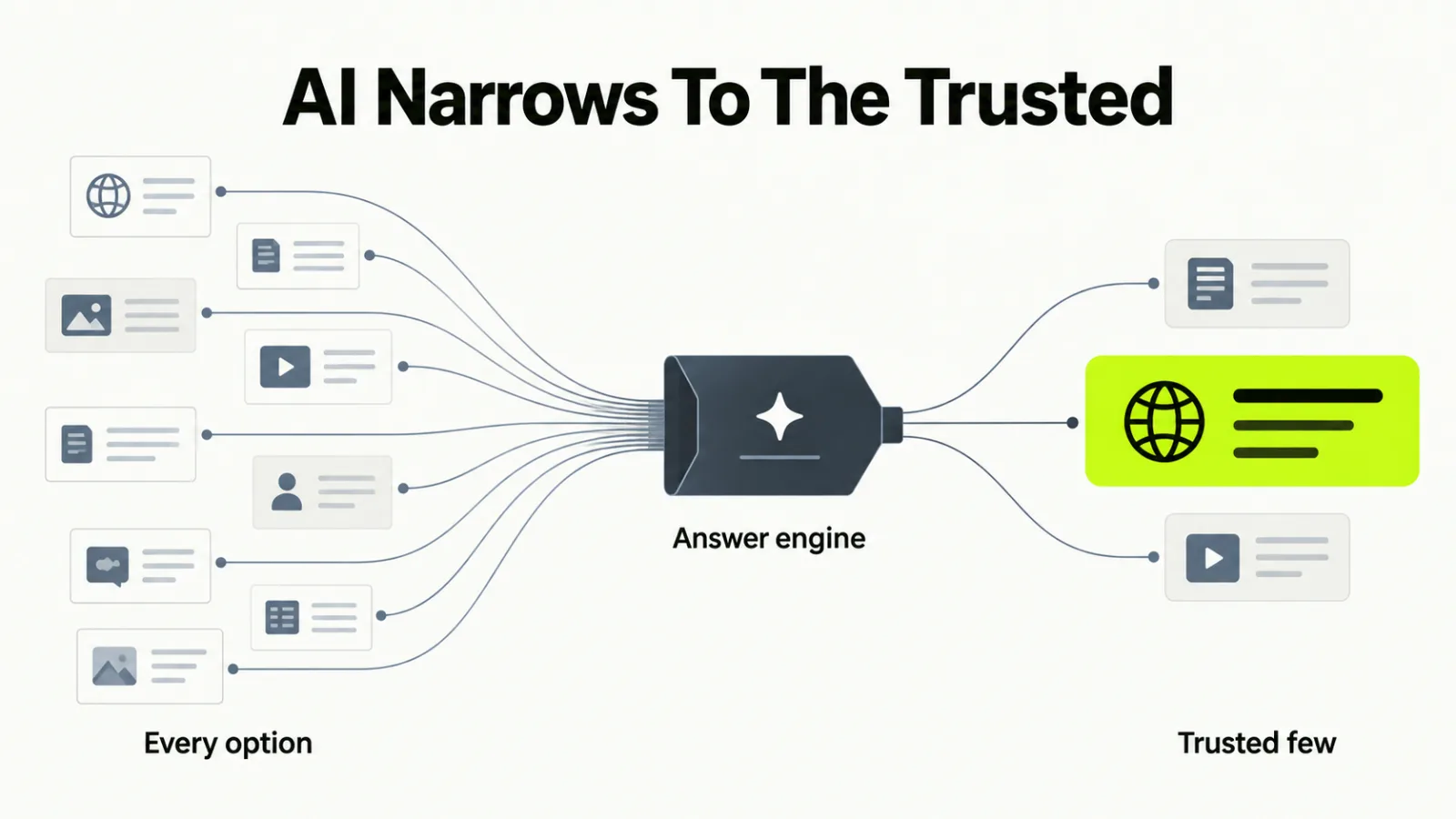
This concentrates the rewards of authority and sharpens the penalty for obscurity. In classic search, a well-optimized page could still pull some traffic for a lesser-known brand. In an answer engine, the brands that are widely cited and consistently described take the win, and everyone else disappears. That winner-take-more dynamic is what turns authority from a nice-to-have into a moat. We break down the mechanics of this shift in our guide on how AI search changes SaaS SEO.
How to start building your authority moat
Start by choosing a topic you can credibly own, covering it thoroughly, then earning the external validation that turns coverage into recognized authority. Moats get built in sequence. Skip the early steps and you end up with content that never pays off, which is where most brands stall.
Begin where you have real expertise and commercial relevance, which is usually the core problem your product solves. Build the topical depth that makes you a complete resource. Then go earn the links, mentions, and community presence that vouch for it. Reinforce your entity with consistency and structured signals so search and AI systems know who you are. And above all, pick consistency over intensity. Authority grows when the work is sustained and resets when it is sporadic. This is patient infrastructure, which is precisely why the companies willing to build it walk away with an edge the impatient never catch. If you want to map an authority strategy for your category, you can contact our team.
Frequently asked questions
What is a SaaS authority moat?
A SaaS authority moat is the durable competitive advantage you get from being the most trusted, most-referenced source in your category. It is built from four things working together: topical depth, earned external validation, entity strength, and brand recognition, which make your brand the one search engines and AI models surface and recommend. Because it accumulates slowly and gets validated by others, competitors cannot buy or copy it on a short timeline.
Why is authority a better moat than publishing more content?
Content volume is easy to match and gets discounted fast when it has no relevance or external validation behind it. Authority is the trust that builds up from full coverage plus earned references. It takes years to accumulate and cannot be faked. A competitor can out-publish your blog. What they cannot replicate quickly is the credible citations and recognition that make your content rank and your brand get named.
How does AI search affect the value of authority?
AI answer engines collapse many results into a few recommendations, and they pick those on trust, which concentrates the rewards of authority. Brands that are widely cited and consistently described are far more likely to get named in AI answers, while lesser-known brands vanish. That winner-take-more dynamic makes authority more valuable, and more of a moat, than it ever was in classic search.
How long does it take to build an authority moat?
Expect a multi-quarter to multi-year effort, because it depends on accumulating topical depth and earned validation over time. Early progress is slow. Then it pays off, as your authority grows and each new asset performs better than the last. No honest partner can promise a specific timeline: outcomes ride on competition, consistency, and factors outside any provider’s control.
Can a small or early-stage SaaS build authority against larger competitors?
Yes, by owning a narrow topic where it can credibly become the definitive source instead of fighting across the whole category at once. Depth in a focused niche earns recognition faster than breadth spread thin, and that beachhead expands into adjacent topics over time. Smaller brands often build the most durable authority precisely because they are willing to specialize where bigger competitors stay generic.
What is the first step to building authority?
Choose a topic you can own, usually the core problem your product solves, and commit to covering it thoroughly. From there, earn the external validation through links, mentions, and community presence that turns coverage into recognized authority. Consistency from that point on is what lets the moat grow instead of reset.