SaaS Link Building
How Many Backlinks Does a SaaS Company Need?
There is no fixed number of backlinks a SaaS company needs: you need however many it takes to be more relevant and more authoritative than the specific competitors you are trying to outrank, on the specific pages you want to rank. “How many backlinks” is the wrong question. A handful of relevant, editorial links from trusted sources will beat hundreds of cheap ones, every time. Ask instead: from where, to which pages, and how relevant? The answer comes from a competitor gap analysis and not a number on a price list.
Why “how many backlinks” is the wrong question
Backlink quantity is a vanity metric, because search engines weigh relevance, authority, and context far more heavily than raw count. Ten links from respected, on-topic sources can move a page that a thousand links from irrelevant directories never will. Chase a number and you back yourself into the volume-first tactics that build fragile, risky profiles.
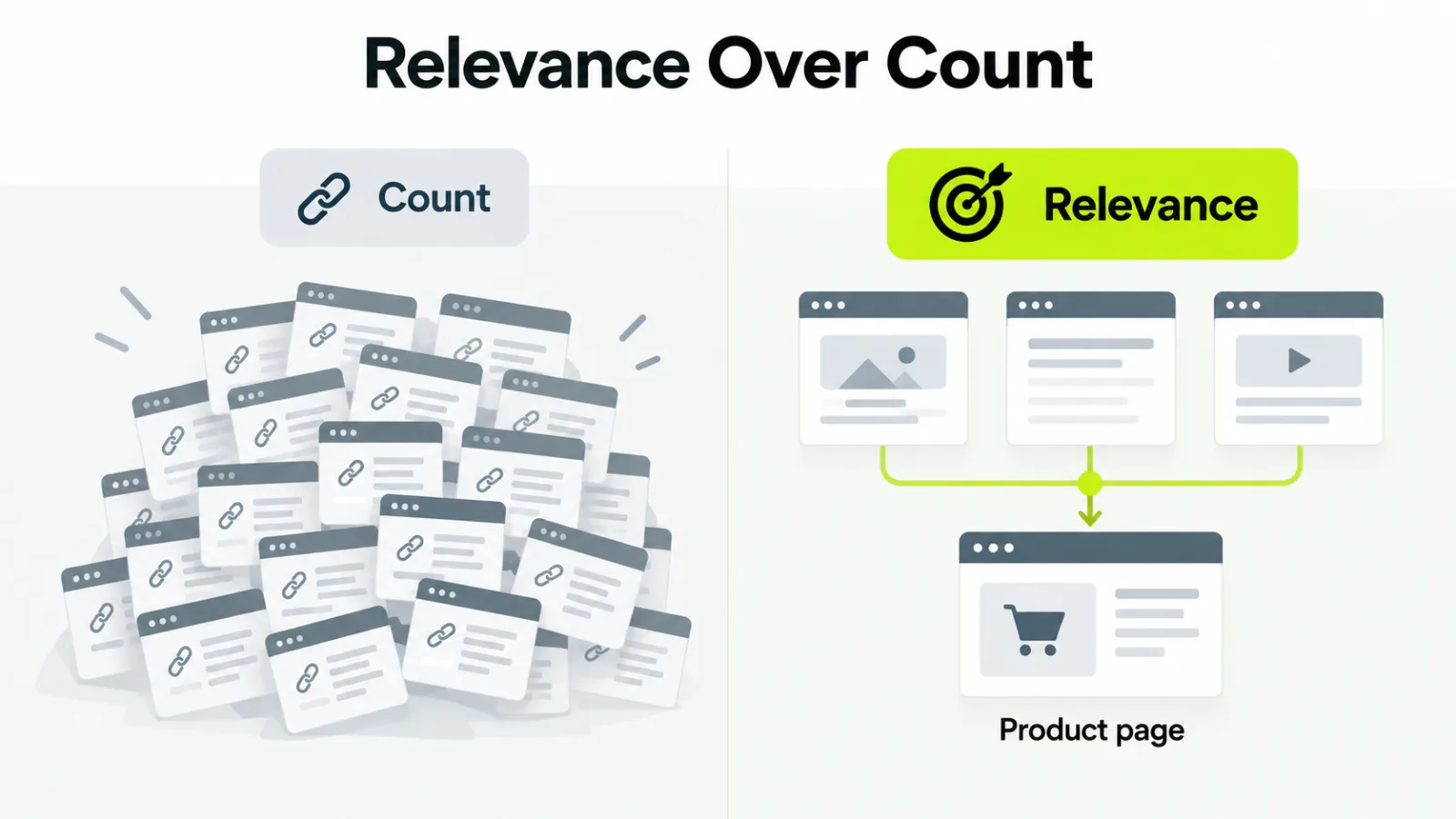
The number that matters is comparative, not absolute. Ranking is a competition. What counts is your authority relative to the pages currently ranking for your target term rather than some threshold you read in a blog post. That’s why two SaaS companies in different categories can need wildly different link profiles to rank for keywords that look identical, and why a single benchmark number means nothing without competitive context. We dig into why volume fails in our guide on why generic link building fails SaaS.
What actually determines how many backlinks you need
Four things set the number of backlinks you need: how competitive your category is, how strong the pages you’re competing against are, how much authority you already have, and how relevant the links you can earn are. Each one shifts the answer up or down. That’s why a scoped assessment beats a generic quota.
| Factor | Pushes the number up when… | Pulls it down when… |
|---|---|---|
| Category competitiveness | Well-funded incumbents own the SERP | The niche is underserved or just emerging |
| Competing pages’ authority | Top results carry strong, relevant link profiles | Top results are thin or barely linked |
| Your existing authority | Your domain is new or rarely cited | You already hold topical authority |
| Link relevance & quality | The links on offer are generic or low-trust | You can earn highly relevant, editorial links |
| Page intent | The page targets a high-competition commercial term | The page targets a long-tail, lower-competition query |
So the most useful exercise is a competitor link gap analysis. Look at the referring domains the pages outranking you have that you don’t, weighted by relevance. That gap is your real target. It hands you specific, reachable sources to pursue instead of a quota to fill.
Running one is the harder half. Our guide to competitor backlinks covers how to pick the right competitors and which gaps are worth chasing.
Quality and relevance beat quantity, every time
A small set of relevant, editorially earned links almost always outperforms a large pile of low-relevance ones, because relevance and trust are what search engines and AI models reward. A link from a respected publication in your category signals something a generic directory link never can, and it carries far less risk.
Concentration matters as much as quality. Point a focused set of strong links at your highest-value, winnable pages and you’ll do more than you would spreading the same links thin across the whole site. The goal isn’t to stack up links. It’s to build relevant authority around the pages that drive pipeline. A deliberate SaaS backlink strategy maps links to those priority pages instead of chasing a count, and our link building services are built to earn the relevant, durable links that move rankings.
Early-stage teams should start with our guide to link building for SaaS startups, which covers what to do before any of this needs a budget.
Frequently asked questions
How many backlinks does a SaaS company need to rank?
There’s no universal number. Ranking depends on your authority relative to the specific pages you’re competing against instead of an absolute threshold. A competitor gap analysis, comparing the relevant referring domains the top results have that you lack, beats any figure someone quotes you. In plenty of cases, a handful of relevant, high-quality links outranks hundreds of low-quality ones.
Are more backlinks always better?
No. Past a point, more links add nothing if they lack relevance, and low-quality links can actively damage your profile and create risk. Search engines weigh relevance, authority, and context over raw count, so a focused set of strong, topically relevant links is worth more than a large volume of weak ones. Quality and concentration beat quantity.
How do I figure out how many links I actually need?
Run a competitor link gap analysis. Find the pages outranking you for your target terms, look at the relevant referring domains they have that you don’t, and treat closing that relevance-weighted gap as your target. This grounds the question in your real competitive situation instead of an arbitrary number, and it hands you specific, reachable sources to pursue.
Is it better to have a few high-quality links or many low-quality ones?
A few high-quality, relevant links win almost every time. They carry more ranking weight, far less risk, and they reinforce the topical authority search engines and AI models reward. A large volume of low-relevance links does little for rankings and can expose your brand to algorithmic and reputational harm. Put relevance and editorial trust ahead of count.
Should all backlinks point to my homepage?
No. Most links should point to the inner pages that drive pipeline: high-intent product, comparison, and category pages rather than the homepage by default. Concentrating relevant authority on winnable, commercially valuable pages works far better than spreading it thin, and internal linking can then push that authority out to related pages.
How long does it take to build the links I need?
Earning relevant, editorial links is a sustained effort measured in months, because authority builds over time. Striking-distance pages can move with a modest number of relevant links, while competitive terms take ongoing investment. No credible partner will promise a specific number of links or rankings on a fixed date, because outcomes depend on too many factors outside anyone’s control.
It’s also why a link can’t be judged in the month it lands. Setting a measurement window long enough to see the effect is one of the steps in our link building checklist.