SaaS Link Building
How to Build Topical Authority for SaaS
Topical authority for SaaS is the proven depth and breadth your domain holds on a subject, earned by covering that subject completely, linking it together logically, and getting cited by other credible sources. For B2B SaaS companies, it is the most durable SEO asset you can build, and the reason is simple: it pays off. The more completely you cover a problem space, the faster Google trusts your domain to rank new pages, and the more often AI engines like ChatGPT, Perplexity, and Google AI Overviews name you as a source. This guide breaks down what topical authority is, the pieces that create it, a step-by-step process to earn it, the mistakes that stall most teams, and how earned links speed the whole thing up.
What topical authority means for SaaS and why it matters
Topical authority means your domain is recognized as a definitive source on a subject, which buys you faster rankings, broader keyword coverage, and citations in AI-generated answers. A single high-ranking page is a page-level win. Topical authority is a domain-level signal. Once Google’s systems see that you have covered the entities, subtopics, and questions around a theme thoroughly and accurately, they extend that trust to every page you publish on the theme.
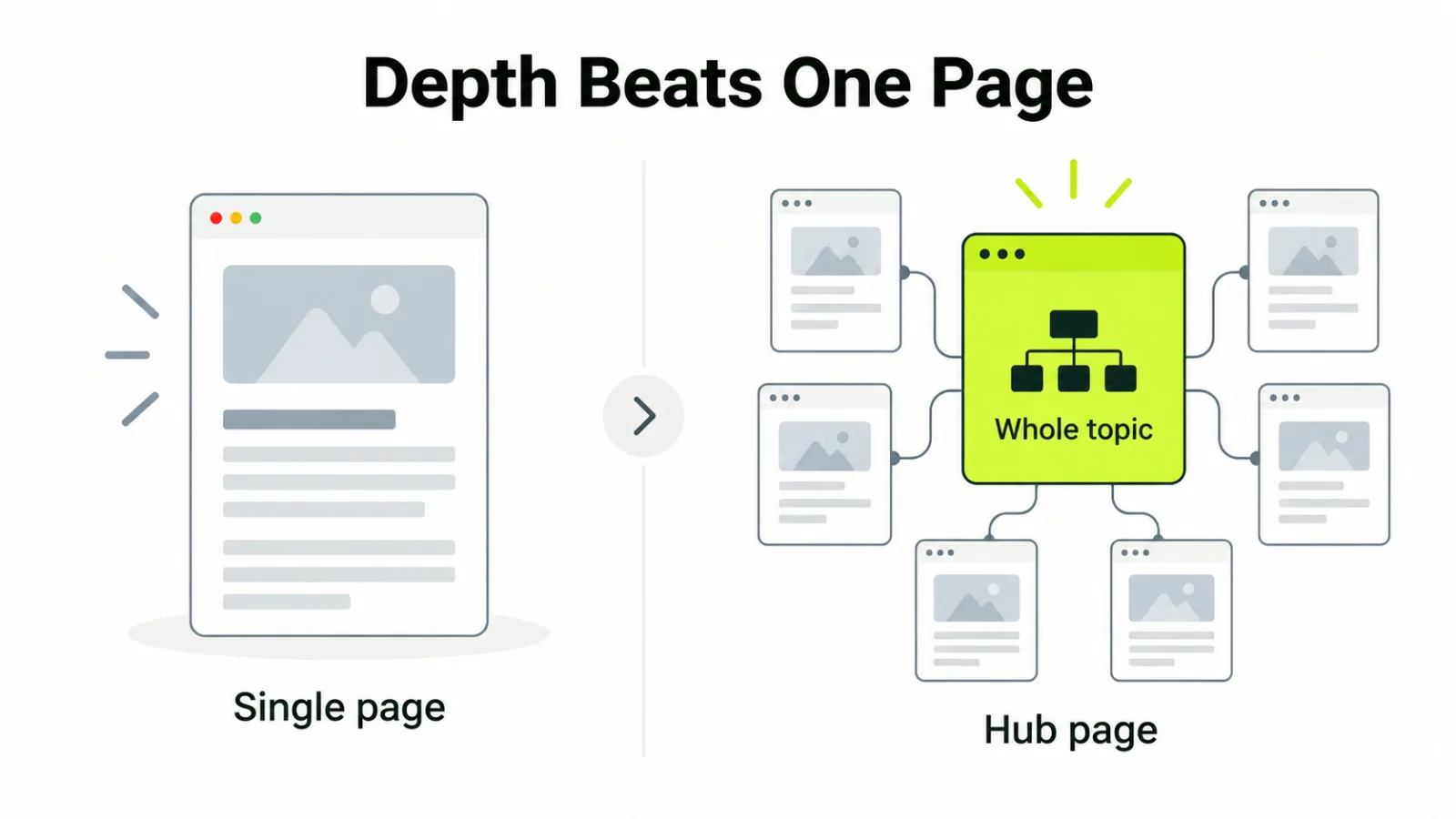
This matters more for SaaS than almost any other category. Your buyers research hard before they ever book a demo, comparing categories, integrations, use cases, and pricing across dozens of queries. Own the full topical map of your category and you catch those buyers at every stage, from “what is workflow automation” to “best workflow automation for healthcare teams.” Authority also feeds the newer layer of discovery. Large language models build answers from sources they consider trustworthy and well-organized, so depth and entity consistency directly shape whether your brand gets named when someone asks an AI assistant for a recommendation. We dig into that shift in our guide on how AI search changes SaaS SEO.
The building blocks of topical authority
Topical authority is built from six interlocking parts: content clusters, internal linking, full coverage, entity consistency, demonstrated E-E-A-T, and earned links and mentions. No single part carries the weight. Authority shows up when they reinforce each other across your domain.
| Building block | What it does | What it looks like in practice |
|---|---|---|
| Content clusters | Organize a topic into a pillar page plus supporting articles | One “API monitoring” pillar with 12 supporting pages on metrics, alerts, and use cases |
| Internal linking | Passes relevance and authority between related pages | Supporting pages link up to the pillar and across to siblings with descriptive anchors |
| Full coverage | Answers every subtopic and question a buyer carries | Definitions, comparisons, how-tos, pricing, and integrations all covered |
| Entity consistency | Uses the same names for products, concepts, and competitors | One vocabulary and matching schema markup across the cluster |
| E-E-A-T | Signals real experience, expertise, and trust | Named expert authors, original data, customer evidence, citations |
| Earned links and mentions | Validate authority with external trust signals | References from industry publications, peers, and respected blogs |
The first four blocks sit in your hands through content and site architecture. E-E-A-T is part editorial, part earned. The last block, external validation, is where most SaaS teams hit a wall, because thorough content on its own rarely produces the off-site signals that confirm your authority to search engines and AI models.
Content clusters: pillar and supporting pages
A content cluster is a pillar page that broadly defines a topic, surrounded by supporting pages that each cover one subtopic in depth. The pillar targets the head term and the buyer’s primary intent. The supporting pages target long-tail questions, comparisons, and specific use cases. This structure mirrors how search engines and language models break a subject into its component entities, which makes your coverage legible to both.
Entity consistency and structured data
Entity consistency means naming the same concepts, products, and people the same way across every page, backed by structured data. Describe your category, competitors, and features consistently, mark them up with schema, and you strip the ambiguity out of the job those systems are trying to do. That clarity matters more every quarter for AI citations, where models reward precision and punish vague or contradictory signals.
A step-by-step process to build topical authority
Build topical authority by mapping your topic, prioritizing clusters, publishing complete pages, linking them deliberately, demonstrating expertise, and earning external validation. Run these steps in order. Each one rests on the foundation the previous step lays down.
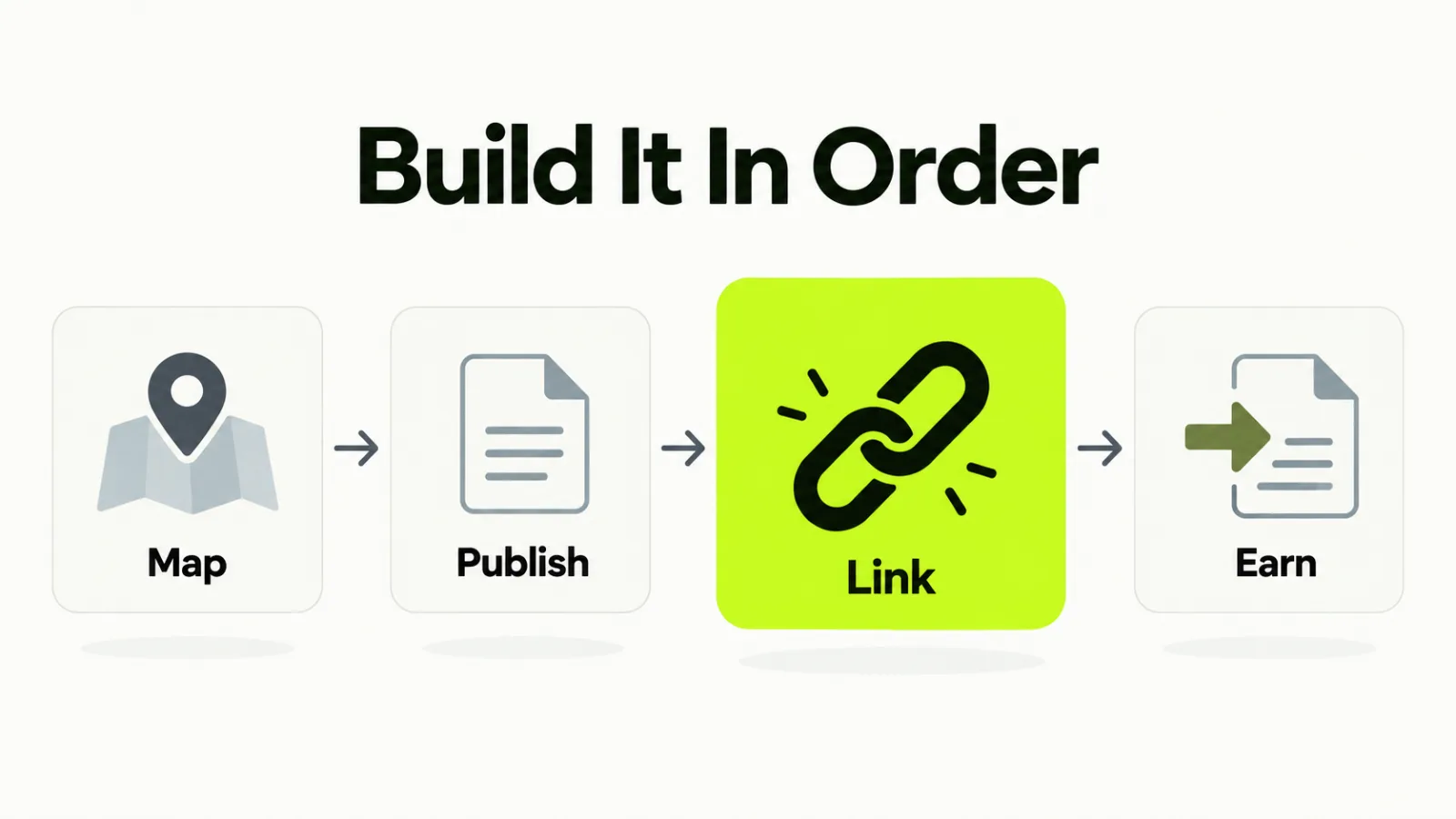
1. Define your core topic and audience
Pick the subject where you have real expertise and commercial stakes, which is usually the problem your product solves rather than the product itself.
2. Map the full topic into entities and subtopics
Pull from customer questions, search data, competitor coverage, and your own knowledge to list every concept, question, and use case a buyer touches.
3. Group subtopics into clusters
Give each cluster a pillar page and a set of supporting pages, and leave no meaningful gap in coverage.
4. Prioritize by intent and opportunity
Start with the cluster closest to purchase intent where you can win, then work outward toward top-of-funnel topics.
5. Publish complete, original content
Write each page to fully answer its intent. Add original data, examples, and a real point of view instead of restating what competitors already said.
6. Link the cluster deliberately
Connect supporting pages up to the pillar, across to siblings, and out to related clusters with descriptive anchor text.
7. Demonstrate E-E-A-T
Attribute content to named experts, cite credible sources, and show first-hand evidence: benchmarks, screenshots, customer outcomes.
8. Earn links and mentions
Chase references from authoritative industry sources to validate the cluster. This is the step that turns thorough content into recognized authority.
9. Maintain and expand
Refresh pages as the topic moves, fill new gaps, and add adjacent clusters to widen your authority over time.
Common mistakes that stall topical authority
The mistakes that derail teams most often are publishing thin or overlapping content, ignoring internal linking, chasing keywords without intent, and treating authority as purely on-page. Each one chips away at the trust you are working to build.
Keyword cannibalization
Publish several near-identical pages on the same subtopic and you split your relevance signals, leaving search engines unsure which page to rank.
Orphaned content
A strong article with no internal links pointing to it can neither pass nor receive authority, so it sits alone and underperforms.
Coverage gaps
Skip obvious subtopics or questions and you signal incomplete expertise, handing those queries to competitors.
Generic, sourceless content
Restating what already ranks, with no original data or named expertise, never shows the experience that E-E-A-T and AI citations reward.
Ignoring off-site signals
Betting that great content will rank on its own ignores the fact that external validation is what confirms authority to search engines and models.
How topical authority connects to link building
Topical authority and link building work together: complete content makes your domain worth linking to, and earned links confirm to search engines and AI models that the authority is real. Content depth without external validation tends to flatten out. Links pointing at a domain with shallow coverage rarely hold rankings. The two run as one system.
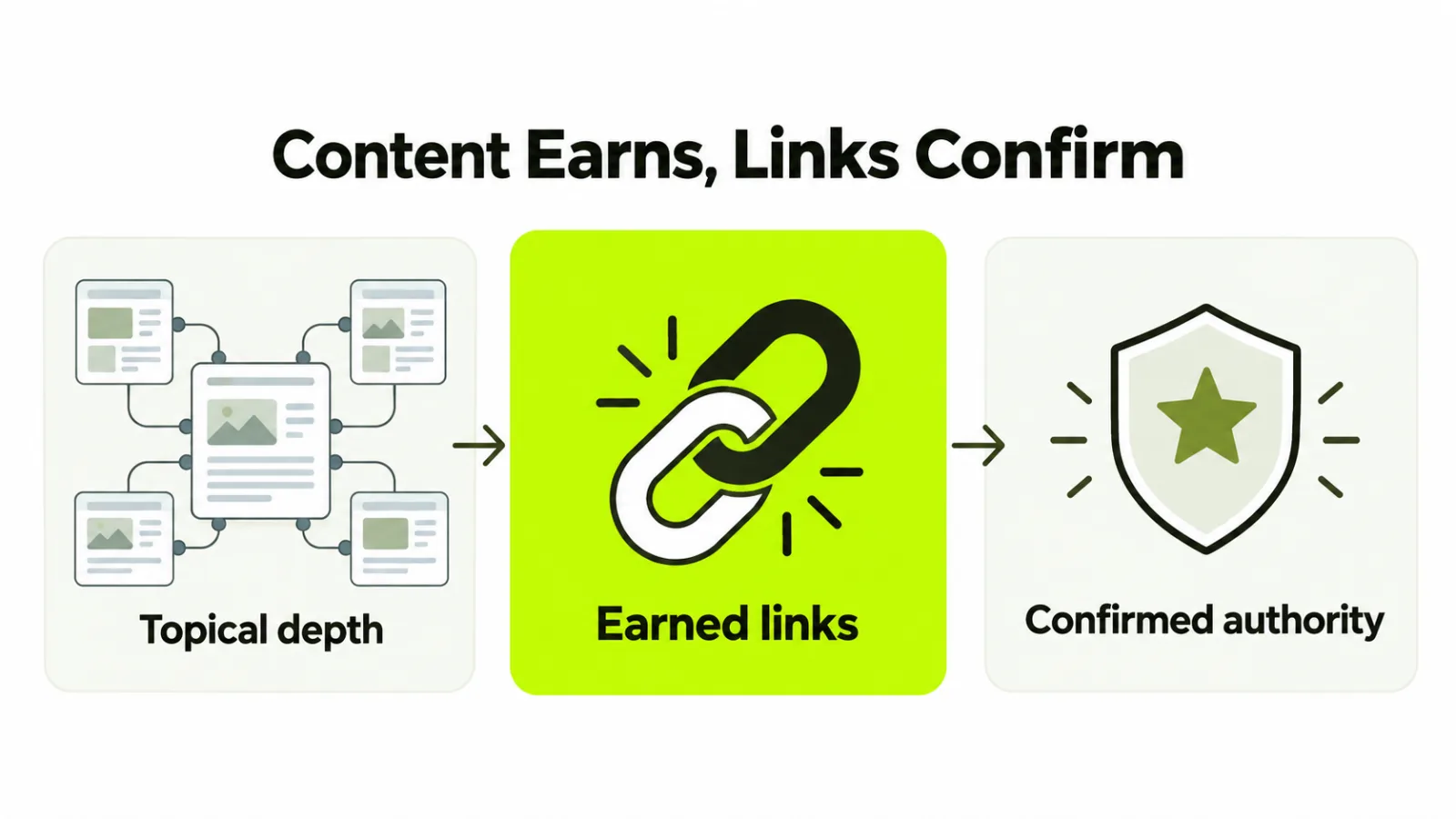
The sequence that works best is to build the cluster first, then earn links to its strongest assets. When journalists, industry bloggers, and peers reference your original research or your definitive guides, the relevance of those links reinforces the exact topic you are trying to own, lifting the whole cluster instead of one page. That is why a deliberate SaaS backlink strategy should map to your topic clusters rather than run as a disconnected volume play. A handful of topically relevant links from credible domains beats a pile of generic ones, because they tell search engines that recognized voices in your space treat you as a reference.
This is the work we specialize in. Our SaaS link building services are built to earn authority-building references that map straight to the clusters you are already investing in, so your content and your off-site signals pull in the same direction. If you want to talk through how to sequence content and links for your category, you can contact our team and we will plan an approach grounded in your specific topic map.
Frequently asked questions
How long does it take to build topical authority for a SaaS site?
Meaningful topical authority usually takes six to twelve months of steady publishing and link earning, though the timeline shifts with competition, domain history, and how much you can resource it. Authority builds slowly, so your early clusters often rank slowly while later pages on the same topic rank faster as your domain’s trust grows. We never promise specific rankings or dates, because search outcomes hinge on plenty of factors no provider controls.
Is topical authority an official Google ranking factor?
It is not a single named ranking factor, but it reflects how Google’s systems weigh relevance, expertise, and trust across a domain. Google has publicly discussed surfacing content from sites with demonstrated topical strength, and its broader push on E-E-A-T lines up closely with the complete, expert coverage that builds topical authority in the first place.
How many pages do I need to establish authority on a topic?
There is no magic number, because authority comes from covering a topic completely rather than from hitting a page count. A focused topic might need one pillar and eight to twelve supporting pages, while a broad category could call for several interconnected clusters. The real test is whether you have answered every meaningful question and subtopic a buyer explores rather than how many URLs you have shipped.
Does topical authority help with AI search and citations?
Yes, and the effect is strong. Large language models build answers from sources they consider trustworthy, well-structured, and internally consistent, so full coverage and entity consistency make your content easier to retrieve and quote. Domains recognized as authorities on a topic are far more likely to get named when buyers ask an AI assistant for recommendations.
Can I build topical authority without earning backlinks?
You can build a strong on-page foundation without backlinks, but authority usually plateaus without external validation. Complete content and internal linking establish relevance. Earned links and mentions from credible sources confirm that relevance to search engines and AI models. In competitive SaaS categories, off-site signals are typically the line between content that ranks and content that stalls.
Should I build authority on one topic or several at once?
Establish authority on one core topic before you expand to adjacent ones. Concentrating your resources lets you reach genuine depth, and depth earns trust faster than spreading thin across many themes. Once your first cluster is recognized and ranking, extend into related clusters that share entities and audience, widening your authority while reinforcing the original topic.